
Aluminum windows offer slim frames, large glass areas, strong structural performance, and modern architectural styling. However, standard aluminum conducts heat easily. Without proper insulation inside the frame, an attractive window can become a weak point in the building envelope and reduce indoor comfort.
That heat transfer can increase heating or cooling demand and make interior frame surfaces noticeably hotter or colder. In some climates, cold frame surfaces may also increase condensation risk. Choosing aluminum based only on frame appearance, profile depth, or price can therefore lead to poor long-term performance.
Thermally broken aluminum windows address this problem by separating the interior and exterior aluminum sections with a low-conductivity barrier. Before buying, however, you should evaluate the complete window—including the thermal break, glass, spacers, seals, hardware, drainage, testing, finish, and installation requirements.
What Are Thermally Broken Aluminum Windows?
Thermally broken aluminum windows contain an insulating section between the indoor and outdoor parts of the aluminum frame. This interruption reduces the direct path through which heat can travel across the highly conductive metal.
The basic concept sounds simple, but performance depends on the complete profile design. Buyers evaluating the thermal break benefits should consider the frame, sash, glazing, spacer, gaskets, and installation interface as one thermal system.
How Does the Thermal Break Work?
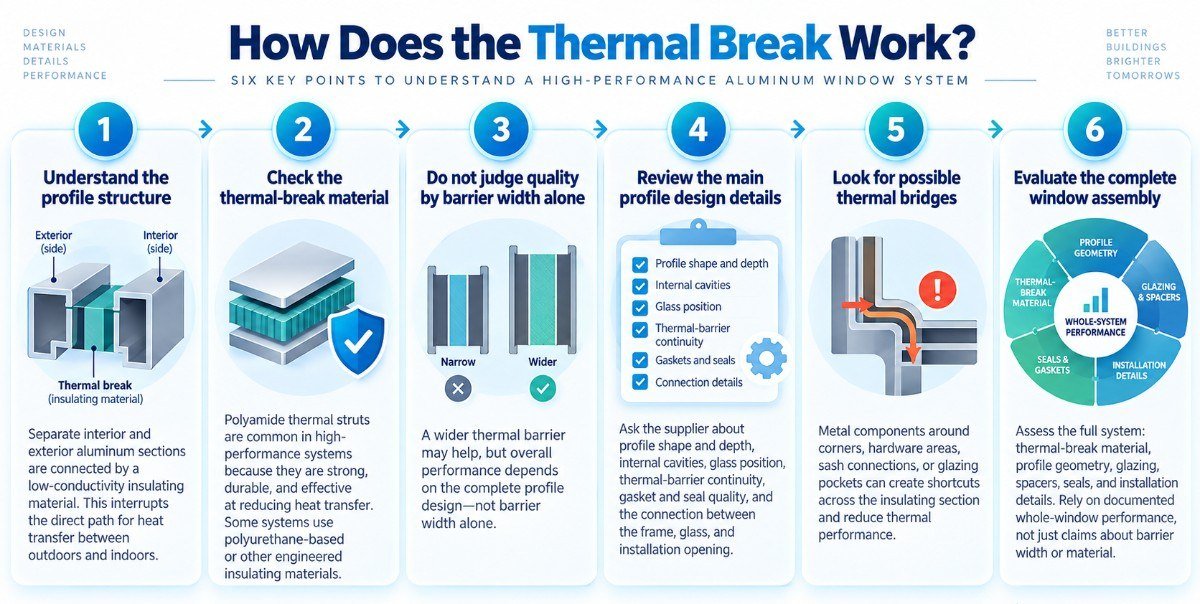
- Understand the profile structure
A modern thermally broken aluminum profile has separate interior and exterior aluminum sections. A low-conductivity insulating material connects these sections instead of one continuous piece of metal.
This design interrupts the direct path for heat to move between the outdoor and indoor sides of the window. - Check the thermal-break material
Polyamide thermal struts are widely used in high-performance aluminum window systems. Polyamide is strong, durable, and effective at reducing heat transfer between aluminum sections.
Some systems use polyurethane-based barriers or other engineered insulating materials. The right option depends on the profile design, structural requirements, fabrication method, and target thermal performance. - Do not judge quality by barrier width alone
The width of the thermal barrier is important, but it is not the only measure of performance. A wider barrier may reduce heat transfer, but the complete profile design determines how well the window performs. - Review the main profile design details
Ask the supplier to explain these features:- Aluminum profile shape and depth
- Number and arrangement of internal cavities
- Position of the glass inside the frame
- Thermal-barrier continuity around the sash and frame
- Quality and placement of gaskets and seals
- Connection between the frame, glass, and installation opening
- Look for possible thermal bridges
Metal components can create shortcuts across the insulating section. This may happen around corners, hardware areas, sash connections, or poorly designed glazing pockets.
These shortcuts can reduce thermal performance. Ask the supplier for a profile cross-section and technical data for the complete window system. - Evaluate the complete window assembly
The most reliable assessment includes the thermal-break material, profile geometry, glazing, spacers, seals, and installation details.
A well-designed system should provide documented whole-window performance. Do not rely only on claims about the thermal-barrier width or material.
Thermally Broken vs Standard Aluminum Windows
The main difference is not visible from the exterior. It is inside the extrusion, where the thermal barrier separates the aluminum sections.
| Feature | Thermally Broken Aluminum | Standard Aluminum | uPVC |
| Frame heat transfer | Reduced | Relatively high | Naturally low |
| Slim sightlines | Excellent | Excellent | Usually wider |
| Large opening capability | Excellent | Excellent | Depends on reinforcement |
| Condensation control | Better when properly specified | Lower resistance | Generally good |
| Structural strength | High | High | System dependent |
| Typical use | Conditioned residential and commercial spaces | Unconditioned or lower-performance spaces | Residential and light commercial projects |
Standard aluminum may remain practical for interior partitions, unconditioned spaces, or applications where thermal performance is not important. For conditioned buildings, thermally broken frames usually provide a better balance between aluminum’s strength and energy performance.
Buyers comparing frame materials can also evaluate custom uPVC windows when thermal insulation and budget carry more weight than very slim aluminum sightlines or large structural openings.
Why Thermal Break Performance Matters
Better Energy Performance
Windows transfer heat through both the glass and frame. Installing high-performance insulating glass inside a conductive frame leaves an unnecessary thermal path around the glazing.
A properly designed thermal barrier helps reduce this frame-related heat flow. Combined with suitable glazing, it supports the broader principles used to create energy-efficient aluminum systems for residential and commercial buildings.
Improved Interior Comfort
Energy ratings matter, but occupants experience window performance through surface temperature and drafts.
During cold weather, an effective thermal break helps keep the interior aluminum surface warmer. During hot weather, it limits heat transfer from the exterior frame toward the conditioned interior.
This can make areas close to windows more comfortable, especially around large glazed openings.
Lower Condensation Risk
Condensation occurs when a surface becomes cold enough for moisture in indoor air to condense on it.
Thermally broken frames can maintain warmer interior surfaces during cold conditions, reducing one important cause of frame condensation. They cannot eliminate condensation caused by excessive indoor humidity, poor ventilation, or poorly performing glass.
Warm-edge spacers and good glass-edge design are especially important because the perimeter of an insulating glass unit can be one of the coldest parts of a window.
Which Performance Ratings Should You Compare?
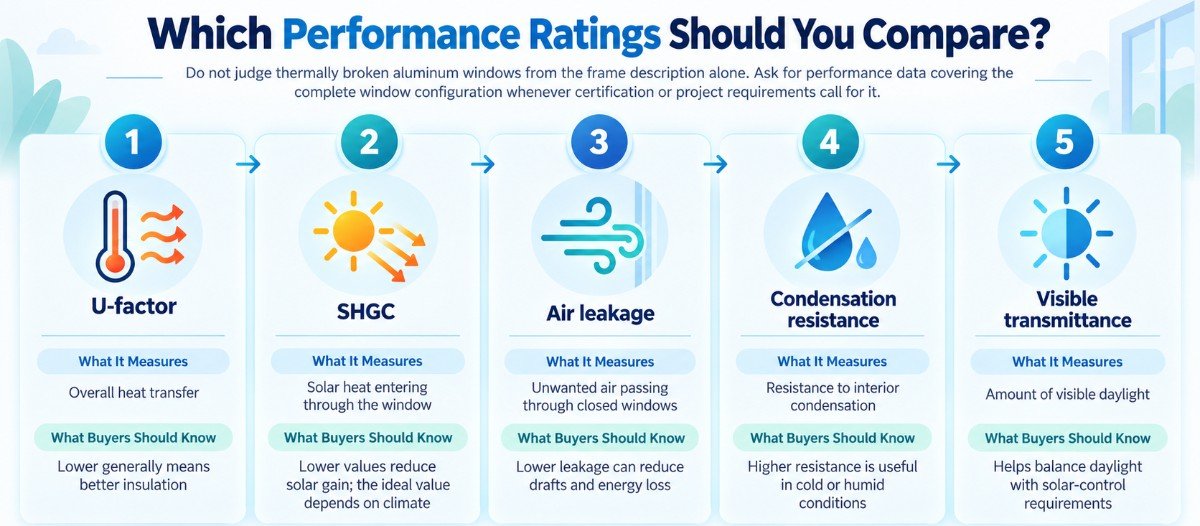
Do not judge thermally broken aluminum windows from the frame description alone. Ask for performance data covering the complete window configuration whenever certification or project requirements call for it.
| Rating | What It Measures | What Buyers Should Know |
| U-factor | Overall heat transfer | Lower generally means better insulation |
| SHGC | Solar heat entering through the window | Lower values reduce solar gain; the ideal value depends on climate |
| Air leakage | Unwanted air passing through closed windows | Lower leakage can reduce drafts and energy loss |
| Condensation resistance | Resistance to interior condensation | Higher resistance is useful in cold or humid conditions |
| Visible transmittance | Amount of visible daylight | Helps balance daylight with solar-control requirements |
Whole-window values are more useful than center-of-glass figures because frames, spacers, glass, and other components all influence actual performance.
The glass specification matters just as much. Appropriate Low-E glass options can reduce radiant heat transfer and help control solar heat gain when selected for the building’s climate and orientation.
What Should You Check in the Aluminum Frame?
Thermal Break Design and Continuity
Ask the supplier for a profile cross-section. You should be able to identify separate interior and exterior aluminum sections connected through insulating material.
Do not evaluate only the nominal thermal-break width. A strong design maintains thermal separation through important frame and sash areas instead of allowing metal components to create shortcuts around the insulated section.
This thermal continuity is a useful specification point that buyers sometimes overlook.
Profile Strength and Wall Thickness
Window profiles must also carry structural loads.
Large glass units, tall openings, high wind pressure, heavy operating sashes, and commercial use may require deeper or heavier profiles. The most thermally efficient profile is not automatically suitable for every opening size.
Request structural information for the actual unit dimensions rather than assuming one profile can safely handle every window.
How Should Glass Be Specified?
- A thermal break cannot compensate for poorly selected glazing. The frame and glass package need to work together for reliable energy performance.
- Choose the right insulated glass unit for the project:
- Double-glazed insulated glass is widely used.
- Triple glazing may be suitable where higher thermal performance is required.
- Glass thickness should match the window size, wind load, and structural requirements.
- Laminated or tempered glass should be selected according to safety, acoustic, and impact needs.
- Low-E coatings, gas filling, and cavity dimensions should match the climate and performance targets.
- Specify warm-edge spacers where appropriate. They can reduce heat transfer around the glass perimeter and help improve condensation resistance near the frame edge.
- For projects using coordinated window and aluminum door systems, keep the frame, glass, spacer, seal, and finish specifications consistent. This can support more uniform façade performance and appearance across the project.
Do Seals, Drainage, and Hardware Affect Thermal Performance?
Yes. A thermally broken profile cannot perform properly if the completed window allows excessive uncontrolled air or water entry.
Compression gaskets should create continuous seals around operable sashes. EPDM and other purpose-designed gasket systems are commonly used because they can maintain flexibility through changing temperatures.
Drainage paths and weep systems must also move water away without blocking the intended pressure-management design.
Hardware affects sash compression as well. Hinges, rollers, locking points, and multi-point locks should keep the sash aligned and maintain even pressure against its seals.
Are Thermally Broken Aluminum Windows Worth the Extra Cost?
They usually cost more than comparable non-thermal aluminum windows because the profiles and manufacturing process are more complex. High-performance glass, premium hardware, warm-edge spacers, special finishes, oversized dimensions, and testing requirements can increase the final price further.
The better question is whether the additional performance has value for the project.
Thermally broken aluminum is particularly relevant for conditioned buildings, large glazed areas, climates with significant indoor-to-outdoor temperature differences, and projects where condensation control or energy-code compliance matters.
For retail and commercial façades, aluminum’s structural strength and narrow framing remain important. The same characteristics that support aluminum retail storefronts can be combined with thermal-break systems where the façade separates conditioned interior space from outdoor conditions.
How Climate Should Affect Your Specification
- Cold climates: Prioritize lower heat loss and warmer interior surfaces. Choose low-U-factor assemblies, suitable insulating glass, warm-edge spacers, and properly sealed perimeter installation.
- Hot and sunny climates: Control solar heat gain as well as frame conduction. Low-SHGC glazing may provide more value than selecting the lowest possible U-factor alone.
- Mixed climates: Use a balanced specification that considers both heat loss and solar gain throughout the year.
- Project location: Avoid selecting windows from a standard catalog description alone. The same frame and glass package may not suit Canada, the Middle East, Southeast Asia, Australia, or northern Europe.
Installation Can Create a New Thermal Bridge
Even an excellent window can underperform when the connection between the window and wall is poorly designed.
Metal brackets, uninsulated gaps, uncontrolled air leakage, or incorrect perimeter sealing can create thermal and air-leakage paths around the frame. Installation details should therefore maintain continuity between the wall insulation, air barrier, flashing, and window assembly.
This issue becomes more important as the performance of the window itself improves. High-performance frames make weak perimeter details easier to notice.
What Should You Ask a Supplier Before Ordering?
A commercial quote should define more than dimensions and color. It should allow buyers to confirm that the proposed product matches the required performance and approved drawings.
| Check Before Ordering | What to Request |
| Aluminum system | Profile series and cross-section drawings |
| Thermal barrier | Material, dimensions, and system construction |
| Glass | Full insulating glass make-up and Low-E details |
| Performance | Relevant U-factor, SHGC, air, water, and wind data |
| Hardware | Brand, locking system, hinges, rollers, or operators |
| Finish | Powder coating, anodizing, PVDF, and color reference |
| Production | Approved shop drawings and inspection requirements |
| Delivery | Packaging method, crate identification, and shipping terms |
Quality control should confirm that production matches the approved specification. A documented window QC process can cover profile dimensions, machining, drainage, glass, hardware, seals, operation, finish, and final inspection before shipment.
International buyers should also treat logistics as part of quality. Proper export window packaging helps protect finished frames, glass, corners, hardware, and project identification throughout container handling and transportation.
Common Buying Mistakes to Avoid
The most common mistake is purchasing a window because the quotation says “thermal break” without confirming the actual system.
Buyers should also avoid comparing glass-only thermal values with whole-window ratings, choosing glazing without considering climate, ignoring air leakage, approving oversized units without structural checks, and treating installation as separate from window performance.
A useful quotation should make those variables clear before production starts.
Why Source Custom Thermally Broken Aluminum Windows from Oridow?

Oridow supports builders, contractors, architects, developers, wholesalers, and project buyers that need custom aluminum windows and doors manufactured to project-specific requirements.
- Manufacturing experience since 2008: Experienced production teams support residential, commercial, wholesale, and international projects.
- Fully custom-made solutions: Specify window sizes, thermal-break frame systems, glazing, hardware, RAL colors, finishes, screens, and opening configurations.
- Tested and quality-controlled products: Production inspections and performance checks help confirm that manufactured units match approved project specifications.
- Factory-direct pricing and global support: Oridow provides quotations, shop-drawing support, material coordination, production management, and CIF or DDP shipping options for international projects.
Ready to Source Thermally Broken Aluminum Windows for Your Project?
Oridow can manufacture custom thermally broken aluminum windows for residential, commercial, development, and wholesale projects.
Whether you need products built to architectural drawings, help selecting frame and glazing specifications, custom finishes, shop drawings, factory-direct pricing, or international shipping, Oridow can coordinate the solution around your project requirements.
Request a free quote from the Oridow team with your window schedule, dimensions, drawings, performance requirements, quantities, destination, and preferred delivery terms.
FAQs About Thermally Broken Aluminum Windows
Do thermal breaks make aluminum window frames weaker?
Not necessarily. Quality thermal-break systems are engineered to connect the interior and exterior profiles while maintaining required structural performance. The correct profile still needs to be selected for the window size, glass weight, wind load, and opening type.
Can the thermal break inside an aluminum window fail?
A properly manufactured thermal barrier is designed to remain integrated with the aluminum profile for long-term use. Poor material quality, incorrect fabrication, or inadequate profile assembly can cause problems, which is why system documentation and factory quality control matter.
Do black thermally broken aluminum frames become hot in sunlight?
Dark exterior aluminum surfaces can become hot under strong sunlight. The thermal break reduces heat transfer toward the interior profile, but glass selection, building orientation, shading, climate, and coating quality should also be considered.
Are thermally broken aluminum windows good for sound insulation?
They can form part of a good acoustic window, but the thermal break alone does not determine sound reduction. Laminated glass, different glass thicknesses, wider cavities, airtight seals, window size, and installation quality normally have a greater influence.
Can thermally broken aluminum windows be used in coastal locations?
Yes, but coastal projects need suitable surface treatment, hardware, fasteners, seals, and maintenance planning. The supplier should know the project’s distance from the coast and environmental exposure before recommending the aluminum finish and hardware specification.
Do thermally broken aluminum windows need special maintenance?
Routine maintenance is generally simple. Keep tracks and drainage outlets clean, inspect gaskets and sealant, clean finished aluminum with suitable products, and lubricate operating hardware when recommended by the manufacturer.
Can thermally broken aluminum windows be manufactured in oversized dimensions?
Yes, aluminum is well suited to large openings, but maximum dimensions depend on profile strength, glass weight, wind pressure, hardware capacity, mullion design, and operating style. Oversized units should be engineered rather than scaled up from a standard window.
Can thermally broken aluminum windows be used for renovation projects?
Yes. They can be manufactured for replacement openings, but accurate site dimensions and installation details are critical. Existing wall conditions, waterproofing, sill design, fixing locations, interior finishes, and perimeter insulation should be reviewed before production.


