
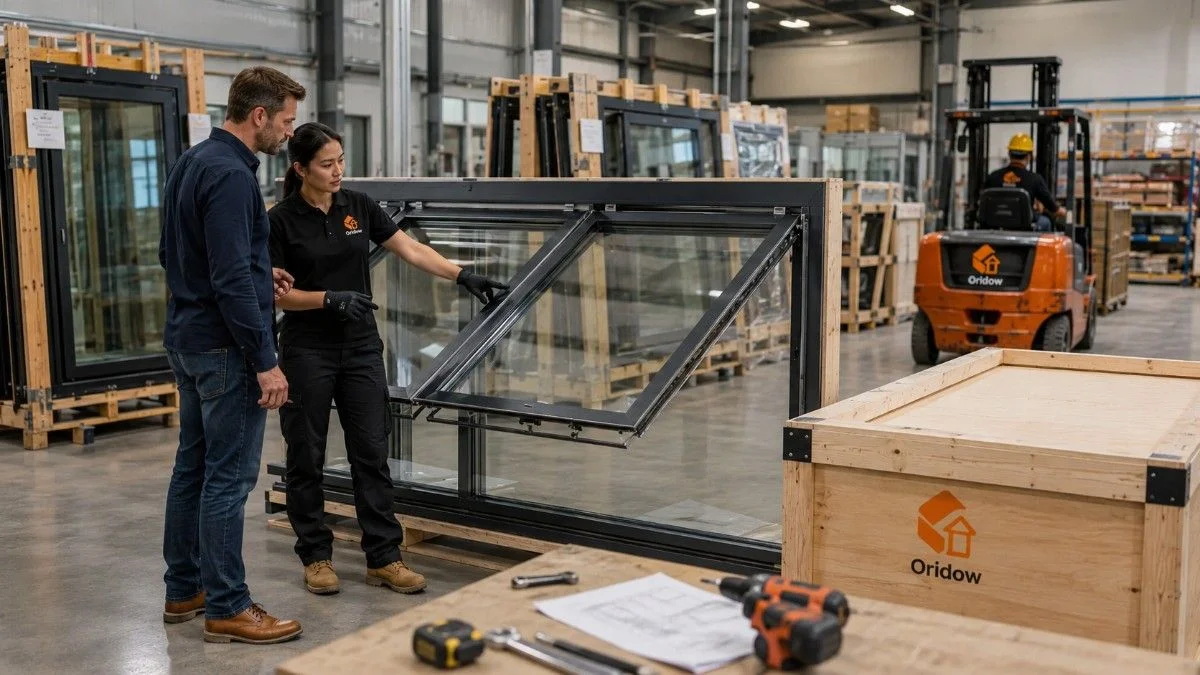
Large fold-up windows can turn a kitchen, restaurant, bar, patio, or commercial counter into a wide indoor-outdoor opening. However, increasing the glass area also increases weight, wind pressure, solar heat, and stress on hinges and balance hardware. The wrong glazing can reduce comfort and operating performance.
Choosing the right fold-up window glass options is therefore not simply a choice between clear, tempered, or double glass. The glass must suit the sash dimensions, opening mechanism, building location, climate, safety requirements, energy target, acoustic conditions, and the amount of daily opening and closing.
A good specification balances safety, strength, weight, insulation, solar control, appearance, and cost. This guide explains how builders, architects, contractors, developers, and wholesalers can compare glass configurations for large fold-up windows without over-specifying the system or creating unnecessary load on the moving sash.
Why Glass Selection Matters More for Large Fold-Up Windows
Glass becomes one of the largest contributors to sash weight as a fold-up window gets wider or taller. The balance system, hinges, frame, and locking hardware must handle that dead load every time the window opens. Manufacturers may require stronger balance systems for heavier configurations.
This is why glass and hardware should be selected as one system. A high-performance triple-glazed unit may provide excellent insulation, but its extra weight may require stronger frames, upgraded balances, larger hinges, or smaller individual sash dimensions.
For commercial projects, modern commercial Aluminum Windows systems are typically designed to support different frame profiles, glazing specifications, Low-E coatings, and insulated glass units, allowing engineers to match performance requirements instead of relying on a single standard glass package.
Main Fold-Up Window Glass Options Compared

The best glass depends on what the opening must achieve. Tempered glass is often selected for impact safety, while laminated glass adds post-breakage retention. Insulated Low-E glazing improves thermal performance, and laminated insulating units can combine energy, acoustic, and safety benefits.
| Glass option | Main advantage | Suitable applications | Main consideration |
| Tempered glass | Strength and safer breakage | Restaurants, counters, residential openings | Limited post-breakage retention |
| Laminated glass | Holds fragments after breakage | Security, noise, exposed locations | Heavier than basic monolithic glass |
| Double-glazed IGU | Better insulation | Exterior conditioned spaces | More sash weight |
| Low-E IGU | Controls heat transfer | Hot or cold climates | Coating must match climate |
| Laminated Low-E IGU | Safety, sound and efficiency | Premium commercial projects | Higher weight and cost |
| Triple glazing | Maximum thermal potential | Very cold climates | Weight can limit sash size |
Tempered Glass for Safety and Strength
Fully tempered glass is heat treated to improve resistance to mechanical and thermal stress. When broken, it generally forms smaller particles rather than large sharp shards. Building codes commonly require safety glazing where human impact is likely.
Heat-strengthened glass is different. It offers greater strength than annealed glass but is not automatically considered safety glazing. If a fold-up window is installed in a location requiring safety glass, the project team should confirm whether fully tempered or qualifying laminated glazing is required.
Laminated Glass for Retention and Security
Laminated glass bonds two glass plies with an interlayer, commonly PVB. If breakage occurs, the interlayer helps retain fragments within the opening. This makes laminated glazing useful where fallout protection, additional security, UV control, or improved sound reduction matters.
Many custom systems use laminated configurations across their designs. Buyers already evaluating custom aluminum frame windows should specify glazing at the drawing stage because thicker laminated constructions can affect sash sections, glazing pockets, hardware selection, and final unit weight.
How Should Glass Thickness Be Selected?
There is no universal glass thickness for every large fold-up window. Selecting 6 mm, 8 mm, or 10 mm glass only because another project used it can create unnecessary risk. Thickness should be based on engineering conditions rather than a simple window-width rule.
ASTM E1300 is widely used by design professionals to evaluate the load resistance of architectural glass. Glass type, dimensions, supported edges, wind pressure, insulating construction, and center-of-glass deflection all affect the final specification.
| Selection factor | Why it matters |
| Glass width and height | Larger panes usually experience greater load and deflection |
| Design wind pressure | Coastal and high-rise locations may require stronger glazing |
| Glass type | Annealed, heat-strengthened, tempered, and laminated glass perform differently |
| Edge support | Frame support conditions affect load resistance |
| IGU construction | Multiple panes change weight and load behavior |
| Sash hardware capacity | The complete moving panel must remain operable |
Accurate opening dimensions are equally important. Although the operating method differs, the basic discipline used when measuring an aluminum window also applies here: verify actual structural openings before final drawings, glass production, and hardware sizing.
Match Glass Weight to the Fold-Up Mechanism
For a fixed picture window, heavier glass mainly affects structural support. For a fold-up window, it also affects daily operation. The glass becomes moving mass that must be controlled by hinges, concealed balances, gas assistance, or another lifting mechanism.
Ask the manufacturer for the complete sash weight rather than glass thickness alone. Two similar-looking IGUs can have very different weights when laminated plies, thicker panes, decorative grids, or triple glazing are added.
This interaction is important when comparing aluminium window price factors. Upgrading the glass can change more than the glazing price because heavier specifications may also require different aluminum profiles, hardware, fabrication, packing, and shipping arrangements.
Choose Energy Performance by Climate

For exterior fold-up windows in conditioned buildings, Low-E insulated glass is usually more useful than selecting glass based only on pane count. Low-emissivity coatings reduce radiant heat transfer, while the sealed airspace and gas fill improve the insulating performance of the glazing unit.
Three useful performance values are U-factor, Solar Heat Gain Coefficient, and Visible Transmittance. Lower U-factor means better resistance to heat transfer. Lower SHGC reduces incoming solar heat, while higher Visible Transmittance allows more daylight through the window.
| Metric | What it tells you | Typical design goal |
| U-factor | Rate of heat transfer | Lower for better insulation |
| SHGC | Solar heat entering indoors | Lower in strong cooling climates |
| Visible Transmittance | Daylight passing through | Balance daylight and glare |
| IGU spacer | Edge thermal performance | Consider warm-edge systems |
| Gas fill | Insulation inside the IGU | Argon is commonly used |
The correct SHGC depends on orientation and climate. A west-facing restaurant window in a hot region may need stronger solar control than a shaded north-facing opening. Selecting the lowest SHGC without considering daylight can also make glazing darker than the design requires.
Consider IGU Durability, Not Only Initial Performance
An insulating glass unit relies on spacers, desiccants, primary seals, and secondary seals to keep moisture outside the cavity and retain gas where applicable. Poor edge-seal performance can eventually lead to fogging or reduced insulating performance.
IGCC certification programs evaluate sealed insulating glass durability using ASTM E2190 requirements. For major projects, asking how the IGU is fabricated, sealed, inspected, and documented gives buyers more useful information than simply asking whether the window is “double glazed.”
Select Laminated Glass When Noise Control Matters

Restaurants, hotels, homes near traffic, and urban commercial projects may need better sound control. Laminated glass can improve acoustic performance because its interlayer helps damp vibration. Using different glass thicknesses within an insulating unit can further improve performance across certain frequencies.
For acoustic projects, request tested STC or OITC information for the proposed complete configuration where available. Do not assume that simply adding another pane will provide the best result. Glass thickness, airspace, interlayer type, seals, and frame leakage all influence perceived sound.
Account for Optical Quality on Oversized Glass
Large areas of heat-treated glass can make optical distortion more noticeable. Roller wave, bow, warp, and strain patterns known as anisotropy may become visible when reflected buildings, straight architectural lines, or bright skies are viewed through the glazing.
Heat-treatment distortion cannot always be eliminated, but production controls can reduce its visual impact. Vitro recommends considering glass thickness, heat-treatment consistency, roller-wave orientation, and full-size project mock-ups where appearance is especially important.
For premium restaurants, residences, and storefronts, include visual quality requirements in the purchase specification before manufacturing. This is particularly important when several large fold-up units sit next to fixed glass because differences in reflection or distortion become easier to notice.
Should Large Fold-Up Windows Use Heat-Soaked Tempered Glass?
Heat soaking can be considered for projects where reducing the risk associated with nickel sulfide inclusions in tempered glass is important. The process encourages susceptible panes to fail during controlled factory testing instead of after installation.
Heat soaking reduces this risk but does not eliminate every possible cause of spontaneous breakage. It adds cost, so it should be discussed with the glass fabricator and project engineer based on glass size, location, consequence of breakage, and local specification requirements.
Why Opening Style Changes the Glass Specification
Glass should be specified for the window system in which it will operate. A fold-up window uses large moving glazed panels, while sliding, fixed, casement, and jalousie windows support glass differently.
These differences affect glass size, thickness, weight, safety requirements, hardware capacity, and maintenance.
For example, buyers researching jalousie window prices Philippines are usually evaluating systems made with several narrow adjustable glass blades.
Fold-up windows use much larger glazed sashes, so specifications designed for jalousie blades should not be transferred directly to a fold-up configuration.
| Window type | Typical glass arrangement | Main glass consideration |
| Fold-up window | Large moving glazed sashes | Sash weight, balance capacity, wind load |
| Jalousie window | Multiple narrow glass blades | Blade strength, ventilation, louver hardware |
| Sliding window | Large panels moving on tracks | Panel weight, rollers, track capacity |
| Fixed window | Non-moving glazed panel | Structural load and thermal performance |
What Changes When the Glass Moves?
The main difference is operating load. A fixed pane remains supported by the frame, while fold-up glass moves whenever the window opens. The hinges, balance mechanism, frame connections, and sash profiles must therefore support the complete glazed panel throughout its operating cycle.
For large fold-up windows, check three factors together:
- Glass weight: Thicker, laminated, double, and triple glazing increase sash weight.
- Hardware capacity: Hinges and balance systems must suit the completed sash, not only the frame.
- Panel dimensions: Larger glass areas can increase wind pressure, deflection, and operating loads.
Buyers comparing jalousie windows for sale may prioritize adjustable airflow and ventilation. A fold-up window has a different purpose: creating a wide, unobstructed opening. That difference changes the most suitable glass construction and the hardware needed to support it.
Where controlled ventilation is the main project requirement, Premium Jalousie Windows may provide a more suitable opening system. Where a large serving opening, indoor-outdoor connection, or pass-through area is required, a properly engineered fold-up window is generally the better fit.
Maintenance Requirements Also Differ
Opening style also changes how the glass and hardware are maintained. Guidance for cleaning jalousie window glass focuses on individual blades, clips, and louver mechanisms. Large fold-up windows require attention to broader glass surfaces, perimeter seals, hinges, drainage channels, locking points, and lifting hardware.
The key specification rule is simple: select the window type first, then engineer the glass for that operating system. This prevents a glass package from meeting thermal or safety targets while becoming too heavy, too flexible, or unsuitable for the fold-up mechanism.
A Practical Glass Specification for Your Supplier
Before ordering, give the manufacturer enough project information to engineer the complete unit instead of requesting only “double tempered glass.”
Include these six items:
- Finished window width and height
- Project location and building elevation
- Required safety or impact standard
- Energy targets such as U-factor or SHGC
- Acoustic or privacy requirements
- Preferred glass appearance and tint
The supplier can then coordinate pane thickness, glass treatment, Low-E coating, airspace, gas fill, spacer, frame profile, balance system, hinges, and sash size around the same performance target.
Why Source Custom Fold-Up Windows from Oridow?
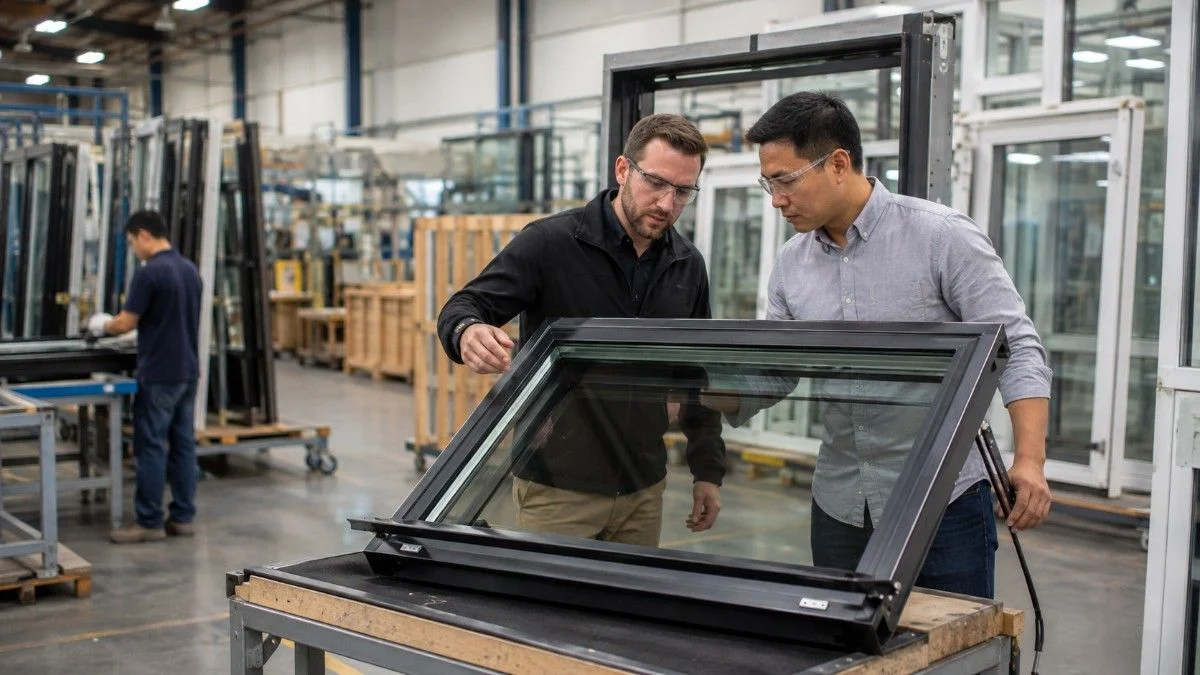
Oridow combines custom window manufacturing, glazing selection, production coordination, quality checks, and international project support for builders, contractors, architects, developers, and wholesalers. The company has operated since 2008 and manufactures custom aluminum and uPVC window and door systems in Fuzhou, China.
Manufacturing Experience Since 2008: Experienced production teams support residential, commercial, hospitality, and wholesale requirements, with custom production based on project drawings and specifications.
Fully Custom-Made Solutions: Buyers can customize window dimensions, aluminum profiles, glazing, Low-E requirements, colors, hardware, screens, grids, and opening configurations.
Production Quality Control: Custom units go through factory production checks, while shop drawings allow important dimensions and specifications to be reviewed before manufacturing begins.
Factory-Direct Pricing and Global Support: Oridow provides direct manufacturer quotations, shop-drawing support, production coordination, and international shipping through CIF or DDP options.
Ready to Specify Glass for Your Fold-Up Window Project?
Oridow helps builders, contractors, architects, developers, and wholesalers source custom fold-up windows manufactured around project-specific dimensions, glazing, hardware, thermal requirements, finishes, and operating needs.
Whether your priority is large opening size, laminated safety glass, Low-E insulated glazing, improved acoustics, solar control, custom aluminum frames, shop drawings, or international delivery, the Oridow team can help coordinate the window and glass specification before production.
Request a free quote to get your window schedule, drawings, opening dimensions, project location, glass requirements, and delivery destination to receive a project-specific recommendation.
Frequently Asked Questions
Can the glass in a fold-up window be replaced without replacing the frame?
Often, yes. Replacement depends on the glazing pocket, sash condition, glass thickness, and original construction. The replacement unit should match the allowable dimensions and weight for the existing sash and hardware.
Can tinted glass provide daytime and nighttime privacy?
Tinted or reflective glass can improve daytime privacy when outdoor light is stronger. It does not guarantee nighttime privacy. When interior lights are brighter than outside conditions, people may still be able to see indoors.
Is triple glazing always better for a large fold-up window?
No. Triple glazing can improve thermal performance, but it also adds weight. For a moving fold-up sash, a well-designed Low-E double-glazed unit may provide a better balance between energy efficiency and operation.
Can existing fold-up windows be upgraded to laminated glass?
Sometimes. The sash glazing pocket and balance system must accept the new thickness and additional weight. The manufacturer or window specialist should check these limits before replacement glass is ordered.
How can I confirm that safety glass was supplied?
Look for the permanent safety-glazing marking or certification required by the applicable standard. Required markings vary by market, so the project specification should identify the standard that the glass must meet.
Will decorative grids affect glass selection?
They can affect overall sash weight and appearance. Grids installed between glass panes usually add less operating complexity than heavy applied systems, but the complete sash weight should still be confirmed with the manufacturer.
How often should fold-up window glass and hardware be inspected?
Inspection frequency depends on use and exposure. High-use restaurant or hospitality windows should be checked more frequently for loose hardware, damaged seals, glass chips, drainage blockage, and changes in sash operation.


