

Understanding window types helps you make good choices. Two popular options are gas strut windows and awning windows. Both offer ventilation and natural light, but they work differently.
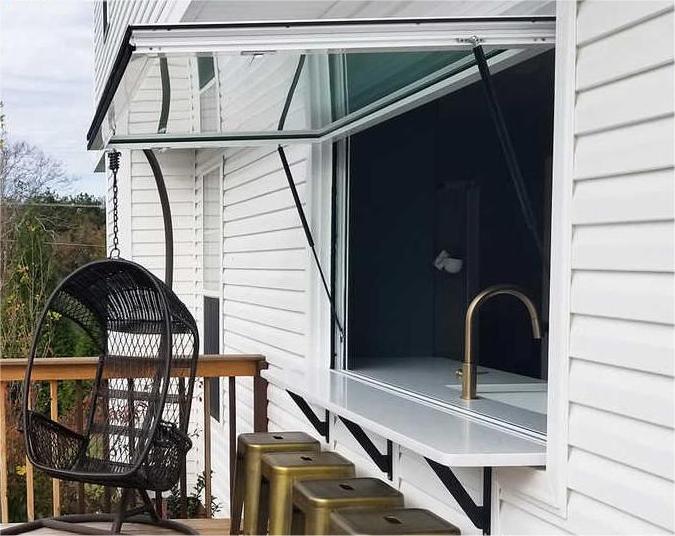
Gas strut awning windows create a clear path. They link your home’s inside to its outside. Their main benefit over a standard awning window is how much they open. A gas strut window opens and locks at a full ninety-degree angle.
Gas strut windows are true pass-through windows. They have no bottom rail or support. This means nothing blocks the path. You can easily serve food and drinks from your kitchen to the outdoors. These windows offer a smooth link from inside to outside.
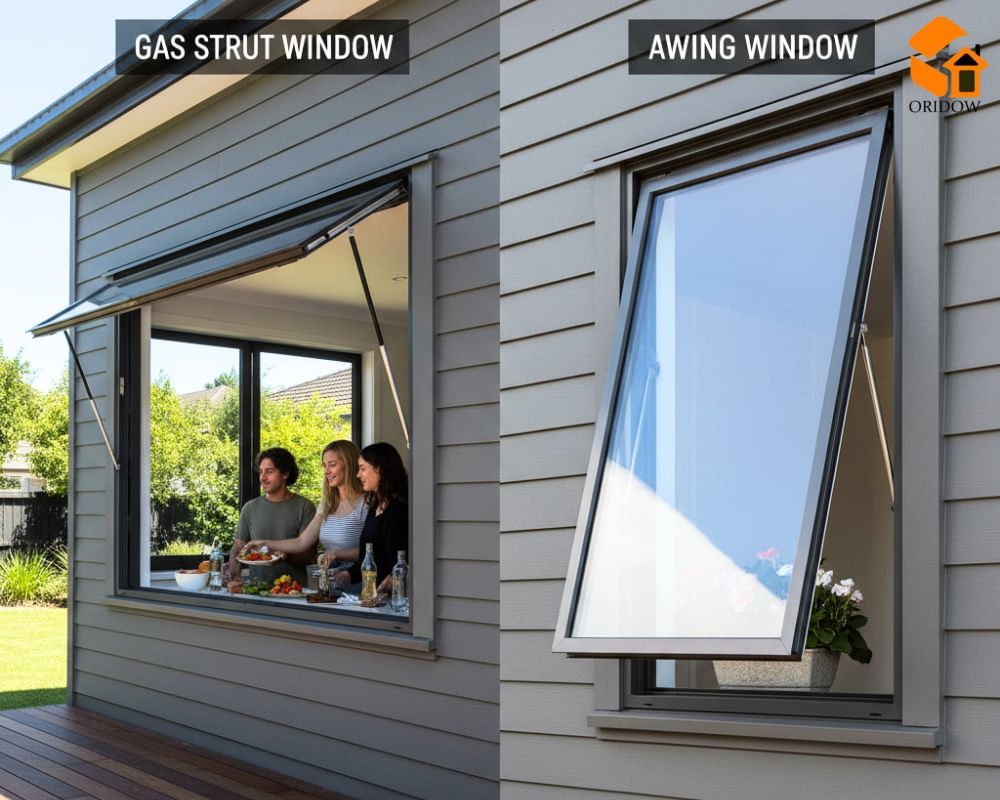
Gas Strut Window vs. Awning Window
| Feature | Gas Strut Window | Standard Awning Window |
|---|---|---|
| How it opens | Large panel hinged at the top; gas struts lift the sash up and hold it horizontally overhead (like a small garage door). | Hinged at the top; sash swings outward from the bottom using a crank or push-out hardware. |
| Typical use | “Pass-through” openings between kitchen and patio/bar, outdoor entertainment counters, serving hatch for cafés/food service. | General residential windows: bathrooms, above kitchen sinks, bedrooms, or high on walls; often paired with fixed/picture windows. |
| Common sizes (examples) | Often wide openings such as 36″×36″, 54″×48″, 60″×42–60″, 72″×36–48″. | Many standard sizes from ~24″×24″, 36″×24″, 48″×24″, 48″×36″, 60″×36″ and larger; wide range of catalog “standard” sizes. |
| Price – window unit | Roughly $300–$2,100+ per unit, depending on size, frame material, and glazing; large aluminum units with thermal break and Low-E glass are often $3,000–$5,000+ for big custom sizes. | Typical $200–$600 for standard sizes (vinyl lowest, fiberglass/wood higher). Some premium/custom units reach $800–$1,500+. |
| Installed cost (very rough) | Frequently $1,000–$4,000+ installed because of heavier hardware, structural header requirements, and finish work at a countertop/bar opening. (Higher for large commercial or custom systems.) This is a synthesis from product pricing + typical install markups. | Often $400–$1,200 per window installed for typical residential jobs, depending on material, size, and labor rates. |
| Frame materials | Commonly aluminum (often thermally broken) or uPVC/vinyl systems designed as pass-throughs. | Widely available in vinyl, wood, aluminum, fiberglass, and composites. |
| Glass / energy options | Usually insulated double glazing, Low-E coatings, and sometimes laminated or tempered safety glass (because they’re large and near counters). | Same options as other modern windows: double or triple glazing, Low-E, argon fill, laminated glass for sound/security in higher-end units. |
| Weather sealing & rain performance | When closed, good seals similar to other modern windows; when open, the panel acts as a roof but large opening can still let wind-driven rain blow in, so they’re usually used in covered patio situations. (Manufacturers push them more for outdoor bars than as general rain-open windows.) | Designed specifically so you can leave them partly open in light rain – the top-hinged sash forms a small “awning” to deflect water while still ventilating. |
| Ventilation | Opens the entire wall section at once – huge airflow and seamless indoor–outdoor connection, but usually just one big opening rather than many smaller ones. | Very good controlled ventilation; can be placed high on walls for privacy while still bringing in fresh air, and can be combined with other window types. |
| Space requirements | Needs clear space outside to swing up (no low eaves, light fixtures, or walkways where people would hit the panel). When open, the sash sits overhead like a canopy. | Projects outward only a moderate amount; usually not a problem unless right next to a sidewalk or narrow exterior path. Works well under overhangs. |
| User operation | Typically a handle latch plus gas struts that assist with lifting and hold the sash open; some models are motorized. Struts eventually wear and may need replacement. | Usually crank-operated or push-out with friction stays; simple mechanics, easy to operate, and parts are widely available. |
Key Differences in Opening and Hardware
The most important difference is how they open. This affects how you use them and where they fit best.
90-Degree Open or Not
This is the key distinction. Gas strut windows open fully to a ninety-degree angle. Awning windows open only partly, to about forty-five degrees.
- Gas strut windows open ninety degrees.
- Awning windows open less than forty-five degrees.
Hardware System
The hardware makes these windows work. Each type uses a different system. This is why their opening actions differ.
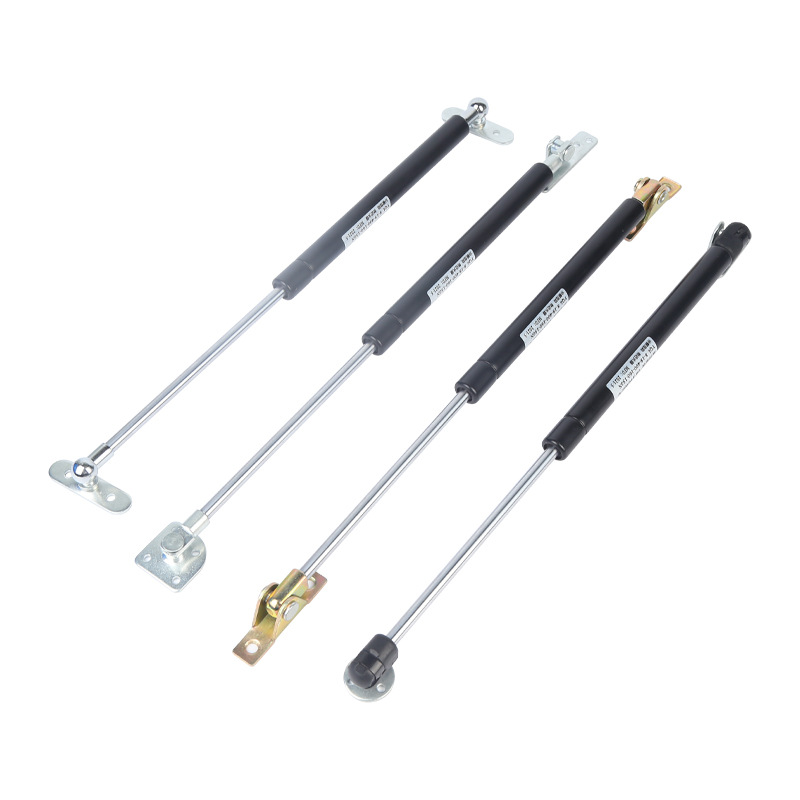
The gas strut window uses a gas spring. This spring holds the window open at ninety degrees. It provides easy lifting and support.
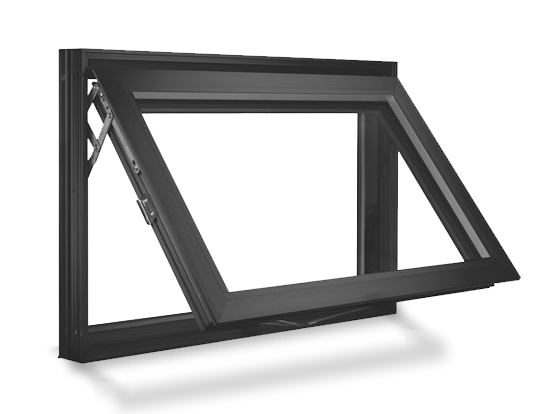
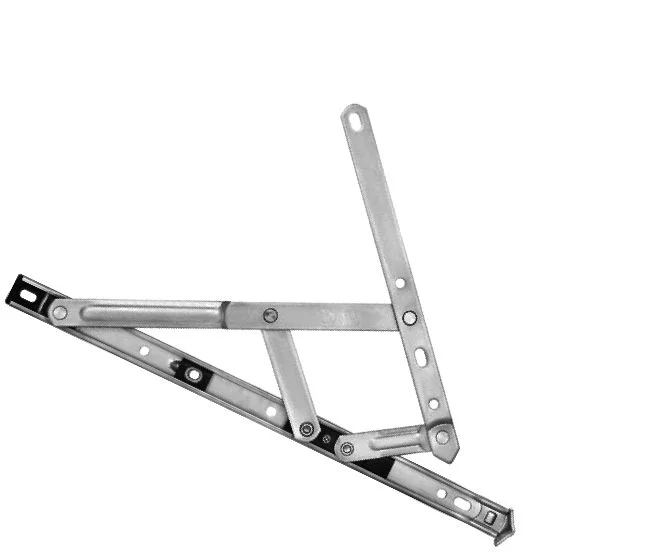
The awning window uses a friction-stay hinge, which opens to 45 degrees and keeps it stable.
The friction stay hinge is often made of stainless steel. You can adjust how much it opens. The standard opening is not over forty-five degrees. The opening angle is usually less than 110 millimeters. This prevents heads from reaching the ground for safety.
- Stainless Steel Friction Stay Hinge
- Gas Strut Gas Spring
Frame Materials: Options and Benefits
Window frames play a big role. They affect insulation, durability, and cost. The choice of material matters.
Gas strut awning windows use specific frames. They are presently available only in non-thermal aluminum profiles. This means they do not have a thermal break. This makes them less insulating than some other options.
Awning windows offer more choices. They come in three different frames:
- uPVC
- Thermal break aluminum
- Non-thermal aluminum
uPVC frames provide excellent insulation. Their multi-chambered design makes them energy-efficient and good for keeping heat or cold out.
Thermal break aluminum frames are also energy-efficient. They have a barrier within the frame. This stops heat from passing through the metal. They are good for those wanting durable and sturdy windows. They offer better insulation than non-thermal aluminum.
Non-thermal aluminum frames are the most economical choice. They suit those on a tight budget. They offer strength. However, their insulation properties are lower.
You can choose the best frame. It depends on your needs and budget.
Size Limits: Matching Windows to Spaces
Window size is an important factor. It impacts natural light and views. It also affects the window’s overall performance.
Gas strut awning windows are effortless and ideal for larger openings. They have a maximum height of 1800 millimeters and a maximum width of 2410 millimeters, making them perfect for spaces needing much natural light and creating wide openings.
Awning windows are smaller, so they suit compact spaces better. They are hinged at the top and open outwards, which makes them excellent for ventilation. They work well even during rainy weather, as their design keeps rain out while open.
For gas strut windows, sizes have limits. These limits ensure long service life. The maximum height for a gas strut window with double-glazed glass is 1500 millimeters. For a single glass, it is 1800 millimeters. The maximum width for a gas strut window with double-glazed glass is 1810 millimeters. For a single glass, it is 2410 millimeters. Oridow controls each panel’s weight. It is kept at 90 kilograms.
How to Close a Gas-Strut Awning Window from the Inside?
Closing a gas strut window is unique. Since it opens ninety degrees, your hand cannot reach the pull handle. This happens when it is fully open.
For this reason, a pull hook is included. You use this hook to snap the handle, and then you can close the window. The hook is customized to match the window’s size and weight, ensuring easy and safe operation.
Benefits of Gas Strut Windows: Why Choose Them?
Gas strut windows offer many distinct advantages. These benefits make them a great choice for certain home designs.
Seamless Indoor-Outdoor Connection
Their main benefit is the wide opening. They create a true pass-through, ideal for kitchens and entertainment areas. You can serve guests directly outside, removing barriers between spaces and making gatherings more fluid.
Enhanced Ventilation
The ninety-degree opening allows maximum airflow, far more than traditional awning windows. It quickly airs out rooms, helping reduce stuffiness and bringing in fresh air.
Unobstructed Views
With no bottom rail, the view is completely clear. This is perfect for scenic locations. It brings the outdoors inside without obstruction, allowing you to enjoy panoramic views from your home.
Modern Aesthetic
Gas strut windows have a sleek look and add a contemporary touch to any home. Their large glass panels provide a sense of openness and make spaces feel larger and brighter.
Commercial Applications
These windows are not just for homes. They work well in commercial settings. They are perfect for cafes, bars, or restaurants. They can serve as servery windows, connecting the kitchen to outdoor seating areas, enhancing customer experience.
Benefits of Awning Windows: When Are They a Better Fit?
Awning windows also have their strengths. They are often a better choice for different needs.
Ventilation in Any Weather
Awning windows open outwards from the bottom, allowing ventilation even during rain. The open sash acts as a small awning, keeping rain out. This is ideal for bathrooms or laundries.
Security
Because they open only partially, awning windows offer good security. The limited opening makes it hard for intruders. You can leave them open for air. You still maintain a level of security.
Versatility in Placement
Their compact size makes them versatile. They fit well in smaller spaces and are often placed high on walls, allowing for privacy while still providing light and air. They also work well above fixed windows.
Energy Efficiency
Awning windows can be very energy-efficient, especially those with uPVC or thermal-break aluminum frames. Their tight seal, when closed, minimizes air leaks, helping maintain indoor temperatures.
Cost-Effective
Non-thermal aluminum awning windows are often more affordable, making them a good option for those on a budget. They still provide good light and ventilation.
Installation and Maintenance Considerations
Both window types need proper installation. This ensures they work well. It also maximizes their lifespan.
Professional Installation
Always choose a professional installer. Incorrect installation can lead to problems. These include drafts, water leaks, and poor operation. Oridow ensures expert installation. This maximizes window benefits.
Cleaning
For gas strut windows, keep the gas springs clean. Wipe them down regularly. Clean the glass and frames often. This maintains their look.
For awning windows, clean the friction stay hinges. Ensure they move smoothly. Clean frames and glass as well.
Hardware Checks
Check all hardware regularly. Look for any signs of wear. Lubricate moving parts as needed. This prevents stiffness or damage.
Oridow’s Expertise in Windows
Oridow is a certified exporter. We are based in Fuzhou, China. We offer high-quality aluminum windows and doors. Our products meet EN standards. We provide a 10-year warranty.
We have a wide range of products. This includes:
- Aluminum doors
- uPVC doors
- uPVC windows
- Aluminum windows
- Impact Windows
- Awning Windows
- Jalousie Windows
- Pivot Doors
- Swing Sliding Door
We also offer uPVC windows and doors. These are good options. They serve as a replacement for wooden products.
Oridow focuses on quality. Our products use the best aluminum. We are a reliable partner for your window needs.
Contact us for more information. Email: sales@oridow.com Tel: 86 131 7030 0715
Read More,
Bi-Folding Doors: Stunning, Light-Filled Spaces
uPVC Windows and Doors Cleaning
Oridow Door and Window Installation: What to Expect
Boost Home Value: Windows & Doors Insights
FAQs
What is the main difference between gas struts and awning windows?
Gas strut windows open fully to ninety degrees. Awning windows open only about forty-five degrees. This is the biggest difference.
Can gas strut windows be used in any room?
They are best for kitchens and entertainment areas. They create a pass-through. This connects indoor and outdoor spaces.
What materials are used for gas strut window frames?
Gas strut windows currently only come with non-thermal aluminum frames.
What are the frame options for awning windows?
Awning windows come in uPVC, thermal break aluminum, and non-thermal aluminum frames.
Are gas strut windows suitable for large openings?
Yes, they are ideal for larger windows. They have a maximum height of up to 1800mm and a width of up to 2410mm.
Can awning windows provide ventilation during rain?
Yes, their design allows them to open outward. This forms a small awning. It keeps rain from entering while open.
How do you close a gas strut window that opens very wide?
A special pull hook is provided. You use it to reach the handle and close the window.
Are gas strut windows energy efficient?
Non-thermal aluminum frames offer less insulation. Thermal break aluminum and uPVC awning windows are more energy-efficient.
What are the security features of these windows?
Awning windows offer good security due to their limited opening. Gas strut windows can have strong locking systems.
What maintenance do these windows need?
Both types need regular cleaning. Check hinges and lubricate them. Inspect sealants for any gaps.


