

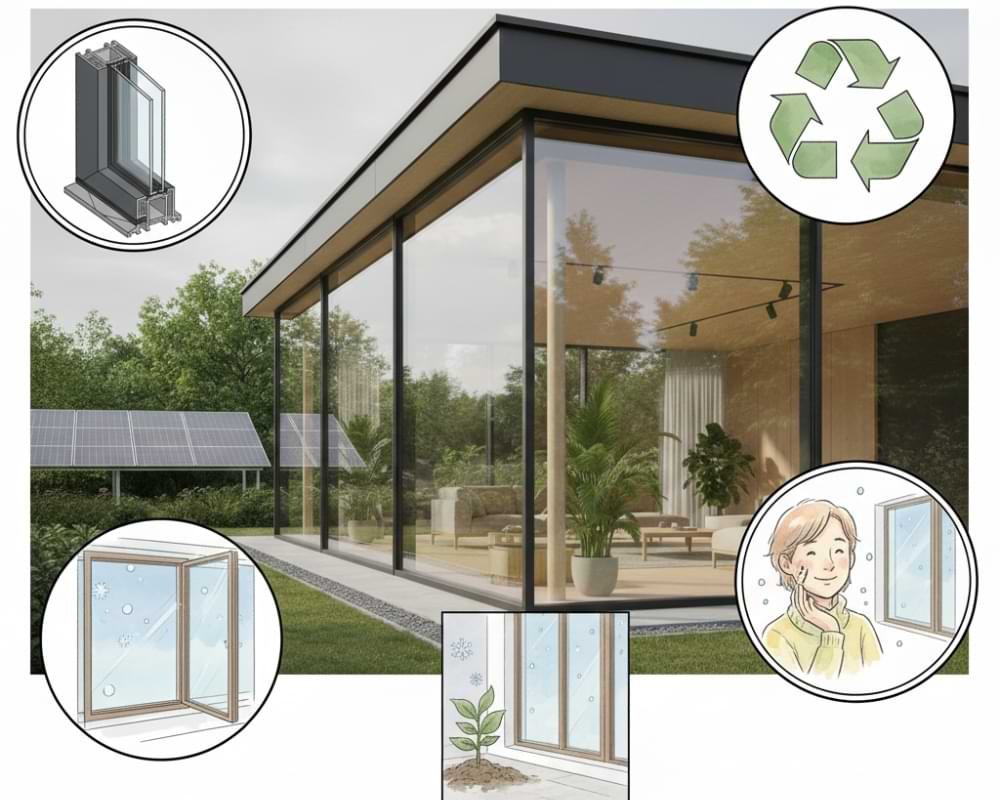
Climate change is shaping the future of how we design and build our homes. As energy costs rise and environmental awareness grows, homeowners and architects are seeking solutions that are both sustainable and visually striking. Aluminum windows offer a perfect balance of performance, durability, and modern design. By improving energy efficiency, reducing long-term waste, and supporting eco-conscious construction, aluminum windows prove that fighting climate change doesn’t mean giving up on style; it means choosing smarter materials for a better future.
Why Use Aluminum for Home Renovation and Construction?
1. Engineered for Strength, Stability, and Modern Living
Aluminum is one of the most reliable materials used in contemporary construction, especially when large openings, slim profiles, and structural stability are required. For home renovations and new builds, this strength matters. Aluminum frames hold heavy glass securely without bending or warping, even over time and under changing weather conditions.
At Oridow, aluminum systems are engineered to support wide spans for bifold doors, sliding doors, and expansive windows—solutions that simply aren’t possible with many other materials. Unlike wood, aluminum isn’t affected by moisture, and unlike steel, it resists corrosion. This makes it particularly suitable for long-term use in varied climates, including coastal or high-humidity environments.
2. Energy Efficiency That Meets Modern Building Standards
While aluminum was once known for poor insulation, modern aluminum systems are fundamentally different. With thermal break technology, insulated glazing, and advanced sealing, aluminum now performs at a level that meets—and often exceeds—today’s energy efficiency expectations.
Oridow aluminum products are designed to minimize heat transfer, helping homes stay warmer in winter and cooler in summer. This reduces reliance on heating and air-conditioning systems, which not only improves comfort but also lowers energy consumption over time. For homeowners renovating with sustainability in mind, aluminum becomes a smart balance between performance and design flexibility.
3. A Durable, Sustainable Investment with Lasting Value
From a lifecycle perspective, aluminum is a practical and responsible building choice. It has an exceptionally long lifespan, meaning fewer replacements and less material waste over time. Aluminum is also 100% recyclable, and recycled aluminum requires significantly less energy to produce than new material.
Oridow’s aluminum systems are finished with high-quality powder coatings that protect against fading, peeling, and wear. This reduces maintenance needs and eliminates frequent repainting or treatments. For renovation and construction projects, this means lower long-term costs, reduced environmental impact, and products that continue to perform and look refined for decades.
The Advantages of Using Aluminum
Although we’ve spoken of the advantages of using aluminum for construction before, the following section will discuss my aluminum is a superior material for all construction.
Aluminum has become one of the most widely used materials in modern construction and manufacturing due to its unique combination of strength, efficiency, and sustainability. From architectural applications to consumer products, aluminum’s properties support both functional performance and environmental responsibility.
1. High Strength-to-Weight Ratio
One of aluminum’s most significant advantages is its exceptional strength-to-weight ratio. Despite being lightweight, aluminum provides strong structural support, making it ideal for applications where durability is essential without adding excessive load. In construction, this allows for larger spans, slimmer profiles, and innovative designs while maintaining safety and stability.
This characteristic also simplifies transportation and installation, reducing labor costs and energy use during construction projects.
2. Resistance to Corrosion and Environmental Stress
Aluminum naturally forms a protective oxide layer when exposed to air, protecting it against corrosion and rust. This makes it highly suitable for use in outdoor environments and regions with high moisture, coastal air, or temperature fluctuations.
Unlike materials that require chemical treatments or frequent maintenance, aluminum retains its performance and structural integrity over long periods, contributing to reliability and lower lifecycle costs.
3. Enhanced Energy Efficiency in Modern Applications
Although aluminum is a conductive material, modern engineering solutions such as thermal break technology have significantly improved its thermal performance. When combined with insulated glazing and advanced sealing systems, aluminum contributes to better indoor temperature control and reduced energy consumption.
This makes aluminum increasingly popular in energy-efficient buildings and environmentally conscious construction projects.
4. Sustainability and Recyclability
Aluminum is a 100% recyclable material that can be reused repeatedly without loss of quality. Recycling aluminum requires substantially less energy than producing primary aluminum, resulting in lower carbon emissions.
Its long service life also means fewer replacements, which reduces resource extraction and material waste. These attributes make aluminum a key material in sustainable design and circular economy models.
5. Design Versatility and Aesthetic Flexibility
Aluminum offers exceptional design flexibility, allowing it to be shaped into complex forms and finished in a wide range of colors and textures. Its slim profiles support modern architectural styles that emphasize natural light and clean lines.
Because aluminum performs well across residential, commercial, and industrial applications, it adapts easily to evolving design trends while maintaining consistent functionality.
Cost-Effectiveness: Beyond the Initial Price Tag
While the initial cost of aluminum might sometimes be perceived as higher than conventional materials like wood, it’s crucial to consider the long-term economic benefits. Aluminum’s exceptional durability and resistance to corrosion mean significantly lower maintenance and replacement costs over its lifespan. Unlike wood, it doesn’t rot, warp, or require regular painting or sealing. This reduced need for ongoing upkeep, combined with its energy-saving insulation properties, translates to substantial lifecycle cost savings, making aluminum a fiscally responsible choice for sustainable building.
Installation Efficiency and Specialized Applications
Aluminum’s lightweight nature simplifies transportation and installation, potentially reducing labor costs and construction timelines. Its ease of fabrication means components can often be prefabricated off-site, leading to faster assembly on-site and less construction waste. Beyond common applications, aluminum is increasingly used in specialized areas like prefabricated modular construction, lightweight bridge structures, and even high-performance building envelopes due to its strength-to-weight ratio and ability to resist extreme weather conditions.
Aesthetic Appeal and Modern Architecture
The inherent sleekness and versatility of aluminum allow for a wide range of aesthetic possibilities. It can be anodized or coated in various colors and finishes, offering designers a broad palette to achieve desired visual effects. From brushed metallic looks to vibrant hues, aluminum seamlessly integrates into contemporary architectural designs, providing clean lines and a sophisticated appearance. This aesthetic flexibility truly allows for “fighting climate change with style,” enabling sustainable buildings to be visually striking and aspirational.
Learn More,
Keep Aluminum Windows Shining: A Maintenance Guide
Cleaning Faux Wood the Right Way
The Environmental Benefits of Aluminum
Choosing the Right Window Option for Your Living Room
Frequently Asked Questions
Is aluminum truly sustainable for construction, considering its energy-intensive production?
While the initial production of aluminum is energy-intensive, its exceptional recyclability offsets this. About 75% of all aluminum ever produced is still in use, and recycling aluminum requires only 5% of the energy needed to produce primary aluminum. This makes it a highly sustainable material over its entire lifecycle, significantly reducing its environmental footprint.
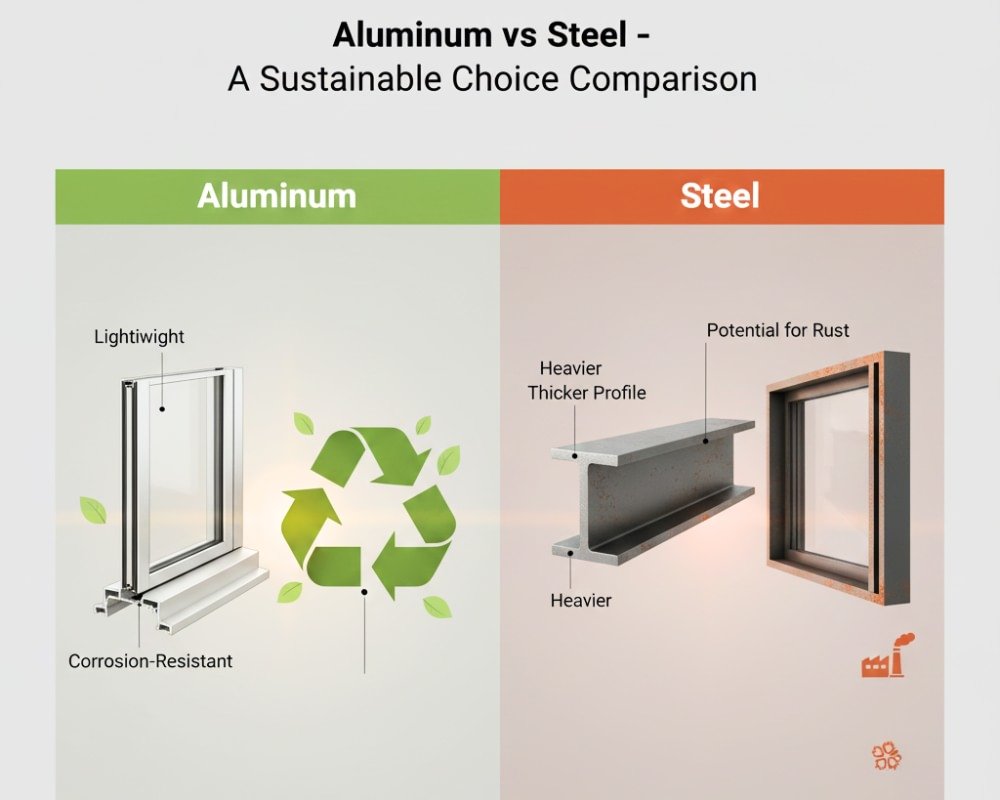
How does aluminum compare to steel in terms of sustainability?
Both aluminum and steel are recyclable. However, aluminum is generally lighter, which can reduce transportation emissions. Its superior corrosion resistance means it often requires less maintenance and lasts longer in certain applications than steel, potentially giving it an edge in long-term sustainability for specific uses.
Can aluminum be used for structural components of a building, or is it primarily for windows and facades?
Absolutely! While popular for windows and facades, aluminum’s high strength-to-weight ratio and malleability make it suitable for a variety of structural components, including roof structures, framing systems, and even lightweight bridges. Its use in the Empire State Building demonstrates its capability for large-scale structural applications.
What kind of maintenance does aluminum require in a building?
Aluminum is remarkably low-maintenance. It doesn’t rust, rot, or warp, so it doesn’t require painting, sealing, or regular anti-corrosion treatments like some other materials. Typically, only occasional cleaning with mild soap and water is needed to maintain its appearance.
Is aluminum a good choice for extreme weather conditions?
Yes, aluminum performs very well in diverse weather conditions. It’s resistant to UV radiation, moisture, and extreme temperatures. Its non-corrosive properties make it ideal for coastal environments where salt exposure can be an issue for other metals.


