

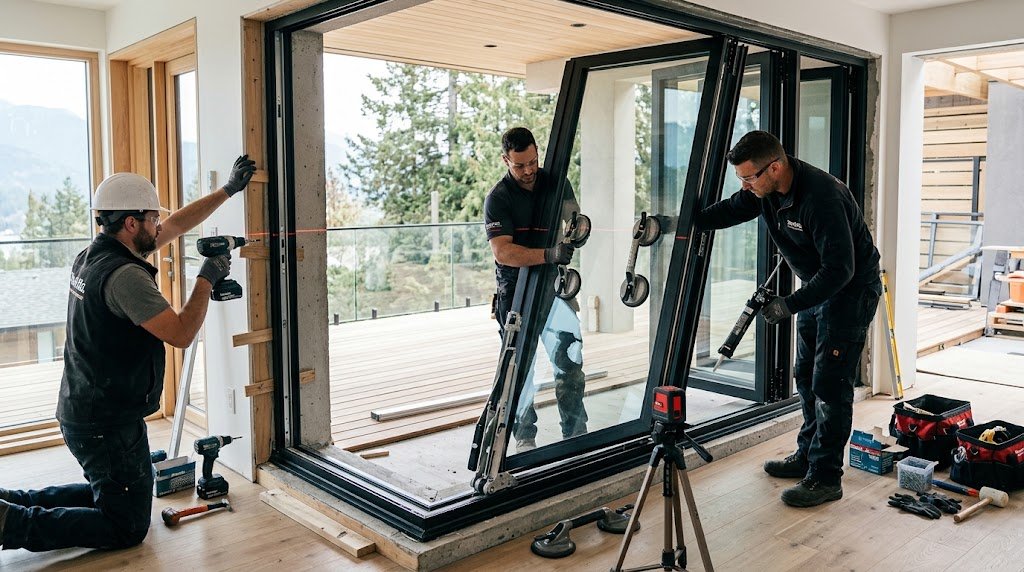
Fold-up windows, also called bi-fold windows, are becoming a favored choice for modern residential and commercial spaces. Their ability to create seamless indoor-outdoor transitions, maximize natural light, and offer flexible ventilation has made them highly desirable among architects, builders, and homeowners alike.
These systems not only elevate design but also enhance functionality by opening entire wall sections with ease. As a result, they have become a defining feature in contemporary projects where space optimization, energy performance, and visual appeal are critical factors.
Key Takeaways:
- Fold-up windows maximize space, ventilation, and aesthetics with aluminum frames, customizable panels, and energy-efficient glazing.
- Proper installation requires precise leveling, sealing, and fastening to ensure durability, smooth operation, and weather resistance.
- Long-term performance depends on regular maintenance, including hinge lubrication, seal replacement, and track cleaning.
Benefits of Installing Fold-Up Windows
Before diving into the installation, it’s important to understand the advantages:
- Space Efficiency – Panels neatly fold to one or both sides.
- Aesthetic Appeal – Creates expansive openings for a sleek, modern look.
- Durability –Aluminum and reinforced frames ensure long-term stability.
- Customization Options – Sizes, glazing, and finishes can be tailored for different projects.
- Energy Performance – Thermal breaks and weather-sealed frames improve efficiency.
Pre-Installation Measurement and Site Checks
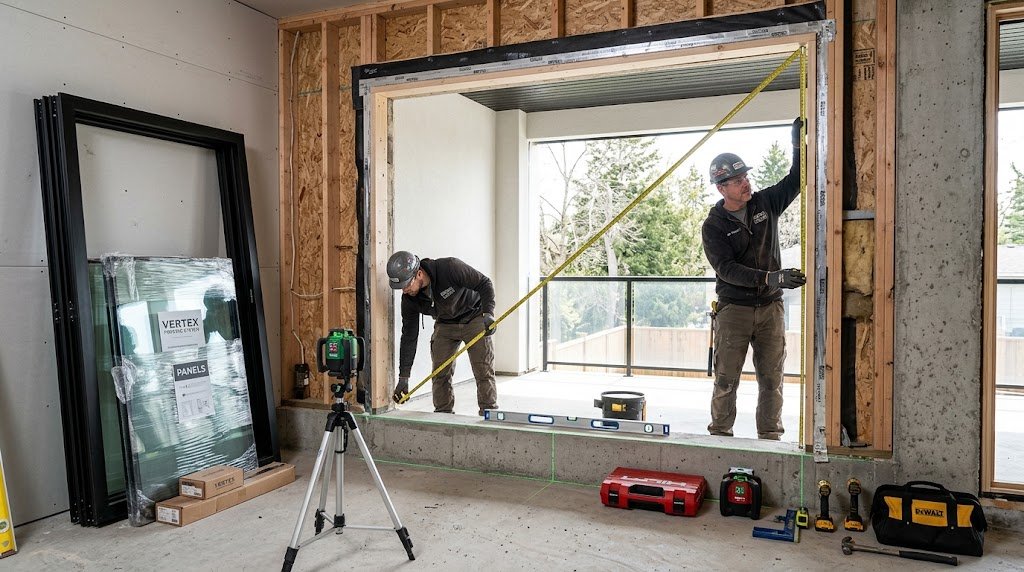
A successful fold-up window installation starts before the frame reaches the opening.
Because these systems use multiple moving panels, small alignment problems can affect how smoothly the entire window operates. Before installation, confirm that the opening is suitable for the ordered system.
Check the Opening
Measure the opening at several points rather than relying on a single width and height.
Confirm:
- Width at the top, middle, and bottom
- Height at the left, center, and right
- Diagonal measurements to check squareness
- Sill level
- Wall plumb
- Finished floor or countertop height
- Available clearance for panels to fold or move
- Space for handles, locks, and surrounding finishes
Record the actual measurements and compare them with the manufacturer’s installation drawings before positioning the frame.
Inspect the Structure
Wide fold-up windows can place significant loads on the surrounding structure.
Before installation, check that:
- The head of the opening has adequate structural support
- The sill is firm and level
- Wall surfaces are stable
- Fixing points are suitable for the frame
- There is no visible water damage around the opening
- The specified anchors are compatible with the wall material
Do not use the window frame to compensate for a badly prepared or structurally unsuitable opening.
Confirm the Installation Configuration
Before unpacking all components, verify:
- Number of panels
- Opening direction
- Folding direction
- Handle position
- Track orientation
- Glass specification
- Hardware supplied
- Locking configuration
This helps prevent discovering configuration problems after the frame has already been fixed.
Essential Tools and Materials for Professional Installation
When installing fold-up windows, precision is critical. Having the right tools and materials ensures a secure fit, structural stability, and long-term performance. Below is a recommended checklist for professionals:
- Measuring Equipment – Tape measure, laser level, and square for accurate dimensions.
- Power Tools – Drill with masonry and metal bits, impact driver for heavy-duty anchoring.
- Fastening Materials – Galvanized screws, wall plugs, and anchors for structural support.
- Sealing & Insulation Products – High-quality weatherproof sealant, flashing tape, and expanding insulation foam.
- Alignment Aids – Shims, wedges, and clamps to ensure the frame is plumb and level.
- Safety Equipment – Gloves, safety goggles, and hearing protection for secure handling.
Pro Tip: Always confirm the compatibility of fastening hardware with the wall type (concrete, brick, timber, or steel framing) to avoid premature loosening or structural weaknesses.
Installation Safety Precautions
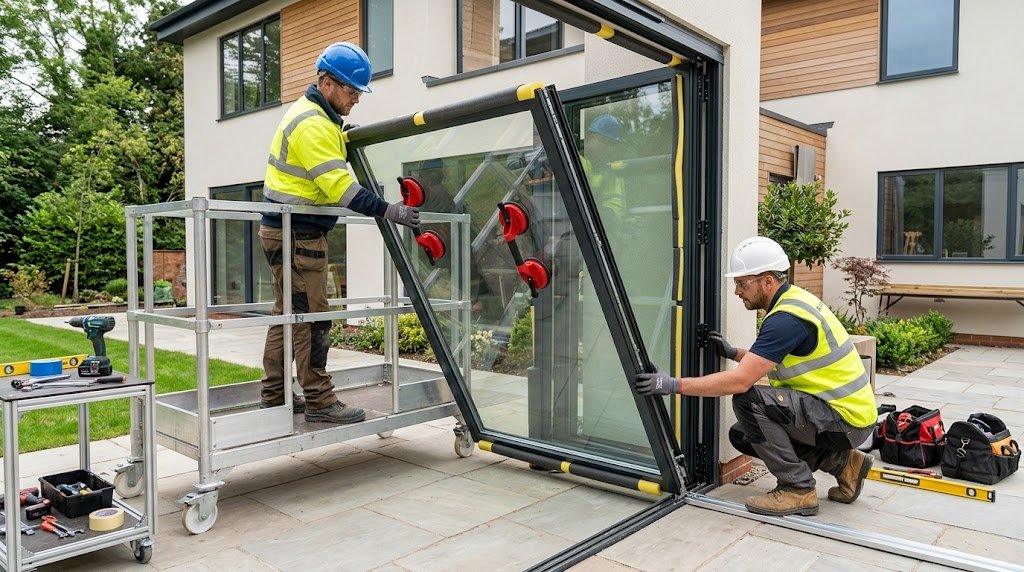
Fold-up windows can include large glazed panels and heavy moving components. Safe handling is essential during installation.
Before Starting
Make sure the work area is clear and that installers have suitable personal protective equipment.
Use:
- Safety gloves
- Eye protection
- Protective footwear
- Stable ladders or work platforms
- Glass-handling equipment where required
- Enough installers to safely handle large panels
Handle Glass Panels Carefully
Never support a large glazed panel only by its hinges or hardware during installation.
Keep panels securely supported until all specified fasteners, hinges, rollers, or support mechanisms are correctly fitted.
Avoid placing glass directly onto hard surfaces without suitable protection.
Keep Hands Clear of Moving Joints
Fold-up systems contain several potential pinch points around:
- Hinges
- Panel joints
- Tracks
- Rollers
- Locks
- Folding edges
Keep fingers clear while panels are being aligned or tested.
Do Not Force Misaligned Panels
If a panel will not move smoothly, stop and identify the cause.
Forcing the window may damage:
- Hinges
- Rollers
- Tracks
- Frame corners
- Locks
- Glass
Correct the alignment first, then test the movement again.
Step-by-Step Installation Process
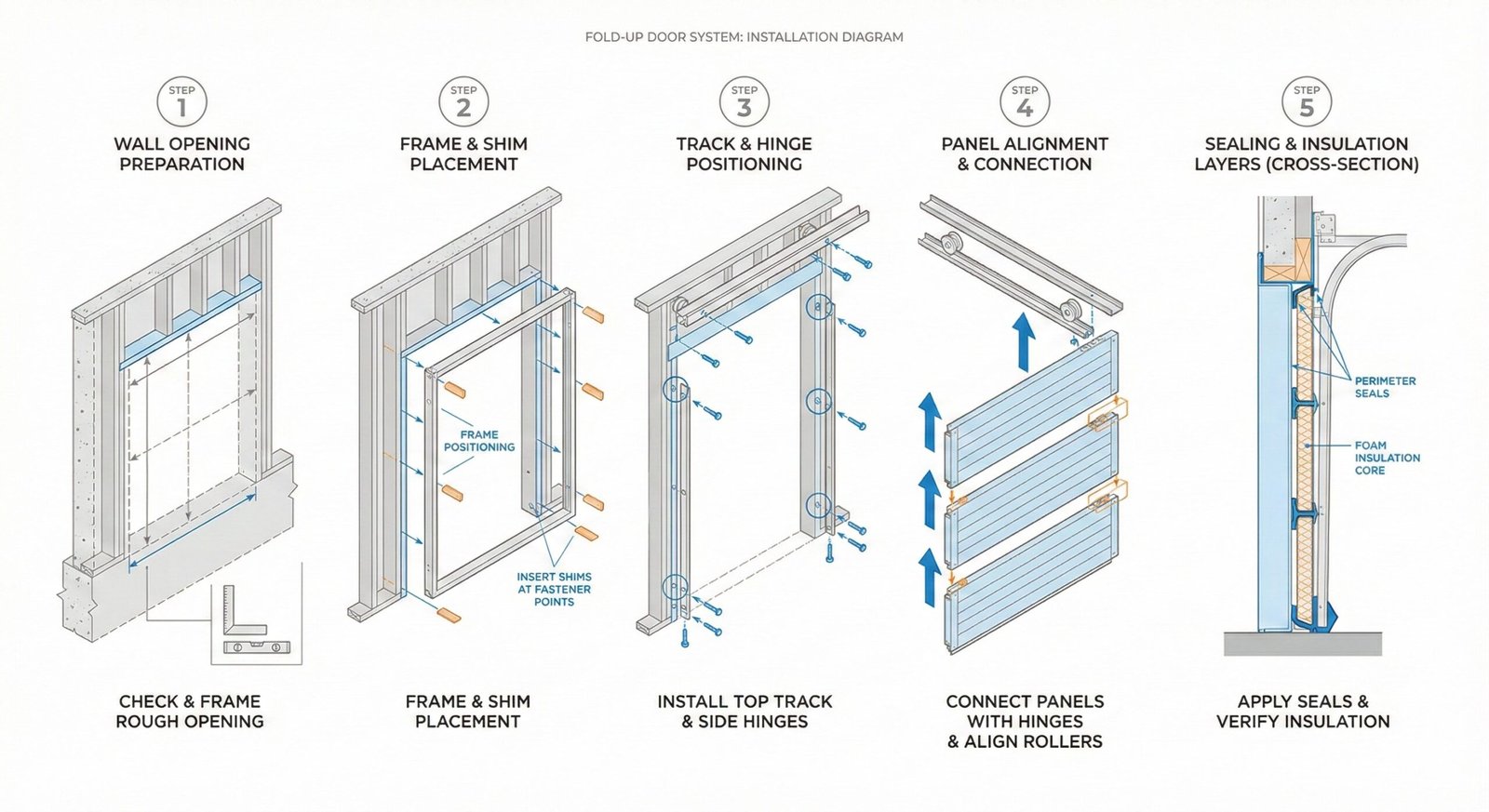
1. Preparing the Opening
- Confirm that the wall opening matches the window’s specifications.
- Check the structural support to ensure it can bear the load.
- Level and square the sill, sides, and head of the opening.
2. Installing the Frame
- Position the frame in the opening with temporary shims.
- Use a level to align the frame vertically and horizontally.
- Secure the frame with screws through the pre-drilled holes.
- Apply sealant around the perimeter to prevent air or water infiltration.
3. Attaching the Tracks & Hinges
- Install the top and bottom tracks as per the manufacturer’s specifications.
- Align hinges carefully to support smooth folding action.
- Test for uniform spacing across the panels.
4. Installing the Fold-Up Panels
- Mount each panel onto the hinges starting from one side.
- Secure fasteners and check alignment after each panel.
- Adjust rollers (if applicable) for smooth gliding.
5. Sealing & Insulation
- Apply weatherproof sealant along exterior edges.
- Use insulation foam between frame and wall gaps.
- Install flashing where necessary to divert water away from openings.
6. Final Adjustments & Testing
- Open and close the windows multiple times to test movement.
- Check lock mechanisms for secure operation.
- Clean frames and glass to ensure a flawless finish.
Common Mistakes to Avoid
- Improper Leveling – Can cause panels to jam or not close properly.
- Skipping Sealant Application – Increases risk of leaks and drafts.
- Using Incorrect Hardware – Weak screws can compromise stability.
- Neglecting Structural Support – Especially in wide openings.
Comparison: Fold-Up Windows vs. Sliding & Casement Windows
| Feature | Fold-Up Windows | Sliding Windows | Casement Windows |
| Opening Width | Full, unobstructed | Limited to half | Limited by hinge |
| Aesthetic Appeal | Modern, expansive | Moderate | Classic |
| Ventilation | Flexible, wide | Partial | Controlled |
| Installation Complexity | High | Moderate | Low |
| Space Requirement | Requires folding clearance | Minimal | Swing clearance |
For cost-conscious buyers, it’s useful to understand the pricing for fold-up windows before choosing between systems.
Long-Term Care and Performance Optimization
Fold-up windows are engineered for durability, but their performance relies on proper upkeep. Following a structured maintenance routine for fold-up windows helps extend product lifespan, preserve smooth operation, and maintain optimal energy efficiency over time.
To maximize performance, professionals and property owners should follow these guidelines:
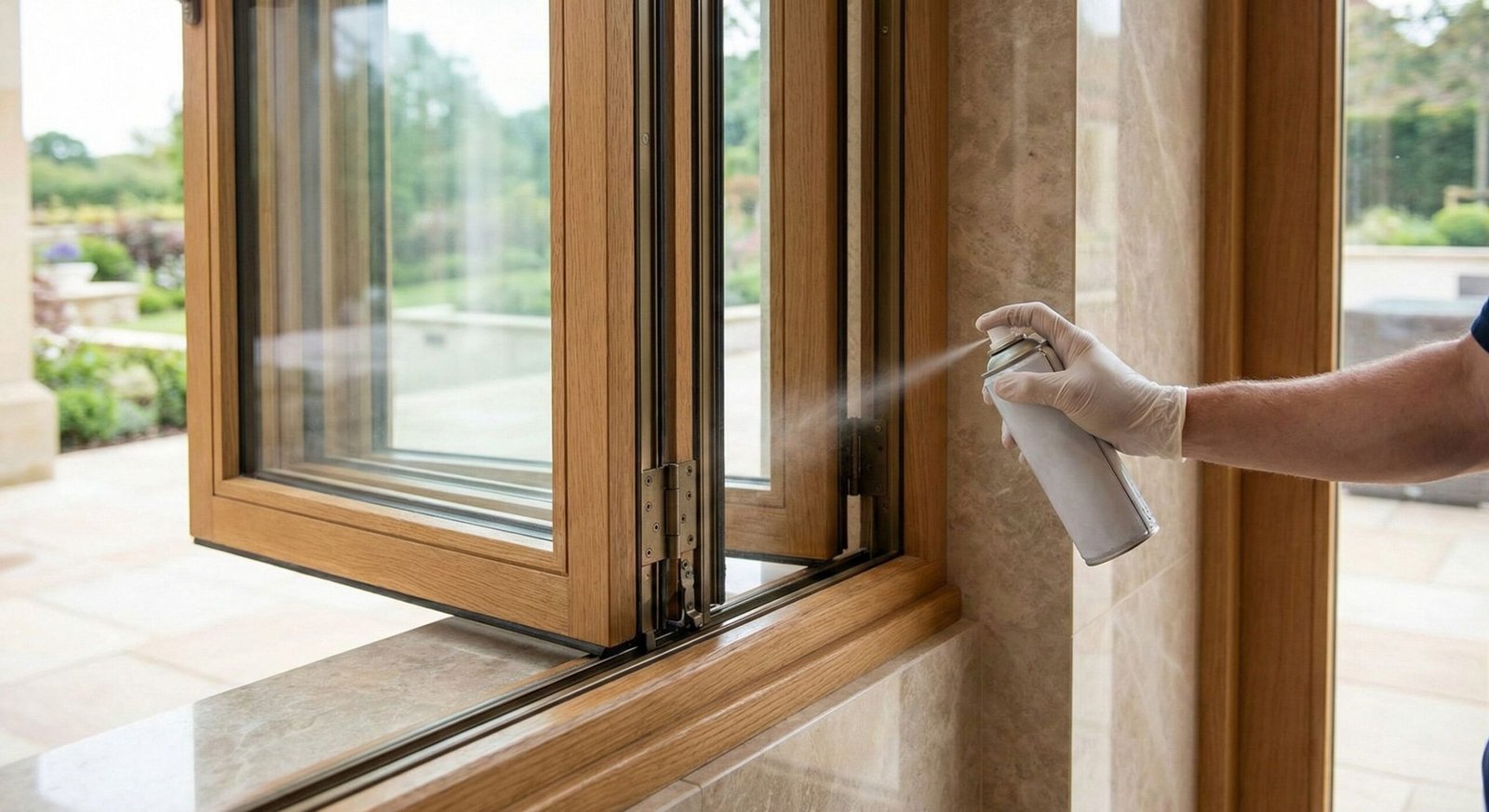
- Lubricate hinges and rollers every 6–12 months.
- Clean tracks regularly to prevent dirt and debris buildup.
- Replace worn-out seals or gaskets promptly to avoid air and water infiltration.
Strategic Considerations for Procurement and Specification
For wholesalers, architects, and builders, selecting the right fold-up window system extends beyond design aesthetics. Decision-making should weigh multiple technical and logistical factors:
- Certification and Compliance – Verify that products meet international building standards (thermal performance, wind resistance, impact resistance where required).
- Customization Capabilities – Explore options for frame colors, glazing thickness, thermal breaks, and locking systems to meet specific project demands.
- Bulk Supply and Logistics – Ensure reliable lead times, consistent quality in large orders, and cost-effective shipping solutions.
- After-Sales Support – Access to technical assistance, replacement parts, and professional installation guidance adds long-term value.
- Warranty and Service Agreements – Prioritize manufacturers offering transparent coverage on both materials and workmanship.
A variety of products can be tailored to meet these needs, from commercial applications to residential renovations.
Why Oridow Is the Right Supplier for Fold-Up Windows
Oridow specializes in manufacturing high-performance aluminum fold-up window systems for residential and commercial projects worldwide. Engineered in-house, their systems are designed to optimize structural stability, smooth panel operation, and long-term durability while offering flexible configurations within a complete architectural glazing portfolio.
- Factory-direct manufacturing with customizable sizes and panel configurations
- Reinforced aluminum frames with precision-engineered track and hinge systems
- Heavy-duty hardware and multi-point locking for enhanced security
- Thermal break technology and insulated glazing compatibility for improved energy efficiency
- Weather-sealed designs with durable powder-coated finishes for diverse climates
- Scalable production capacity supporting bulk procurement and global supply
- Dedicated pre-sale consultation and post-sale technical support with structured documentation
Unlike generic suppliers, Oridow develops fold-up windows to meet modern architectural standards and international compliance requirements, ensuring consistent quality, performance, reliability, and scalable supply for professional projects. Project teams may engage with Oridow’s support team to better understand customization possibilities, technical requirements, and supply capacity.
The Long-Term Value of Fold-Up Windows in Modern Architecture
Fold-up windows are a smart investment for projects requiring versatility, design appeal, and functional efficiency. When installed correctly and maintained with care, they deliver long-lasting performance and elevate architectural value across residential and commercial applications.
For professionals, choosing a supplier that balances certified quality, customization, and large-scale supply capability ensures the best results for both small-scale projects and major developments.
FAQs
1. Are fold-up windows energy efficient?
Yes, modern fold-up windows are designed with thermal breaks, weather-sealed frames, and insulated glazing that help improve energy performance. When installed correctly, they minimize heat loss in winter and reduce heat gain in summer.
- Use double or triple glazing for maximum efficiency.
- Ensure proper sealing around the frame to prevent drafts.
- Opt for low-E coated glass to reflect heat.
2. What kind of maintenance do fold-up windows require?
Maintenance is relatively simple, focusing on keeping moving parts smooth and the frame sealed. Regular upkeep ensures longevity and prevents operational issues.
- Lubricate hinges and rollers every 6–12 months.
- Clean tracks to prevent dirt buildup.
- Replace worn-out seals or gaskets promptly.
3. Can fold-up windows be customized for different projects?
Yes, fold-up windows are highly customizable, which makes them a popular choice for both residential and commercial projects. Customization includes dimensions, finishes, glazing options, and hardware.
- Frame finishes: Powder-coated, anodized, or wood-grain look.
- Glazing options: Single, double, or laminated glass.
- Panel configuration: Bi-folds opening inwards or outwards.
4. How do fold-up windows compare to sliding windows?
Fold-up windows provide a full, unobstructed opening, whereas sliding windows usually only open halfway. This makes them better for spaces requiring maximum airflow and seamless transitions.
- Fold-Up: Expansive opening, modern design.
- Sliding: Limited to 50% opening, easier installation.
- Casement (comparison): Classic look, but requires swing clearance.
5. Are fold-up windows suitable for commercial spaces?
Yes, they are widely used in restaurants, cafés, offices, and showrooms due to their ability to create open, inviting spaces. They also provide practical solutions for high-traffic areas.
- Ideal for serving counters and shopfronts.
- Adds versatility for seasonal indoor-outdoor setups.
- Enhances aesthetic appeal in modern architecture.
6. What are common mistakes to avoid during installation?
Improper installation can lead to poor performance, leaks, or jamming. Professionals should pay close attention to leveling, sealing, and hardware compatibility.
- Failing to level the frame properly.
- Using incorrect fasteners for wall type.
- Skipping sealant and flashing, leading to water ingress.
7. How do I choose the right supplier for fold-up windows?
Choosing the right supplier is critical for quality and compliance. Look for a manufacturer with certifications, customization options, and a proven track record in large-scale supply.
- Check certifications for international standards.
- Ensure bulk procurement support for wholesalers.
- Verify warranty and after-sales service availability.


