


Choosing the right window system plays a major role in how a home or commercial space functions day to day. Beyond appearance, windows influence ventilation, energy efficiency, natural light, and even how comfortably a space can be used throughout the year. Among the most popular modern options are folding windows and awning windows, each offering distinct advantages depending on climate, layout, and lifestyle.
Both window types are widely used across Australia, the UK, and the USA due to their reliability and adaptability. However, they serve very different purposes. Understanding how each performs in real-world conditions helps ensure the right choice is made from the start.
Folding Windows vs Awning Windows: Simple Definitions
Folding windows are multi-panel window systems that fold and stack to create wide openings and seamless indoor-outdoor connections.
Awning windows are top-hinged windows that open outward, allowing ventilation while shielding the interior from rain.
This simple distinction explains why folding windows are often chosen for openness, while awning windows are preferred for daily comfort and weather protection.
Folding Windows vs Awning Windows: At-a-Glance Comparison
| Feature | Folding Windows | Awning Windows |
| Opening Style | Panels fold and stack | Hinged at the top |
| Airflow | Maximum ventilation | Controlled airflow |
| Weather Resistance | Moderate when open | Excellent |
| Energy Efficiency | Good | Very high |
| Best Use | Living areas, kitchens | Bedrooms, bathrooms |
| Maintenance | Moderate | Low |
| Visual Impact | Bold and modern | Clean and subtle |
How Folding Windows Work
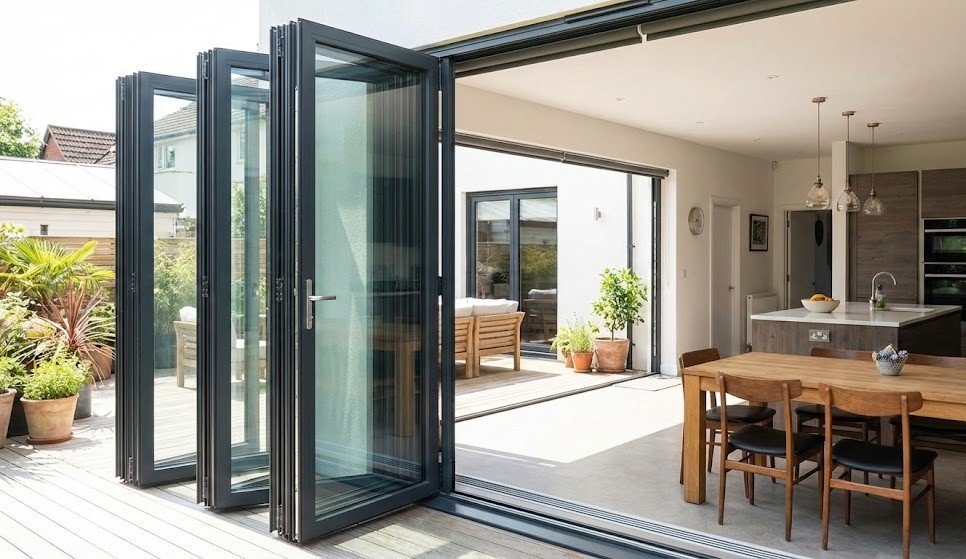
Folding windows consist of multiple connected panels that slide along a track and fold neatly to one or both sides. When fully opened, they remove visual barriers and allow uninterrupted access between indoor and outdoor spaces.
They are commonly installed in:
- Open-plan kitchens
- Dining and living areas
- Entertainment zones
- Cafés and hospitality venues
Modern folding window systems are engineered with aluminum frames for strength, corrosion resistance, and long-term durability. High-quality systems incorporate concealed rollers, precision tracks, and multi-point locking mechanisms to ensure smooth operation even with large glass panels.
Contemporary examples of this design approach can be seen in advanced folding systems, which emphasize structural stability while maintaining a clean, modern appearance.
How Awning Windows Work
Awning windows are hinged at the top and open outward from the bottom. This creates a protective canopy effect that allows fresh air to flow in while keeping rain and debris out.
Because of this design, awning windows are widely used in:
- Bathrooms
- Bedrooms
- Stairwells
- High-rise buildings
- Coastal or wet climates
They are particularly valued for their reliability and ease of use. Their sealing mechanism compresses tightly when closed, improving insulation and reducing air leakage. Many modern awning windows also feature chain winders or automated openers for convenience.
Examples of practical and durable designs can be found in Oridow’s awning window range.
Performance Comparison: Folding vs Awning Windows
Ventilation and Airflow
| Feature | Folding Windows | Awning Windows |
| Airflow Volume | Very high | Moderate |
| Cross Ventilation | Excellent | Good |
| Use During Rain | Limited | Excellent |
| Best Use | Open entertaining areas | Everyday ventilation |
Folding windows provide exceptional airflow when fully open, making them ideal for social spaces. Awning windows offer controlled airflow that works well year-round, even during wet weather.
Weather Resistance and Durability
Awning windows excel in harsh weather conditions. Their outward-opening design prevents rain from entering, while compression seals reduce drafts and moisture penetration.
Folding windows perform well when closed but are more exposed when open. For this reason, they are often paired with covered outdoor areas or installed in climates with less rainfall.
When properly manufactured and installed, both systems can withstand wind loads and temperature fluctuations common in Australia, the UK, and the USA.
Energy Efficiency and Insulation
| Performance Area | Folding Windows | Awning Windows |
| Airtightness | Moderate | High |
| Thermal Performance | Good | Excellent |
| Heat Retention | Moderate | Strong |
| Energy Savings | Medium | High |
Awning windows generally achieve better energy ratings because their design allows for tighter sealing. Folding windows can still perform efficiently when fitted with double glazing and thermally broken aluminum frames.
Advantages of Folding Windows
Folding windows are often selected for their architectural impact and lifestyle benefits.
Key advantages include:
- Wide, unobstructed openings
- Seamless indoor-outdoor connection
- Increased natural light
- Enhanced visual appeal
- Ideal for entertaining spaces
They are particularly popular in modern homes, productive kitchens, luxury renovations, and hospitality environments where openness and flow are essential.
Limitations of Folding Windows
Despite their appeal, folding windows require thoughtful planning.
Common considerations include:
- Higher upfront cost
- More complex installation
- Periodic track maintenance
- Reduced usability during heavy rain
With proper installation and quality materials, these limitations can be minimized, but they should still factor into the decision-making process.
Advantages of Awning Windows
Awning windows are valued for their practicality and efficiency.
Their benefits include:
- Excellent weather protection
- Strong energy efficiency
- Easy operation
- Minimal maintenance
- Enhanced security when partially open
Because of these qualities, awning windows are frequently used in bedrooms, bathrooms, and multi-storey buildings where safety and comfort are priorities.
Limitations of Awning Windows
Awning windows are not designed for wide openings or dramatic visual impact.
Limitations include:
- Smaller opening size
- Limited use for serving or pass-through areas
- Less architectural emphasis
However, their reliability and efficiency often outweigh these drawbacks.
Maintenance and Longevity
Maintenance requirements differ between the two window types.
Folding windows require:
- Periodic cleaning of tracks
- Lubrication of rollers
- Inspection of seals
Awning windows typically require:
- Occasional hinge inspection
- Cleaning of glass and frames
- Minimal mechanical upkeep
With proper care, both systems can last decades, especially when constructed from high-grade aluminum.
Design Trends Influencing Window Choice
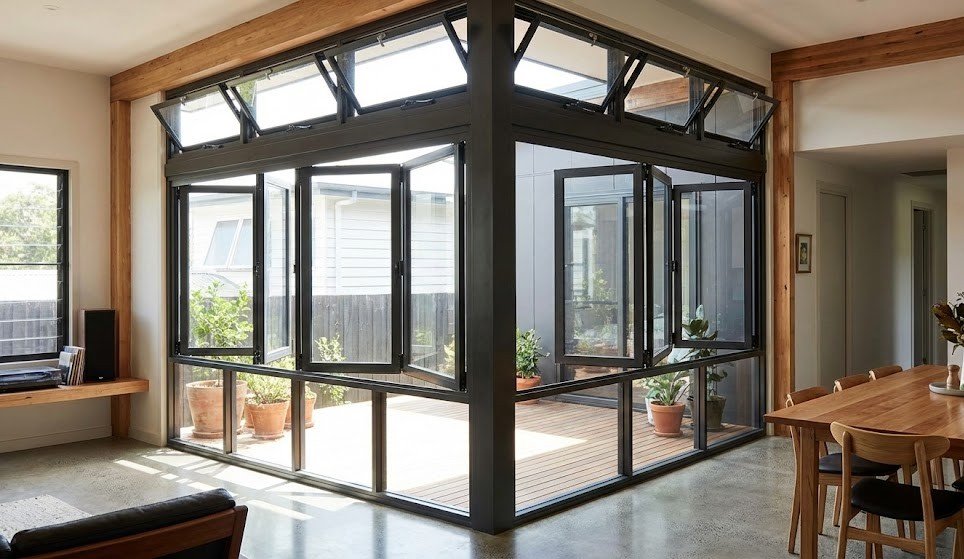
Across Australia, the UK, and the US, modern architecture increasingly emphasizes:
- Indoor-outdoor living
- Energy efficiency
- Minimalist framing
- Sustainable materials
Folding windows support lifestyle-driven design, while awning windows align with performance-focused construction. Many homes combine both to achieve balance between openness and practicality.
Why Oridiw Is the Right Supplier for Folding and Awning Windows
The performance of any window system depends on the quality of its engineering and manufacturing. Oridow designs aluminum windows with a strong focus on long-term performance and reliability.
Key strengths include:
- Structural strength that supports large glass panels without compromising stability
- Weather-resistant construction designed to perform in varied climates
- Smooth and precise operation using high-quality hardware and components
- Long-term durability backed by robust aluminum profiles
Oridow’s folding windows are designed to support wide openings without losing strength or stability. This makes them a strong choice for open-plan homes and entertaining areas where space and flow matter most.
Their awning windows are built for everyday comfort. They offer reliable ventilation, strong sealing, and consistent performance in all weather conditions.
You can explore their all available options in the product range. For tailored advice or project guidance, support is available through their contact team.
Choosing the Right Window for Your Space
The best choice depends on how the space is used and how you select the perfect window for your personal space.
Consider the following:
- Is airflow or openness more important?
- Will the window be used daily or occasionally?
- Is the area exposed to rain or wind?
- Does the design prioritize function or visual impact?
Frequently Asked Questions
1. Are folding windows waterproof?
They are weather-resistant when closed ,but should not be left open during heavy rain.
2. Are awning windows suitable for kitchens?
Yes. They are commonly installed above sinks and countertops for ventilation without water intrusion.
3. Which window type is more energy efficient?
- Awning windows typically provide better thermal performance
- Their compression seals reduce air leakage
- Help maintain indoor temperature more effectively
- Contribute to lower heating and cooling costs
4. Do folding windows add property value?
- Yes, they are considered a premium architectural feature
- Enhance natural light and indoor–outdoor flow
- Increase overall visual appeal and functionality
- Often improves resale value, especially in modern homes


