
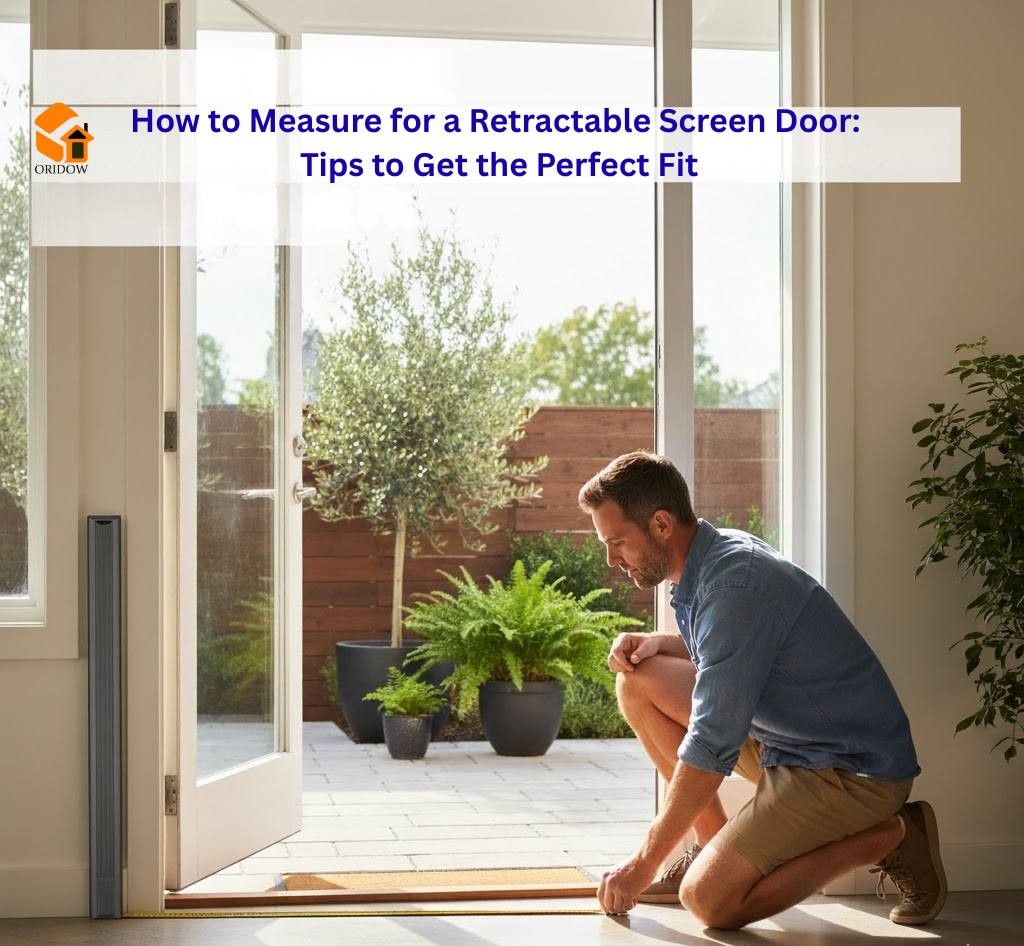
Measuring for a retractable screen door is simple, but small mistakes can lead to poor alignment, gaps, or a screen that does not retract smoothly. The key is to measure the inside opening of the door frame at multiple points and use the smallest accurate dimensions, unless your manufacturer gives different instructions.
For the best fit, measure the width at the top, middle, and bottom, then measure the height on both sides. You should also check whether the frame is square, confirm the available mounting depth, and note any handles, trim, thresholds, or other obstructions.
This guide explains exactly how to measure for a retractable screen door step by step, what measurements to send your manufacturer, and the common mistakes to avoid before ordering a custom screen.
What Is a Retractable Screen Door, and Why Does Accurate Measurement Matter?
A retractable screen door rolls or slides into a slim housing when not in use, disappearing. Unlike fixed screens, these doors are designed for flexibility and style, but they rely on perfect alignment.
If your measurements are off by even half an inch, you might face:
- Gaps that let insects in
- Screens that don’t retract smoothly
- Misalignment that wears out the track or mesh prematurely
Accurate measurement = long-lasting performance.
How Do You Measure a Retractable Screen Door Opening?
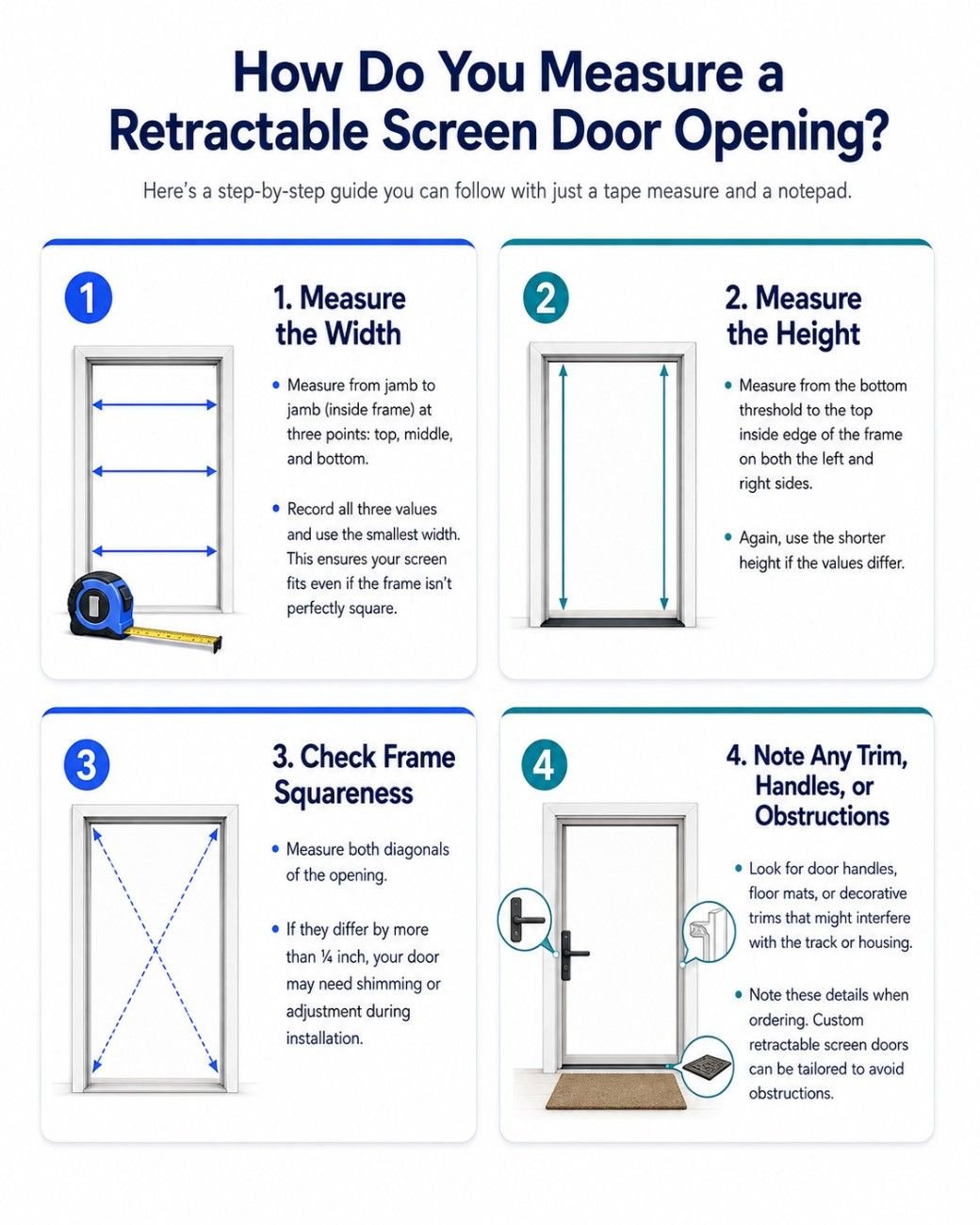
Here’s a step-by-step guide you can follow with just a tape measure and a notepad.
1. Measure the Width
- Measure from jamb to jamb (inside frame) at three points: top, middle, and bottom.
- Record all three values and use the smallest width. This ensures your screen fits even if the frame isn’t perfectly square.
2. Measure the Height
- Measure from the bottom threshold to the top inside edge of the frame on both the left and right sides.
- Again, use the shorter height if the values differ.
3. Check Frame Squareness
- Measure both diagonals of the opening.
- If they differ by more than ¼ inch, your door may need shimming or adjustment during installation.
4. Note Any Trim, Handles, or Obstructions
- Look for door handles, floor mats, or decorative trims that might interfere with the track or housing.
- Note these details when ordering. Custom retractable screen doors like those from Oridow can be tailored to avoid obstructions.
Where Is the Screen Mounted?
Before taking final measurements, confirm where the retractable screen door will actually be installed. The mounting position affects the width, height, depth, and clearances you need to record.
Retractable screen doors are commonly installed in one of these ways:
- Inside or recess mount: The screen cassette and tracks sit within the door opening or frame.
- Face or surface mount: The system is fixed to the face of the frame, trim, or surrounding wall surface.
- Frame-mounted system: The screen attaches directly to the existing door or window frame.
The correct option depends on your door design, available space, trim, handles, and the screen system being used.
What Should You Check?
Before measuring, look closely at the installation area and confirm:
- Is there enough flat surface for the cassette?
- Can the top and bottom tracks sit straight and level?
- Will the screen interfere with handles, locks, or hinges?
- Is there decorative trim around the opening?
- Is the door inward-opening or outward-opening?
- Is the mounting surface solid enough to support the system?
If you are unsure about the mounting position, take clear photos of the full opening and close-up photos of the frame. A manufacturer can use these details to help determine the most suitable installation method.
Tip: Do not assume every retractable screen system uses the same measuring method. Confirm the mounting style before making deductions or ordering a custom size.
Measure the Available Mounting Depth
Width and height are important, but mounting depth is easy to overlook.
The screen cassette, tracks, and guides need enough flat space to sit securely without interfering with the existing door.
Use a tape measure to check how much usable depth is available around the opening.
Measure These Areas
Check the available space at:
- The side where the retractable cassette will be installed
- The opposite side where the screen closes or latches
- The top of the opening for the guide track
- The bottom threshold or floor area
- Around handles, locks, hinges, or door closers
Measure the flat, usable surface, not just the total frame thickness.
For example, a frame may appear wide enough, but part of that space could be occupied by trim, a raised edge, or hardware.
Why Mounting Depth Matters
Insufficient depth can lead to:
- A cassette that does not sit flush
- Tracks that cannot be installed securely
- Interference with door handles
- Poor screen alignment
- Difficult opening and closing
- Gaps around the screen edges
If the available space is tight, do not guess. Record the depth accurately and provide photos to your supplier before ordering.
What Tools Do You Need to Measure for a Retractable Screen Door?
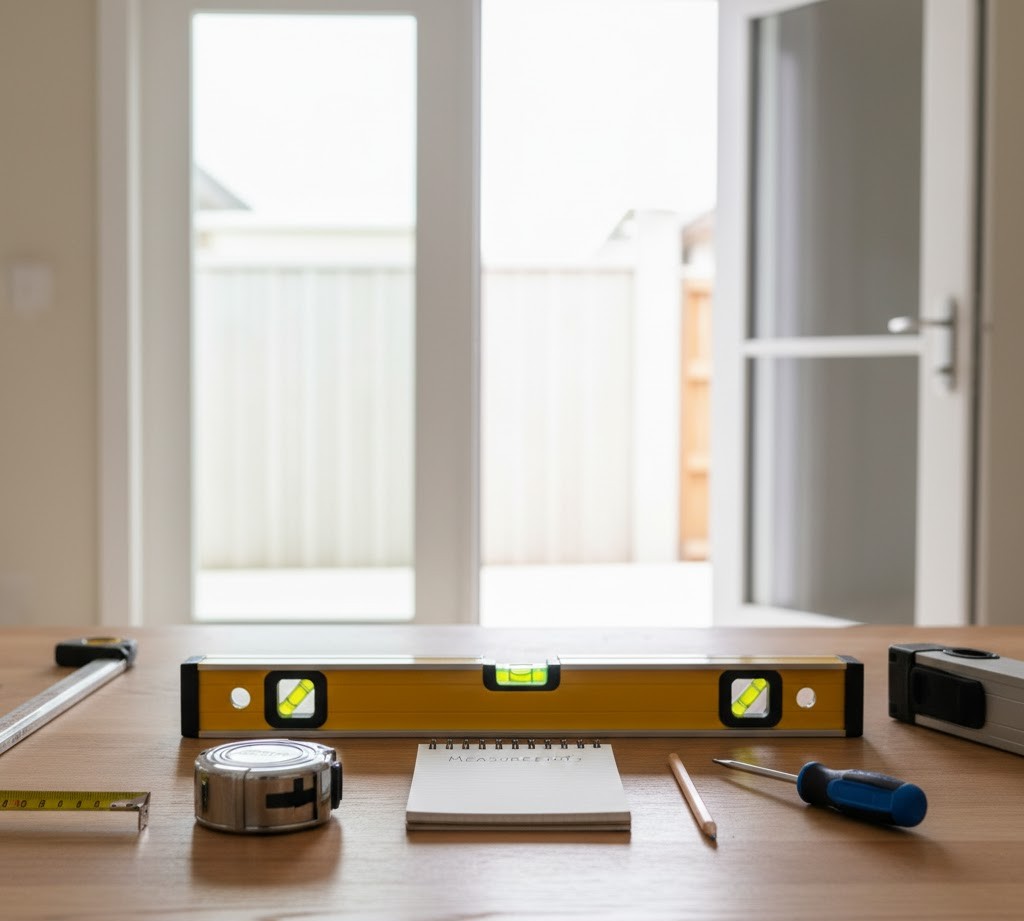
You only need a few simple tools:
- Tape measure (metal, not cloth)
- Level (to check squareness)
- Pencil and notepad to record dimensions
- Helper (optional but handy) for wider openings like French or double doors
Pro tip: Use inches and fractions, not rounded centimeters. Precision makes installation smoother.
If your screen tends to drag or feel uneven later, regular retractable screen door cleaning can help keep it sliding properly.
Should You Measure for a Single or Double Retractable Screen Door?
It depends on your door type:
| Door Type | Recommended Screen Style |
| Standard single door | Single retractable screen |
| French doors or patio sliders | Double retractable screen (meeting in the middle) |
| Large custom openings | Oversized dual screen systems |
If you’re unsure, take measurements for both panels and share them with your supplier. Oridow’s design team reviews measurements before confirming orders to ensure accuracy.
What If Your Door Frame Isn’t Standard Size?
That’s common, especially in older homes or custom builds.
If your measurements don’t match standard sizes, consider:
- Custom retractable screen doors made to fit your exact opening
- Adjustable cassette systems that allow a small range of flexibility
- Professional measurement services (many suppliers, including Oridow, offer this)
Custom fitting ensures your screen sits flush, operates smoothly, and looks seamless.
Common Mistakes to Avoid When Measuring
- Measuring the wrong surface. Always measure the inside of the frame, not the outer trim.
- Rounding up measurements. Always round down to the nearest 1/16 inch.
- Ignoring uneven floors or warped frames. Note any visible tilt.
- Not checking both sides. Even small differences matter for retractable tracks.
Avoiding these ensures your installation is quick, clean, and frustration-free. If you ever notice issues afterward, you can explore repair guide for easy fixes.
How Do Professionals Measure Retractable Screen Doors?
Industry pros typically:
- Use laser measurement tools for precision
- Verify plumb, level, and square before taking the final numbers
- Confirm measurements with the manufacturer before fabrication
According to installation data from screen manufacturers, up to 70% of installation issues stem from incorrect measurements, not product defects.
Taking your time here saves you from returns or rework later.
What Measurements Should You Send Your Manufacturer?
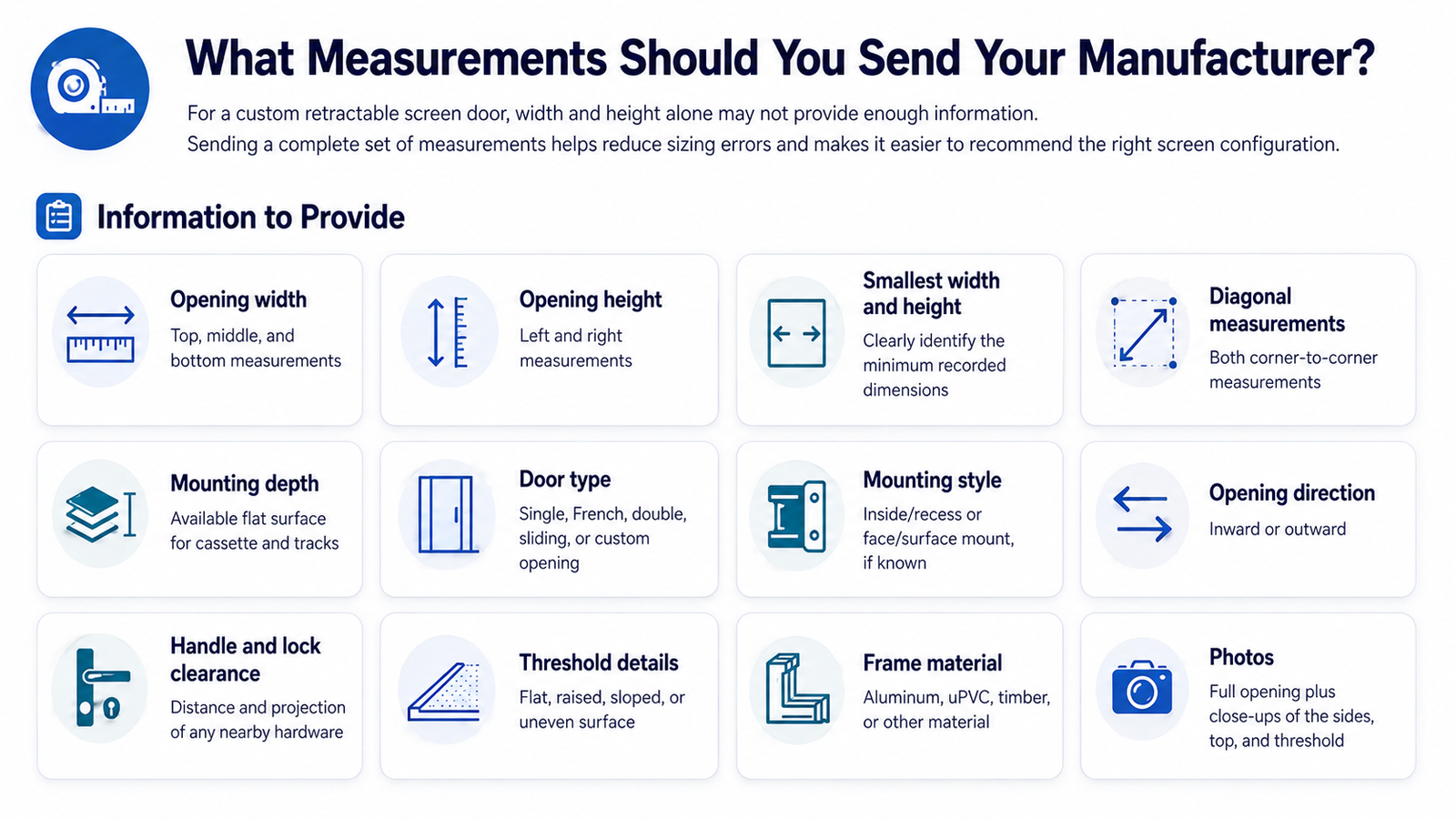
For a custom retractable screen door, width and height alone may not provide enough information.
Giving your manufacturer a complete set of measurements helps reduce sizing errors and makes it easier to recommend the right screen configuration.
Information to Provide
| Measurement or Detail | What to Send |
|---|---|
| Opening width | Top, middle, and bottom measurements |
| Opening height | Left and right measurements |
| Smallest width and height | Clearly identify the minimum recorded dimensions |
| Diagonal measurements | Both corner-to-corner measurements |
| Mounting depth | Available flat surface for cassette and tracks |
| Door type | Single, French, double, sliding, or custom opening |
| Mounting style | Inside/recess or face/surface mount, if known |
| Opening direction | Inward or outward |
| Handle and lock clearance | Distance and projection of any nearby hardware |
| Threshold details | Flat, raised, sloped, or uneven surface |
| Frame material | Aluminum, uPVC, timber, or other material |
| Photos | Full opening plus close-ups of the sides, top, and threshold |
Take Photos as Well
Photos are especially useful when the opening has:
- Unusual trim
- Deep or narrow frames
- Large handles
- Uneven thresholds
- French-door hardware
- Decorative molding
- Non-standard construction
Take one photo straight in front of the opening, then additional photos of the left side, right side, top, and bottom.
Before You Submit Your Measurements
Double-check that:
- The tape measure was held straight
- Measurements were taken from the correct mounting surfaces
- You recorded exact values rather than estimating
- The final flooring height is known
- No trim or hardware is scheduled to change
- You have confirmed whether the screen is single or double
For custom manufacturing, send the actual measurements you recorded unless your supplier specifically instructs you to make a deduction. This allows the manufacturer to apply the correct production allowance for the selected retractable screen system.
Final Thoughts
Measuring for a retractable screen door is easy, but accuracy is everything. Follow these steps, double-check your numbers, and you’ll ensure your new screen fits perfectly, slides smoothly, and looks like it was built for your home.
If you’re shopping for a custom-fit retractable screen door, Oridow offers precision-built, durable designs engineered for seamless installation.
FAQs About Measuring Retractable Screen Doors
How do I know if my door frame is square?
Measure both diagonals of the door opening. If the difference is more than ¼ inch, the frame isn’t square, and you may need shimming during installation.
Do I measure inside or outside the door frame?
Always measure inside the frame (jamb to jamb). That’s where the retractable screen mounts.
What if my measurements fall between standard sizes?
Choose the smaller size or opt for a custom-built screen. A slightly smaller screen ensures a tight fit.
Can I install a retractable screen door myself?
Yes. Most modern retractable screens come with DIY-friendly kits. Just ensure your measurements are precise before ordering.
Should I remove my old screen before measuring?
Yes. Remove any existing fixed or magnetic screens to measure the actual frame dimensions.


