

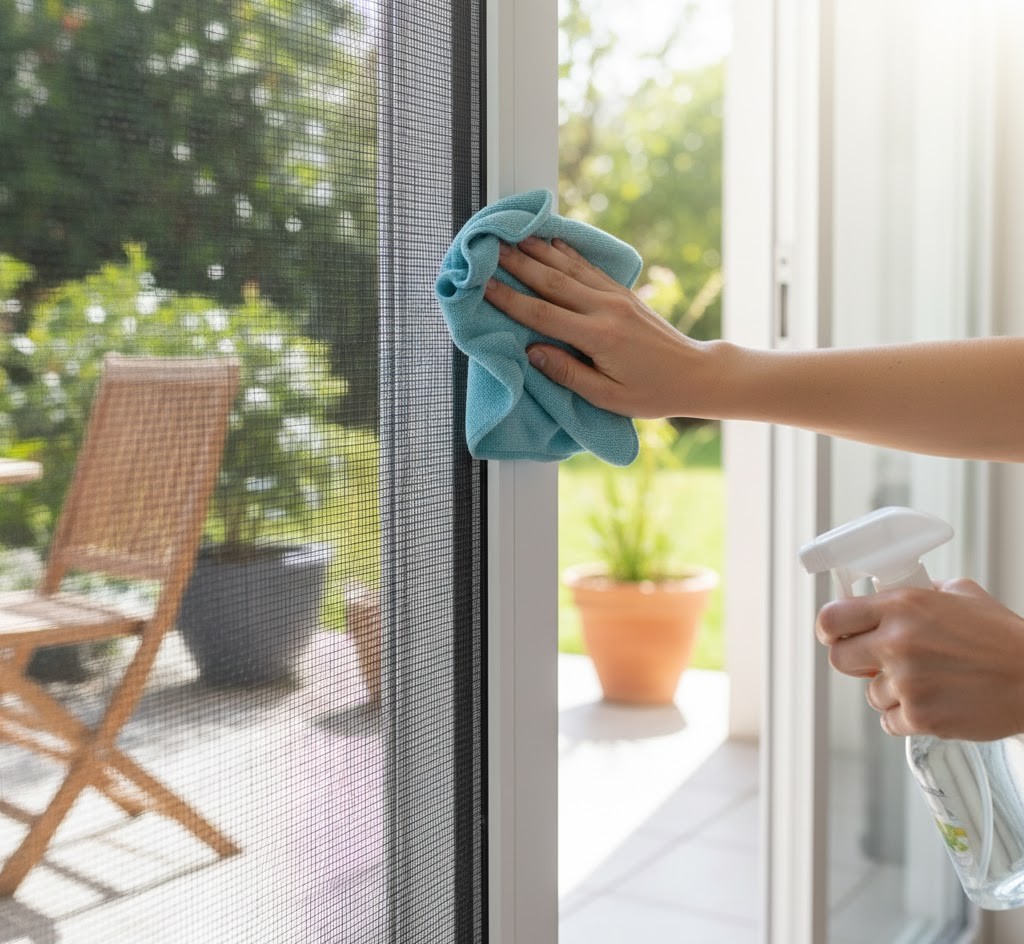
To clean a retractable screen door, remove loose dust with a vacuum or soft brush, gently wash the mesh with mild soap and warm water, and apply a silicone-based lubricant to the tracks. Regular monthly cleaning keeps your screen sliding smoothly and extends its lifespan by years.
Key Takeaways
-
Clean retractable screen doors by vacuuming debris, washing mesh with mild soap, and lubricating tracks using silicone spray.
-
Monthly or quarterly cleaning prevents sticking, extends lifespan by 3–5 years, and reduces repair or replacement costs.
-
Sticking doors are usually caused by dirty tracks, misaligned rollers, or lack of non-greasy lubrication.
-
Avoid pressure washing and oil-based lubricants; use low-pressure water and silicone or PTFE dry lubricants only.
What’s the Correct Way to Clean a Retractable Screen Door?
Cleaning a retractable screen door means removing dust, debris, and buildup from the screen mesh, frame, and tracks using non-abrasive tools and mild cleaning agents to maintain smooth operation and airflow.
Step-by-Step Cleaning Instructions
| Step |
Action |
Tools Needed |
Purpose |
| 1 | Retract and inspect the screen | Flashlight, cloth | Spot dirt, cobwebs, or frayed edges |
| 2 | Remove loose debris | Soft brush or vacuum (with brush head) | Prevent scratches and buildup |
| 3 | Wash the mesh | Bucket of warm water, mild soap, microfiber cloth | Remove dirt, grease, and pollen |
| 4 | Rinse and air dry | Clean water, towel | Avoid streaks and mildew |
| 5 | Clean & lubricate tracks | Dry cloth, silicone spray | Restore smooth glide and prevent sticking |
Pro Tip: Always clean both the top and bottom tracks; neglecting one side causes uneven wear and alignment issues. For details on resolving hardware misalignment, refer to this fixing guide.
Why Does My Retractable Screen Door Stick or Jam?
According to installation experts and brands like Phantom Screens, the most common reasons for sticking are:
- Dusty or clogged tracks
- Bent or misaligned rollers
- Lack of lubrication
- Warped door frame due to temperature changes
How to Fix It:
- Clean the tracks thoroughly.
- Realign the bottom roller if off-track.
- Lubricate using a non-oily silicone spray (avoid WD-40).
- Tighten screws on both ends to prevent wobble.
Expert Note: Silicone lubricants reduce friction by up to 30%, improving retractable door glide performance compared to untreated tracks (Home Maintenance Institute, 2023).
If the issue persists, consider whether a smart retractable upgrade would better suit your needs.
How Often Should You Clean a Retractable Screen Door?
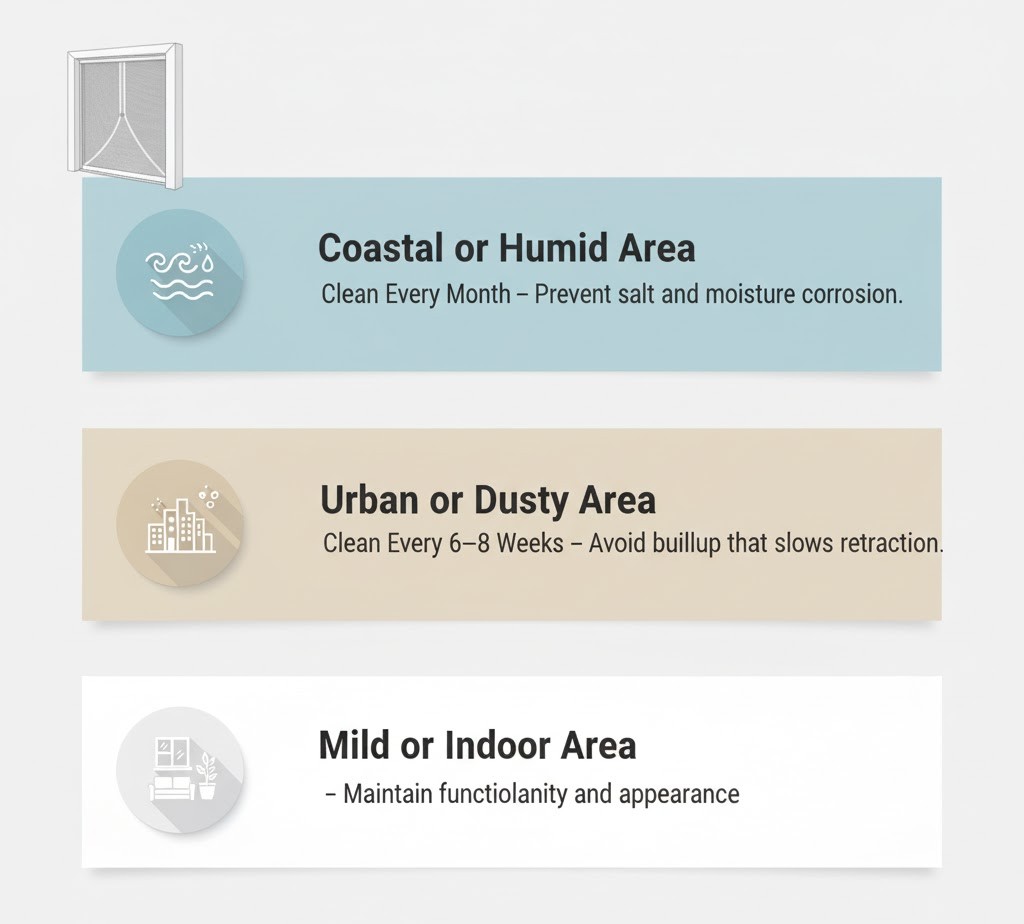
| Environment | Cleaning Frequency | Why It Matters |
| Coastal or humid area | Every month | Prevent salt and moisture corrosion |
| Urban or dusty area | Every 6–8 weeks | Avoid buildup that slows retraction |
| Mild or indoor area | Every 3 months | Maintain functionality and appearance |
Industry Insight: Consistent maintenance can extend a retractable screen door’s lifespan by 3–5 years, saving $150–$400 in early replacement costs. If you’re comparing options, review the retractable vs fixed screen analysis to understand long-term performance differences.
Can You Use Water to Clean the Screen Mesh?
Yes,but use low pressure and avoid soaking the housing.
Safe Cleaning Method:
- Use a damp microfiber cloth or gentle hose spray.
- Rinse off soap residue carefully.
- Let the screen dry fully before retracting to prevent mold.
Avoid:
- Power washers
- Harsh detergents or bleach
- Abrasive brushes
For high-humidity climates, proper drying is key to avoiding mildew a common concern with retractable door systems.
What’s the Best Lubricant for Retractable Screen Door Tracks?
Recommended Lubricants:
| Product Type | Example Brands | Benefits |
| Silicone spray | 3-IN-ONE Silicone, Blaster Silicone | Non-greasy, dirt-repellent |
| PTFE dry lube | DuPont Teflon Dry Lubricant | Long-lasting, smooth finish |
Avoid: Oil-based lubricants they attract dirt and increase friction over time.
Application Tip:
Spray lightly along the entire length of the track, then slide the door back and forth 3–4 times to distribute evenly. This works well with most modern retractable doors designed for smooth operation.
How to Prevent Dirt and Grime Buildup
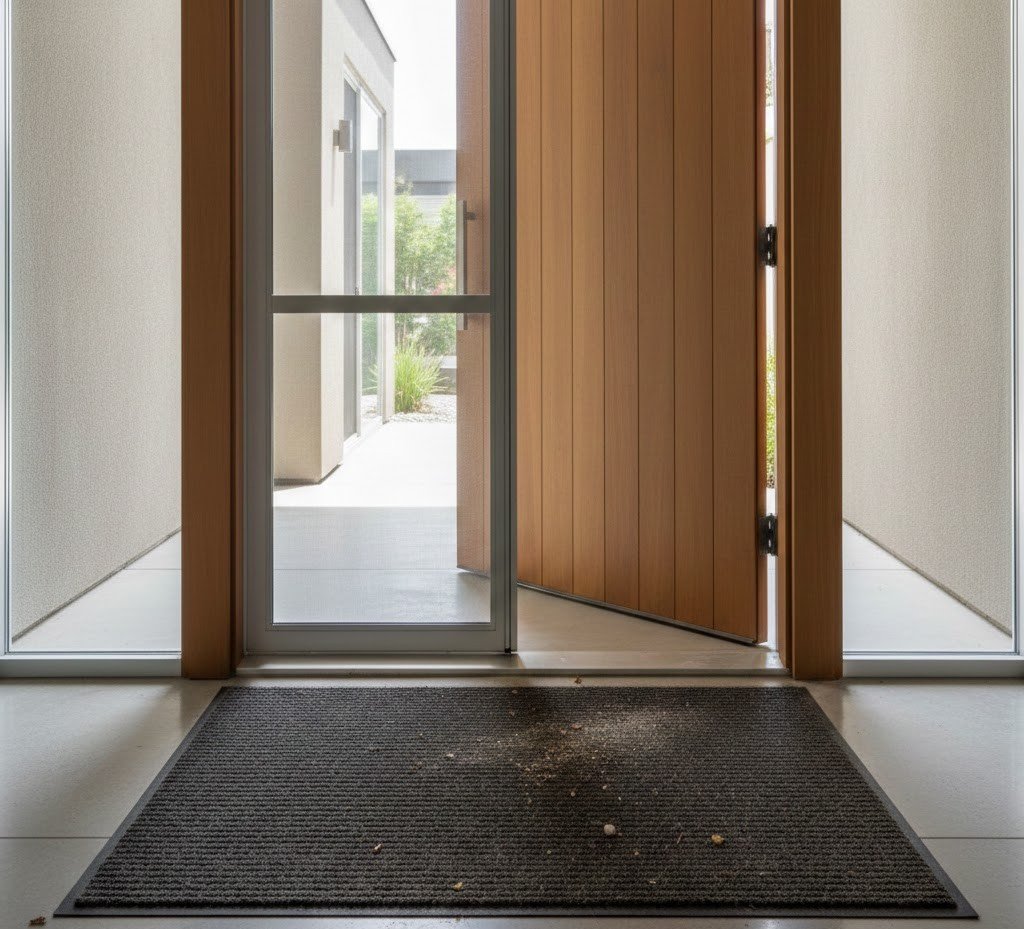
You can prevent 80% of retractable door issues by following these habits:
- Sweep or vacuum near door thresholds weekly.
- Keep outdoor mats clean to trap dirt before it enters.
- Close the screen during windy days.
- Retract the door during off-season months to protect the housing.
Pro Maintenance Formula:
(Clean mesh + Lubricate tracks + Retract when idle) × Consistency = Long-lasting performance.
Expert Maintenance Schedule (Printable Framework)
| Task | Frequency | Duration | Tools Needed |
| Dust and inspect | Monthly | 10 minutes | Cloth, brush |
| Deep clean mesh | Every 3 months | 20 minutes | Mild soap, sponge |
| Lubricate tracks | Quarterly | 5 minutes | Silicone spray |
| Full maintenance check | Annually | 30 minutes | Toolkit, level, screwdriver |
This schedule aligns with home maintenance best practices recommended by the National Association of Home Builders (NAHB) and applies to both fixed and retractable screen systems.
Why Regular Cleaning Matters
Retractable screen doors are precision-engineered systems. Dirt particles can damage fine mesh fibers or jam roller mechanisms.
Regular maintenance helps:
- Maintain smooth glide and tension
- Prevent premature wear
- Improve airflow and appearance
- Save on repair or replacement costs
Stat Insight:
In 2022, addressing housing repair needs in the U.S. was estimated to cost $149.3 billion, reflecting an 18% increase over 2018 levels. (Source: Federal Reserve Bank of Philadelphia research brief “Updated Estimates of Home Repair Needs and Costs”
If persistent issues arise, it’s worth scheduling a quick consultation to assess professional servicing options.
When Cleaning Isn’t Enough: Repair vs Replacement
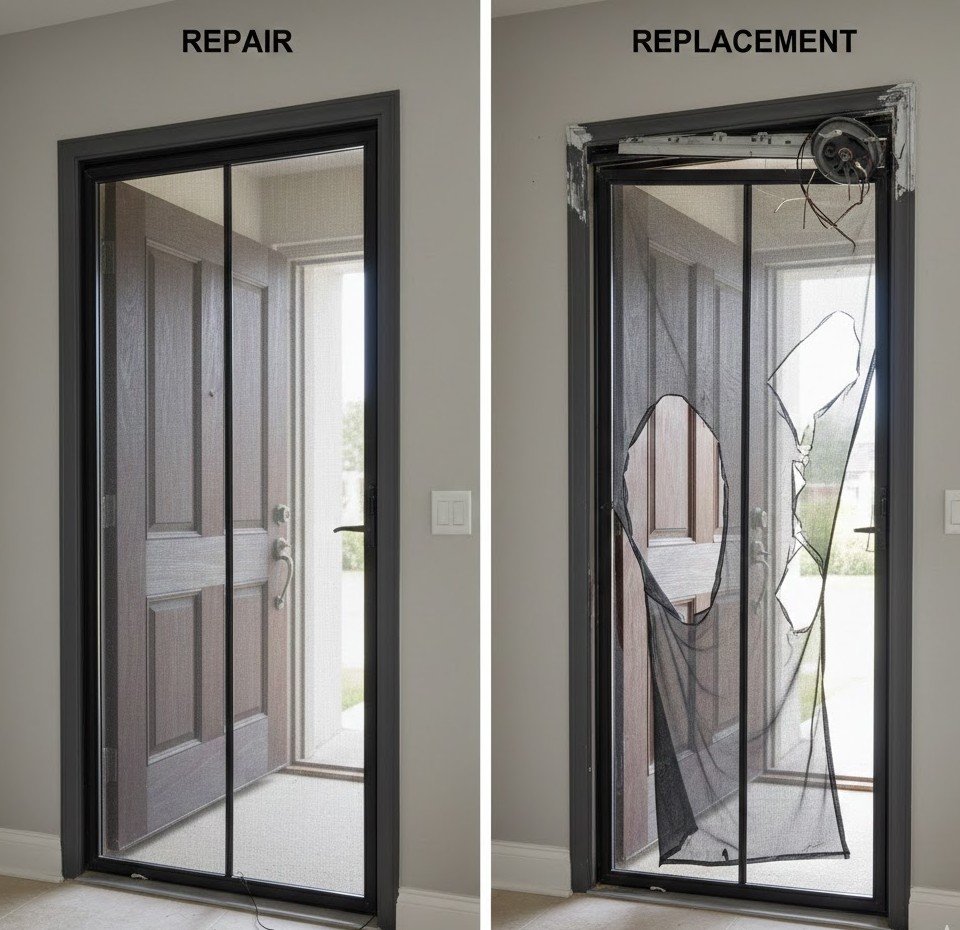
Regular cleaning solves most retractable screen door issues, but some problems go beyond routine maintenance. Knowing when to repair a component versus replacing the entire system helps prevent wasted effort, recurring failures, and unnecessary costs.
When a Repair Is the Right Choice
In many cases, targeted repairs restore smooth operation without replacing the door:
-
Minor mesh tears or edge fraying
Small damage near the edges can often be re-tensioned or patched without affecting performance. -
Dirty, dry, or slightly misaligned tracks
If the door sticks even after cleaning, a roller adjustment or fresh silicone lubrication usually resolves the issue. -
Loose fasteners or housing shift
Seasonal temperature changes can cause screws or frames to loosen, leading to uneven retraction. Retightening and realignment are typically sufficient.
For well-maintained systems under 5–7 years old, repairs are often the most cost-effective and practical solution.
When Replacement Makes More Sense
In some situations, continued repairs can become inefficient or unreliable:
-
Severely torn, warped, or stretched mesh
Extensive damage compromises tension and airflow, affecting how smoothly the screen retracts. -
Worn tension springs or damaged cassette housing
These internal components are precision-calibrated. When they fail, performance and safety can’t always be restored through repair alone. -
Persistent jamming despite proper cleaning and lubrication
If sticking continues after full maintenance, internal wear or frame distortion may be the cause. -
Older systems with outdated mechanisms
Modern retractable screen doors use improved track tolerances, mesh materials, and self-regulating tension systems that significantly outperform older designs.
Practical Guidance for Homeowners
A simple rule of thumb:
-
Choose repair if the issue is isolated, mechanical, or maintenance-related
-
Choose replacement if multiple components are failing or performance remains inconsistent after servicing
From a long-term perspective, upgrading to a newer retractable screen system can improve durability, reduce ongoing maintenance, and enhance daily usability — especially in high-traffic or harsh-climate environments.
If you’re unsure which option fits your situation, a professional assessment can quickly determine whether repair or replacement will deliver better long-term value.
Final Thoughts
Your retractable screen door is an investment not a disposable accessory.
By following these structured maintenance steps, using the right materials, and cleaning regularly, you’ll ensure it remains quiet, smooth, and functional for years.
For additional insights and compatible systems, visit Oridow for design and maintenance resources.
FAQs:
1. Can I pressure wash my retractable screen door?
No. High pressure can warp the frame or tear the mesh. Use gentle rinsing and a soft sponge instead.
2. How do I remove mold or mildew from the screen?
Mix one part white vinegar with four parts water, wipe the mesh, and dry thoroughly before retracting.
3. Why won’t my retractable screen fully retract?
Clean the housing and check for tension spring obstructions. Lubricate lightly, or consult a technician if the spring is damaged.
4. What’s the average lifespan of a retractable screen door?
With regular cleaning, 7–10 years. Without maintenance, issues often arise within 3–5 years.
5. Is silicone lubricant safe for all retractable door brands?
Yes silicone-based sprays are universally compatible and recommended by major manufacturers like Phantom, Mirage, and Larson.


