

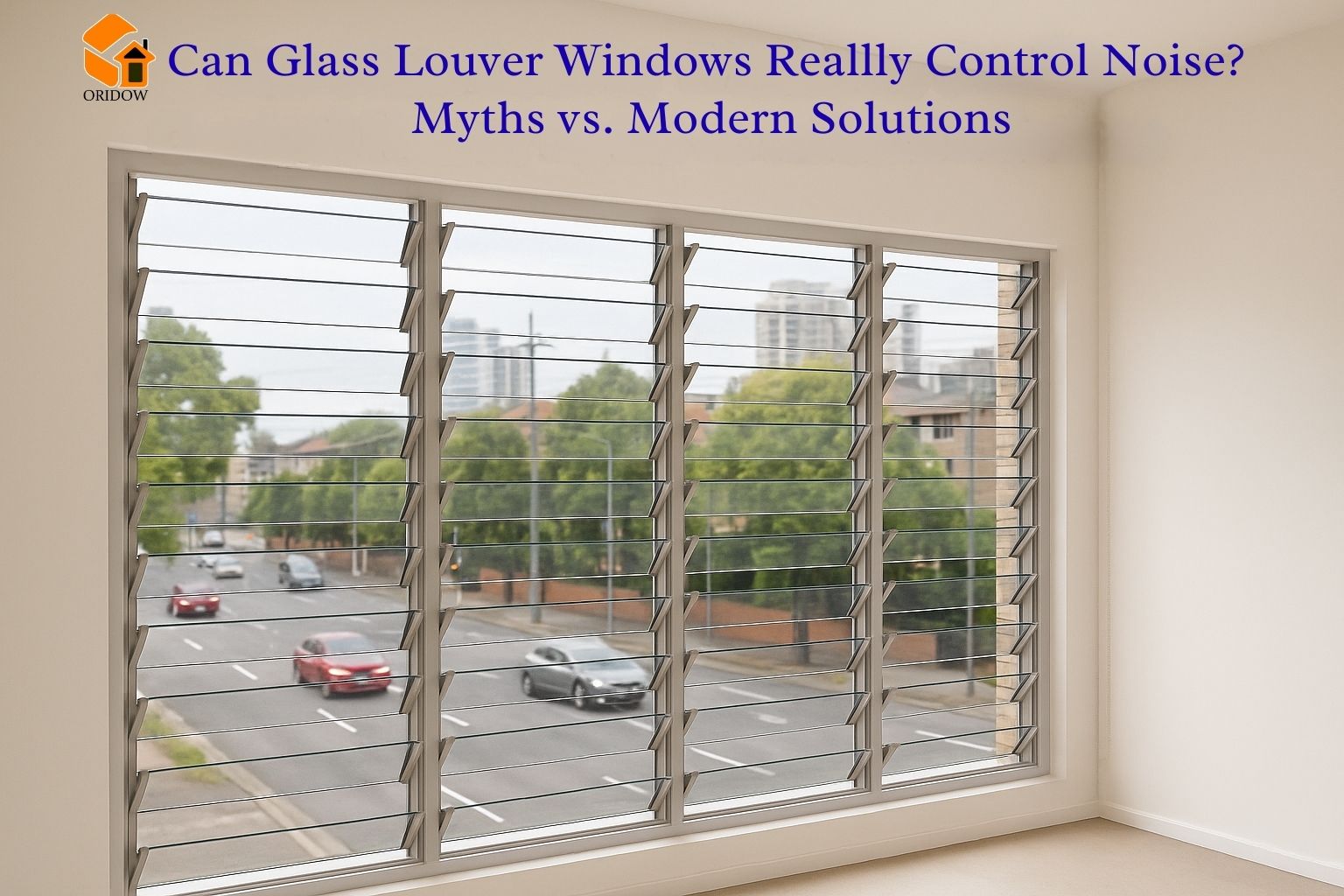
Glass louver windows are loved for their sleek design and adjustable airflow perfect for warm climates and modern homes. But there’s one big question homeowners and architects often ask: Can they really block outside noise?
For decades, louvers were seen as “noisy by design,” with gaps between blades that let in traffic, neighbors, and even airport sounds.
Today, that’s changing. With soundproof glass, acoustic inserts, and precision sealing, modern glass louver window noise control solutions deliver far better performance. In this article, we’ll break down the myths, highlight new technologies, and show how louvers can now give you both fresh air and peace and quiet.
Key Takeways:
- Modern glass louver windows reduce noise by 25–35 dB using laminated or double-glazed acoustic glass.
- Tight seals and aluminium or UPVC frames improve louver window sound attenuation and energy efficiency.
- Fixed windows block the most noise, but louvers balance ventilation with effective acoustic performance.
- Acoustic louver windows suit homes near roads, airports, high-rises, offices, schools, and coastal climates.
Understanding the Noise Problem with Traditional Louver Windows
Traditional louvre windows were designed with ventilation in mind, not soundproofing. While they excelled in tropical climates by maximizing airflow, their drawbacks included:
- Gaps between blades – even when closed, sound could easily travel through small air leaks.
- Thin glass or timber slats – provided little resistance against external noise.
- Lack of acoustic rating – traditional designs were never tested for modern glass louver window acoustic performance.
This explains why louver window glass replacement became common in urban settings, where noise pollution from roads, airports, or neighbors significantly impacted comfort.
Myth vs. Reality: Do Glass Louver Windows Block Noise?
Louver windows have long been surrounded by myths. Let’s clear them up with the facts:
- Myth 1: “Louver windows are always noisy.”
- Reality: Not anymore. Modern designs use acoustic glass panels, tight seals, and adjustable louver frames to block much of the outside noise.
- Myth 2: “Casement windows are the only good option for soundproofing.”
- Reality: While casement windows seal tightly, today’s glass louver windows can achieve impressive results with soundproof glass windows or acoustic window inserts.
- Myth 3: “Louver windows waste energy while trying to reduce noise.”
- Reality: Advanced UPVC and aluminium louver windows include energy-efficient thermal breaks, meaning they reduce noise and save on heating and cooling costs.
Modern Solutions for Glass Louver Window Noise Reduction
Thanks to advancements in fenestration engineering, the perception of louver windows has changed dramatically. Here are key innovations:
1. Soundproof Glass Windows & Acoustic Panels
By using laminated acoustic glass or double-glazing inserts, manufacturers significantly boost the glass louver window acoustic rating.
- Laminated glass reduces sound vibration.
- Double-glazed louvers provide a sealed air gap for louver window sound attenuation.
2. Sealing & Acoustic Frames
Old designs left gaps, but modern aluminium louver windows come with tight compression seals that reduce air and sound leakage.
3. Acoustic Window Inserts
A retrofit-friendly option, inserts can be added to existing louvers for glass louver window noise control solutions without needing full replacement.
4. Adjustable Louver Windows with Acoustic Control
Smartly designed adjustable louver windows allow homeowners to balance ventilation with acoustic protection, offering flexibility that fixed windows cannot.
5. Benefits of Acoustic Louver Windows in Urban Living
- Noise reduction up to 35–40 decibels with the right configuration.
- Keeps homes peaceful even near highways or airports.
- Available in UPVC, aluminium, or hybrid frames for design variety.
Glass Louver Windows vs. Other Window Types: Noise Control Comparison
When investing in noise-reducing windows, it’s natural to wonder how glass louver windows measure up against other common options. While fixed and casement windows are traditionally known for better sealing, advancements in glass louver window acoustic performance have narrowed the gap.
|
Window Type |
Ventilation |
Noise Reduction |
Best Use Case |
|
Glass Louver Windows (Modern Acoustic Design) |
Excellent (adjustable airflow) |
Good (25–35 dB with acoustic glass) |
Homes needing both airflow and noise control |
|
Casement Windows |
Good |
Very Good (30–40 dB) |
Urban homes & apartments |
|
Fixed Windows |
None |
Excellent (up to 45 dB) |
High-noise areas where ventilation isn’t needed |
|
Soundproof Jalousie Windows |
Excellent |
Very Good (35–40 dB) |
Coastal homes & near airports |
Applications: Where Do Noise-Reducing Louver Windows Work Best?
Modern glass louver window noise control solutions are versatile and can be applied across a wide range of settings. Here are the most common and effective use cases:
- Homes Near Busy Roads or Railways
Noise from cars, trains, and motorbikes can make daily living uncomfortable. Installing acoustic louver windows with laminated glass significantly reduces traffic noise while still allowing fresh air circulation. - Residences Close to Airports
Aircraft noise is among the hardest to block. By choosing soundproof jalousie windows with double-glazed or acoustic glass, homeowners can cut down on harsh jet engine sounds without giving up ventilation. - High-Rise Apartments and Condominiums
City living comes with constant exposure to urban noise from honking horns to nightlife. Aluminium louvers with acoustic sealing not only improve peace inside but also enhance energy efficiency, reducing heating and cooling costs. - Commercial Buildings and Offices
In workplaces, noise distractions can impact productivity. Glass louver window acoustic performance systems ensure offices stay quiet while still maintaining airflow, an advantage in open-plan spaces or buildings without heavy HVAC reliance. - Educational and Healthcare Facilities
Schools, hospitals, and clinics require quiet environments to support learning and recovery. Acoustic louver windows balance noise control with natural ventilation, reducing dependence on mechanical air systems. - Coastal and Tropical Homes
In humid climates, adjustable louver windows allow airflow while reducing wind and sea noise. They stem from tropical home design and remain a modern, practical trend.
Why Choose Oridow for Acoustic Louver Windows?
As a China-based aluminium windows and doors manufacturer, Oridow has built a reputation for delivering custom, high-performance fenestration systems for global residential and commercial projects.
Oridow’s Key Advantages:
- Custom-built solutions tailored for wholesalers, builders, architects, and distributors.
- Acoustic certifications and performance testing, ensuring buyers know the glass louver window acoustic rating.
- Options in aluminium, UPVC, and hybrid designs for different budgets and architectural styles.
- Proven track record in bulk procurement for international projects, ensuring cost-effectiveness without compromising on quality.
Final Thoughts
Once known as “noisy by design,” glass louver windows have been redefined with modern acoustic glass, advanced sealing, and smart engineering making them a stylish yet practical choice for noise control.
For wholesalers, builders, and architects, Oridow offers certified, customizable acoustic louver solutions that balance quiet comfort with fresh airflow.
FAQs on Glass Louver Windows Noise Control
Do glass louver windows really block outside noise?
- Yes. Modern designs use laminated acoustic glass and compression seals that can cut noise by 25–35 dB depending on the configuration.
Why are glass louver windows said to be noisy?
- Older models had:
- Poor sealing between blades.
- Thin glass panels that let sound pass through.
- No acoustic rating or performance testing.
What type of glass louver windows are best for soundproofing?
- Double-glazed laminated acoustic glass paired with aluminium or UPVC frames offers the best balance of strength, sealing, and noise reduction.
Are glass louver windows as good as fixed windows for noise reduction?
- Fixed windows are usually superior because they’re sealed permanently.
- However, acoustic louver windows provide noise reduction plus natural ventilation, which fixed windows cannot.
Can I upgrade my existing louver windows to reduce noise?
- Yes, by adding:
- Louver window glass replacement with laminated or acoustic glass.
- Acoustic window inserts for retrofitting.
- Better sealing or upgraded aluminium/UPVC frames.
Are glass louver windows good for homes near busy roads or airports?
- Absolutely. Soundproof jalousie windows are specifically engineered for high-noise environments.
- With the right configuration, they can make homes near highways or airports significantly quieter.
Do louver windows waste energy while trying to reduce noise?
- No, if you choose modern energy-efficient aluminium or UPVC frames with thermal breaks.
- These designs improve insulation while also blocking external noise.
What should I check before buying noise-reducing louver windows?
- Key factors include:
- Glass type and thickness (prefer laminated acoustic glass).
- Glass louver window acoustic rating provided by the manufacturer.
- Frame material (aluminium or UPVC recommended).
- Quality of sealing and installation.
- Certification from trusted brands like Oridow.
Do glass louver windows have official soundproof ratings?
- Yes. Reliable manufacturers like Oridow provide decibel reduction data and acoustic performance certifications for their products.
Can louver windows let in fresh air while still keeping out noise?
- Yes, that’s their unique advantage.
- Adjustable louver windows let you control ventilation without fully compromising acoustic performance.


