

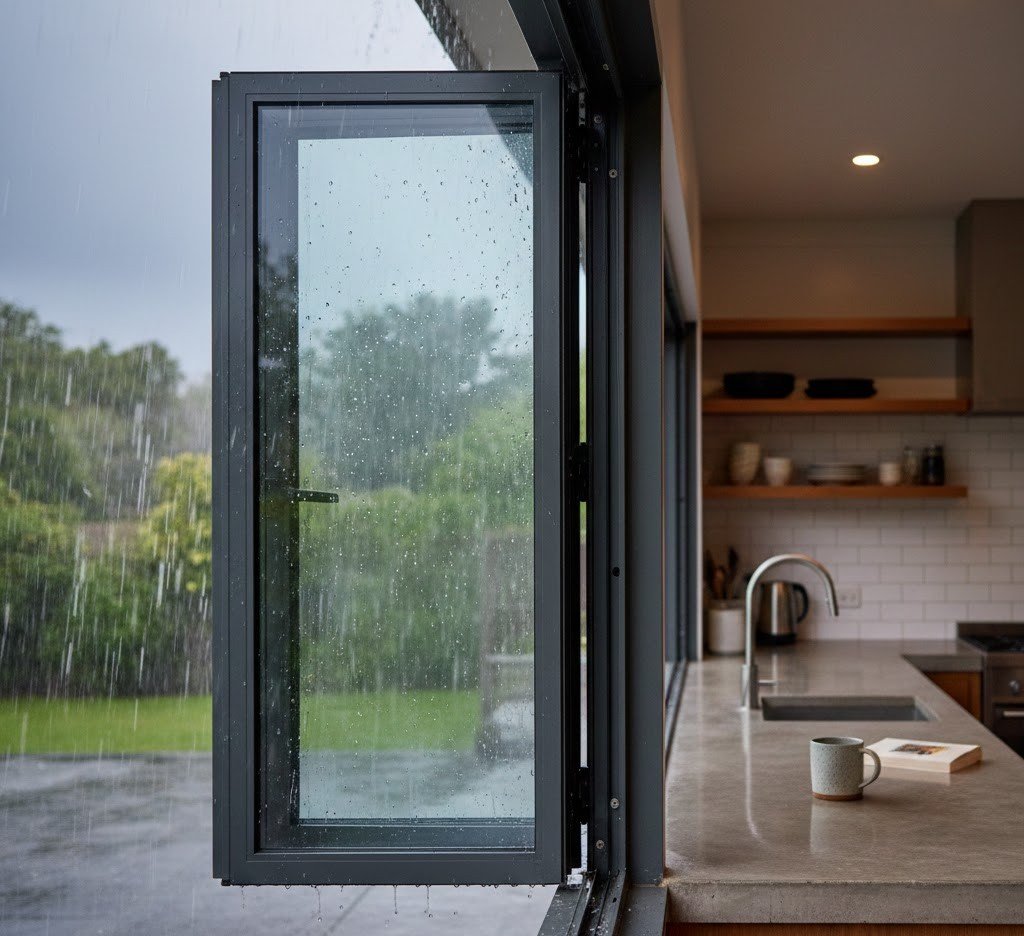
Rain performance is one of the biggest concerns when choosing fold-up windows, especially for homes and commercial spaces exposed to heavy storms or coastal weather. If a window opens upward and creates a wide serving or ventilation opening, it is natural to question whether it can truly seal tightly against wind-driven rain.
The good news is clear. Properly engineered and professionally installed fold-up windows are designed not to leak during normal or heavy rainfall. Their performance depends on structural frame stability, compression-based sealing systems, integrated drainage channels, and correct installation. When these elements work together, fold-up windows deliver weather resistance comparable to fixed, sliding, or awning window systems.
How Do Fold-Up Windows Stay Watertight in the Rain?
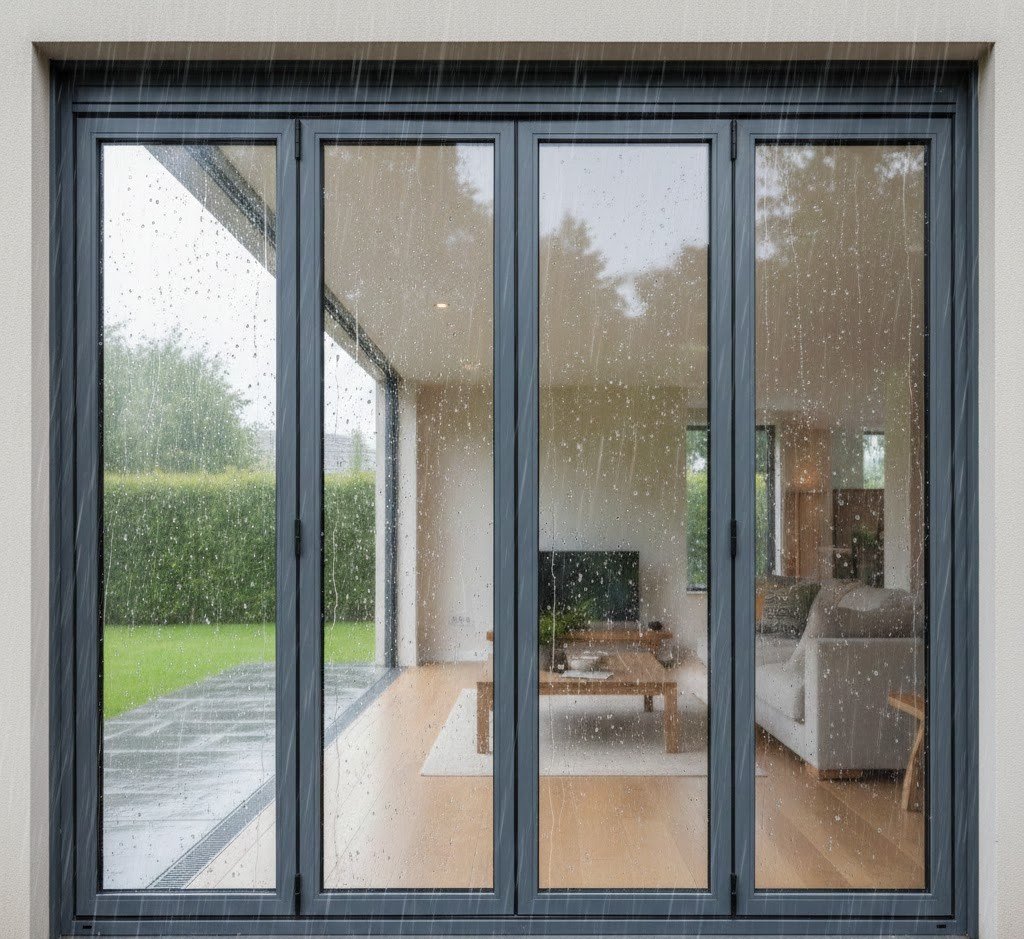
Modern vertical fold-up windows are engineered as sealed systems rather than simple hinged panels. They are designed to resist wind-driven rain, pressure changes, and long-term exposure to moisture.
1. Compression Seals and Gaskets
When closed, fold-up windows rely on:
- Continuous perimeter weather seals
- EPDM or silicone gaskets
- Multi-point locking systems
- Tight frame-to-sash compression
As the window locks into place, pressure compresses the seals evenly across the frame. This prevents water intrusion even during storms. Choosing a reliable window supplier ensures these sealing components meet structural and environmental standards rather than being cosmetic add-ons.
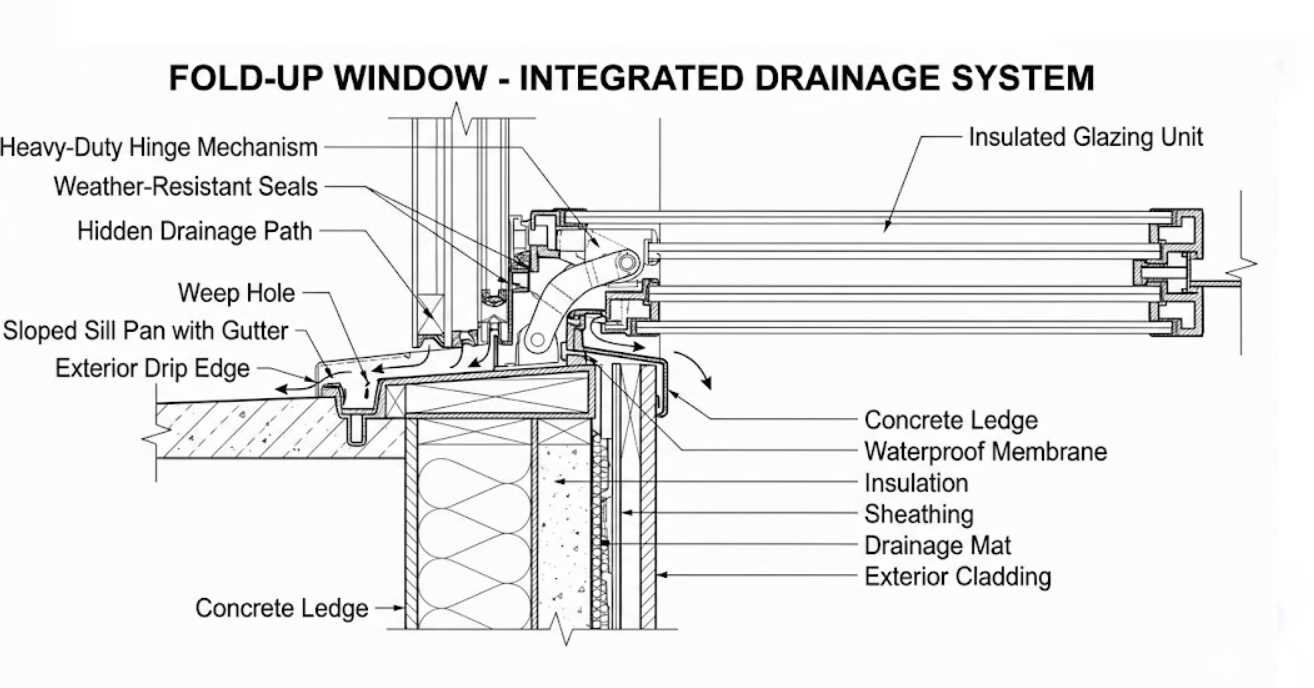
2. Integrated Drainage Systems
Even the best-sealed systems are designed with secondary protection.
Quality units include:
- Internal drainage chambers
- Sloped sills
- Concealed weep holes
If wind-driven rain passes the outer seal, it is redirected outside before reaching the interior wall cavity. Many engineered aluminum units incorporate this layered water-management approach to improve long-term performance.
3. Frame Stability Matters
Material selection plays a critical role. Aluminum is widely used because it does not swell or warp when exposed to moisture.
That is why architects frequently specify advanced aluminum systems for projects in Australia, the UK, and coastal areas of the USA, where seasonal rain and humidity are significant factors. When frames remain square and rigid, seals maintain consistent pressure.
What Causes Fold-Up Windows to Leak?
If you have heard stories about leaking fold-up windows, the problem usually comes from one of three issues.Leaks are rarely caused by the folding mechanism itself. Instead, they stem from avoidable weaknesses.
Low-Quality Materials
| Component | High-Quality System | Low-Quality System |
| Frame | Thick aluminum profile | Thin or flexible frame |
| Seals | Multi-layer compression gaskets | Basic rubber strip |
| Drainage | Internal channels + weep holes | Minimal or none |
| Finish | Corrosion-resistant coating | Basic paint |
Inferior systems often cut costs in hardware and sealing. This is why reviewing realistic window costs helps you understand what level of engineering you are getting.
Incorrect Installation
Common installation errors include:
- No flashing tape
- Gaps around the frame
- Misaligned tracks
- Improper anchoring
Water does not need a large opening. Even small installation gaps allow wind-driven rain to enter.
Lack of Maintenance
Like any exterior feature, fold-up windows require basic care:
- Cleaning debris from tracks
- Inspecting seals annually
- Tightening hardware if needed
- Clearing drainage holes
Neglected systems may eventually show leakage simply because the drainage path is blocked.
Are Fold-Up Windows Suitable for Heavy Rain and Coastal Climates?
Yes, when designed properly.
Fold-up windows are widely used in:
- Coastal Australia
- Rain-heavy regions in the UK
- Storm-prone areas of the USA
They are especially popular in café and hospitality designs where indoor-outdoor flow is essential. In fact, many modern café shop fold up windows are built specifically for exposed environments, with reinforced frames and weather-rated hardware.
In high-wind regions, look for systems that offer:
- Tested wind load ratings
- Water penetration certification
- Corrosion-resistant hardware
- Powder-coated or anodized aluminum finishes
Coastal installations should use marine-grade components to prevent salt corrosion.
When engineered correctly, fold-up windows perform reliably even under sustained rainfall and wind pressure.
How Can You Ensure Your Fold-Up Window Will Not Leak?
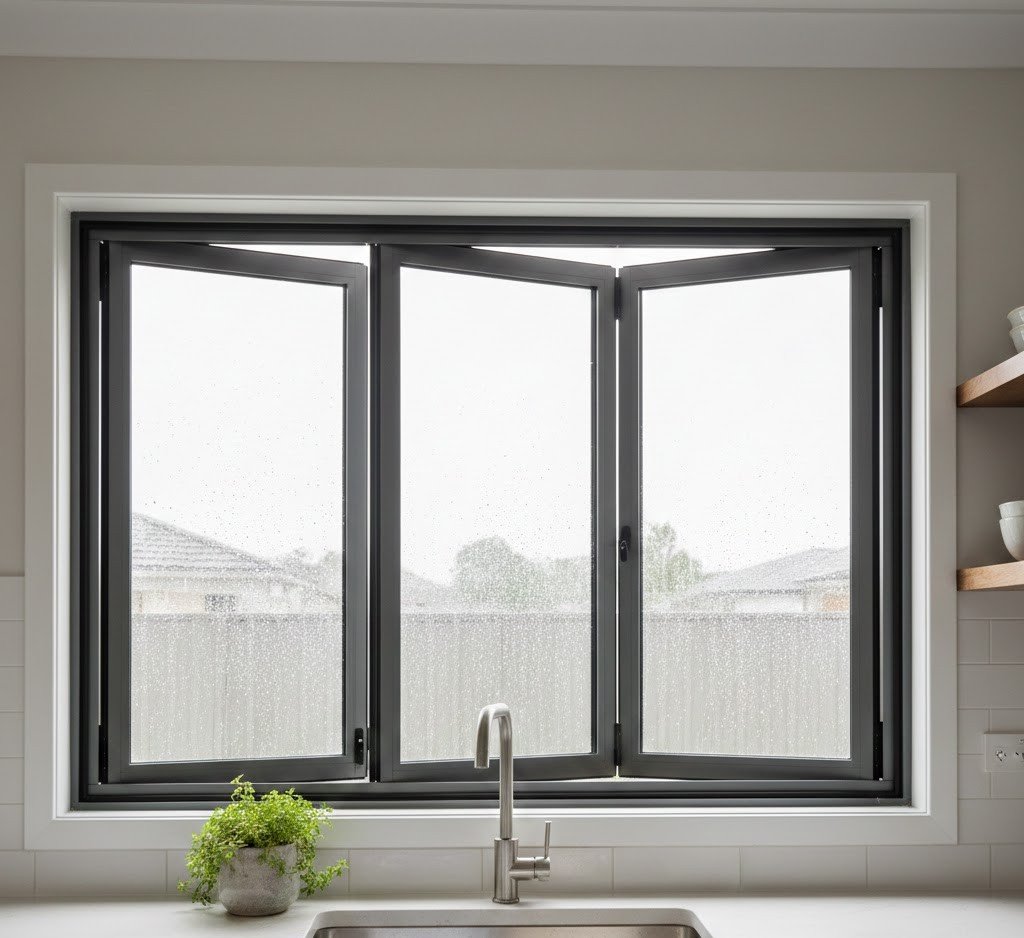
If you are planning an installation, follow this practical framework.
Step 1: Evaluate the Frame Material
The frame is the structural backbone of your fold-up window. In wet or variable climates, stability is critical.
Choose powder-coated or anodized aluminum because it:
- Resists corrosion and rust
- Does not swell, warp, or crack when exposed to moisture
- Maintains structural alignment under temperature changes
- Provides strong load-bearing support for large glass panels
Avoid materials that absorb moisture or expand significantly, as even slight movement can weaken seal compression and create gaps over time. In coastal regions of Australia, the UK, and the USA, marine-grade finishes offer added durability against salt exposure.
Step 2: Inspect the Sealing System
Ask about:
- Compression seals
- Multi-layer gasket systems
- Replaceable weatherstripping
High-performance systems rely on layered protection.
Step 3: Review Water Testing Standards

Objective testing separates engineered systems from basic assemblies.Before purchasing, request documentation showing compliance with recognized standards:
- AS/NZS 2047 in Australia for structural and water penetration performance
- BS EN 12208 ratings in the UK for watertightness classification
- AAMA/WDMA/CSA 101/I.S.2/A440 testing in the USA for water resistance under pressure
These standards simulate wind-driven rain and pressure conditions. Certified testing confirms the window has passed controlled laboratory evaluations rather than relying on manufacturer claims. Certified testing gives you objective proof of weather resistance.
Step 4: Choose Experienced Installers
Installation matters as much as product quality. Always verify that installers understand:
- Structural support requirements
- Flashing methods
- Drainage management
Step 5: Consider Security and Locking Pressure
A well-designed locking system improves water resistance. Multi-point locking creates uniform compression across seals. If you are curious how this works, review modern locking systems that enhance both security and weather performance.
Why Oridow Is the Right Supplier for Aluminum Fold-Up Windows
Choosing the right supplier directly impacts the performance and lifespan of your folding window system. Oridow delivers solutions built for structural strength, energy efficiency, and modern architectural standards across Australia, the UK, and the USA.
Key advantages:
- Precision-engineered aluminum frames for durability and stability
- Advanced thermal insulation for improved energy performance
- Smooth-glide track systems for effortless daily use
- Custom sizing for residential and commercial projects
- Construction aligned with modern building standards
- Clean, contemporary designs for seamless integration
Oridow’s folding windows combine strong engineering with refined design, making them a trusted choice for architects, builders, and homeowners.Explore their dedicated window systems or browse the full product collection to compare options. For projects requiring tailored specifications, consulting with the support team can help clarify sizing considerations and technical details before final selection.
Key Takeaways
- Fold-up windows do not leak when properly engineered and installed.
- Water resistance depends on seals, frame strength, drainage, and installation quality.
- Aluminum frames with compression gaskets provide strong protection against rain.
- Professional installation is critical.
- Regular maintenance preserves long-term performance.
If leakage occurs, the cause is typically poor materials, improper installation, or lack of maintenance rather than the fold-up design itself.
Frequently Asked Questions
1. Can heavy wind-driven rain force water through fold-up windows?
Only if the system lacks proper sealing or drainage. High-quality units are tested for wind pressure and water penetration to prevent this issue.
2. Do fold-up windows require more maintenance than sliding windows?
No. Maintenance is similar. Clean tracks, inspect seals annually, and ensure drainage holes remain clear.
3. Are aluminum fold-up windows better than timber for rainy climates?
- Aluminum does not swell, warp, or rot when exposed to moisture
- Resists corrosion with proper powder-coated or anodized finishes
- Maintains frame alignment for consistent seal compression
- Performs reliably in coastal and high-humidity environments
4. Do fold-up windows meet building codes in Australia, the UK, and the USA?
- Reputable manufacturers design systems to meet regional standards
- Australia: AS/NZS performance compliance
- UK: BS EN structural and watertightness ratings
- USA: AAMA water and wind load testing
- Always request certified documentation before installation


