


Understanding Fold-Up Windows in Harsh Environments
Fold-up window, are outward-opening glazed panels that lift vertically to create a wide, unobstructed opening. Their popularity in coastal and exposed architecture comes from their ability to connect indoor and outdoor spaces while remaining secure when closed. In harsh environments, performance depends on how well the system is engineered to manage wind, weather, and long-term exposure.
- Fold-up windows must manage both positive wind pressure pushing inward and negative pressure that can pull outward during strong gusts or storms.
- Structural frame design, glass strength, and secure locking systems play a critical role in maintaining stability in high-wind locations.
- Systems designed for harsh environments are tested under simulated wind loads, pressure cycles, and repeated operation to assess deflection, hinge durability, locking strength, and seal performance.
- In coastal settings, corrosion-resistant materials, finishes, and hardware are essential to withstand salt air, moisture, and temperature changes while maintaining long-term performance and appearance.

What Makes Fold-Up Windows Suitable for High-Wind Areas?
Wind Ratings and Structural Engineering
Wind performance is determined by how well the window resists pressure and suction forces. High-quality fold-up windows are independently tested to ensure they meet or exceed regional building codes.
Key structural factors that matter
| Key Feature / Performance Factor | Why It Matters in Coastal & High-Wind Zones |
| Reinforced aluminum frames | Resists strong wind loads, prevents frame distortion, and offers durability in saltwater environments |
| Corrosion-resistant coatings | Protects aluminum from salt-laden air, reducing pitting, oxidation, and long-term damage |
| High wind load (PG) rating | Confirms the system meets local code requirements for wind pressure and water resistance |
| Robust seals & weatherproofing | Blocks wind-driven rain, moisture, and salt intrusion |
| Pressure-extruded frames | Enhances structural integrity for frequent use and sustained high-wind exposure |
| Impact resistance | Provides added protection against windborne debris in severe weather conditions |
| Multi-point locking system | Distributes wind pressure evenly across the sash for improved stability |
| Tested hinge systems | Reduces risk of hardware failure during uplift and repeated wind stress |
In coastal Australia, the UK, and hurricane-prone US regions, certified wind ratings are non-negotiable for long-term safety.
Glass Selection for Coastal Safety
Glass selection directly affects safety, durability, and compliance, particularly in coastal and high-wind environments. In exposed locations, laminated safety glass is widely regarded as the most reliable option because it is designed to remain intact even when subjected to extreme pressure or impact.
In high-wind conditions, glass must withstand both sudden gusts and sustained pressure over time. Laminated glass consists of two or more layers bonded with an interlayer that holds the pane together if cracked, reducing the risk of failure and protecting occupants from wind-driven debris.
Comparison of glass types for high-wind environments:
| Glass Type | Suitability for Coastal Areas | Key Benefit |
| Standard toughened glass | Limited | Shatters safely but offers less wind protection |
| Laminated safety glass | High | Holds together if cracked |
| Toughened laminated glass | Very high | Maximum impact and wind resistance |
Toughened laminated glass is often specified for locations with the highest exposure, including beachfront properties and commercial buildings in storm-prone regions. It combines the strength of toughened glass with the containment benefits of lamination, making it suitable for strict building and safety codes.
Beyond safety, laminated glass also improves acoustic performance by reducing wind noise and enhances thermal efficiency by limiting air movement through the glazing system. These benefits make it a practical choice for projects using folding windows in exposed coastal locations where comfort, durability, and compliance are equally important.
Corrosion Resistance in Coastal Climates
Salt-laden air accelerates corrosion, which is why coastal fold-up windows must use marine-grade materials. Aluminum frames treated with high-performance finishes offer long-term durability even in harsh seaside conditions.
Essential material features include:
- Powder-coated or anodized aluminum
- Stainless steel hinges and fasteners
- Sealed drainage channels to manage moisture
These features are standard in engineered systems commonly specified through professional product solutions for coastal and commercial use.
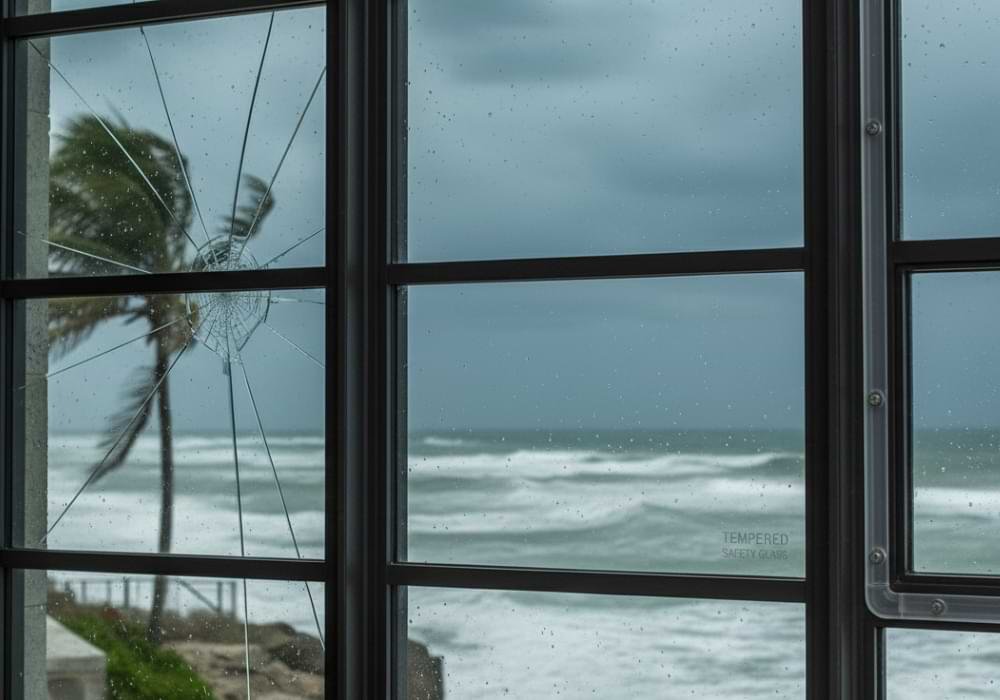
Are Fold-Up Windows Safe During Storms?
Yes, fold-up windows can be safe during storms when they are designed, rated, and installed for severe weather conditions. High-performance systems are engineered to resist strong wind pressure, flying debris, and water intrusion when fully closed and locked.
Why fold-up windows can be storm-safe:
-
Impact-rated glass resists shattering from windborne debris
-
Reinforced aluminum frames maintain structural stability
-
Multi-point locking systems prevent panels from flexing or lifting
-
Certified wind-load ratings meet coastal and storm-prone building codes
-
Proper professional installation ensures secure anchoring to the structure
Locking and Sealing Systems
When closed, fold-up windows are designed to act as a solid barrier against wind and rain. Compression seals and locking mechanisms create a tight closure that resists air and water infiltration.
Storm-performance components explained:
| Component | Function During High Winds |
| Compression seals | Prevent wind-driven rain entry |
| Multi-point locks | Secure the panel evenly |
| Controlled opening angle | Prevents sudden uplift when open |
| Reinforced hinges | Maintains alignment under pressure |
With proper specification, these systems perform comparably to fixed glazing during severe weather.
Installation Is Critical in Wind-Exposed Areas
Even the strongest window system can fail if the installation process of oridow folding windows does not follow structural requirements.
Professional installation should always include:
- Anchoring into a load-bearing structure
- Compliance with local wind and coastal codes
- Allowances for thermal expansion
This is why commercial projects often rely on engineered systems from experienced suppliers offering tailored fold-up window solutions.
Best Applications for Coastal and Wind-Exposed Projects
Fold-up windows are widely used across residential and commercial projects where airflow, views, and durability matter. Their ability to open fully when conditions allow and seal tightly when weather changes makes them especially suitable for environments exposed to wind and salt air.
Common coastal applications include:
- Beachfront homes and apartments, where wide openings maximize views while maintaining weather protection
- Coastal cafés and bars, allowing operators to adapt quickly to changing wind and weather conditions
- Outdoor kitchen serveries, providing a practical pass-through while protecting interiors during storms
- Hospitality venues with flexible openings, where safety and ventilation must work together
In restaurants and food service settings, vertical fold-up designs are especially effective. They allow controlled airflow without swinging outward into service areas, reducing wind interference while maintaining clear sightlines and safe operation.
For commercial projects, these systems also support compliance with health, safety, and accessibility requirements. When properly specified, fold-up windows help balance operational flexibility with structural performance, making them a reliable choice for coastal and wind-exposed environments.
Design Tips for High-Wind Locations
Design choices significantly influence performance. Early planning reduces risk and ensures compliance.
Best-practice design considerations:
| Design Choice | Performance Impact |
| Panel sizing | Smaller panels handle wind loads better |
| Glass thickness | Improves structural stability |
| Frame depth | Increases rigidity |
| Custom configuration | Matches site exposure conditions |
Many architects refine these details using professional sizing guidance of fold up window before final approval.
Why Oridow Is the Right Supplier for Fold-Up Windows?
- Engineered for real conditions: Oridow systems are designed for wind pressure, frequent operation, and long-term exposure,not just visual appeal.
- Built for coastal environments: Each fold-up window is developed to handle moisture, salt air, and changing weather while maintaining smooth, controlled operation.
- Structural reliability first: Stability and consistent performance are prioritized across residential and commercial applications.
- Proven product collection: Oridow’s fold-up windows are part of a broader product collection built specifically for high-wind and coastal settings.
- Design-stage advantage: Early involvement of the Oridow support team helps ensure long-term durability and confidence in demanding environments.
FAQs
1.Can fold-up windows withstand cyclonic or hurricane winds?
- Yes, when engineered and tested to the required wind load ratings
- Commonly used in cyclonic regions of Australia and hurricane-prone areas of the USA
- Designed with reinforced aluminum frames and laminated safety glass
2.Are fold-up windows less secure than fixed windows?
No, fold-up windows are not less secure than fixed windows when high-quality systems are used. When closed, they perform similarly by using compression seals to resist wind and water intrusion, along with multi-point locking systems that distribute pressure evenly for added security and stability.
3.Do coastal fold-up windows need more maintenance?
- Maintenance requirements are minimal
- Regular rinsing helps remove salt buildup
- Periodic hardware inspections are recommended
- Marine-grade finishes significantly reduce corrosion risk
4.Can fold-up windows be customized for coastal projects?
Yes, fold-up windows can be customized for coastal projects by adjusting glass thickness and type, panel sizing and configuration, and frame finishes suitable for coastal exposure. Consulting with specialists early in the design process helps ensure compliance, durability, and long-term performance.


