

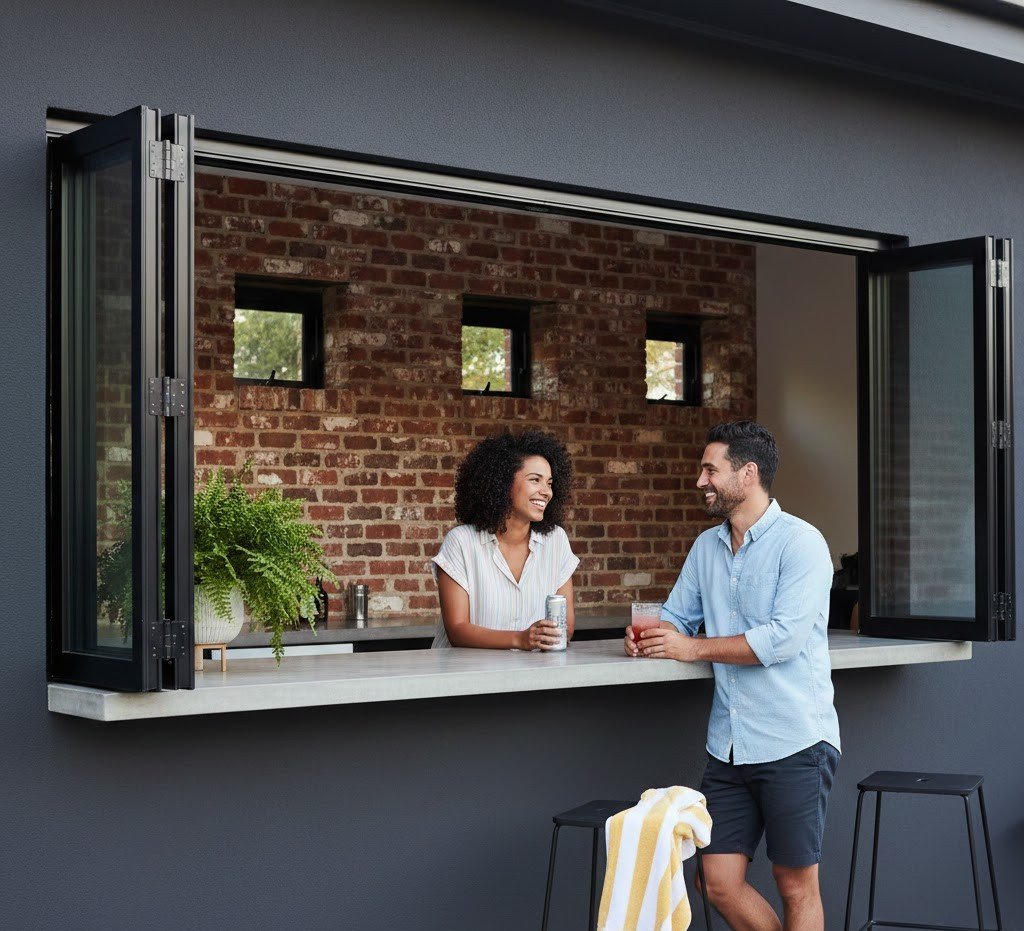
Aluminium bifold windows have become a signature feature in modern homes and hospitality spaces because they open wide, look sleek, and hold up for years with minimal upkeep. They work especially well for kitchen pass-throughs, bar counters, patios, and any opening where you want ventilation, interaction, and unobstructed views.
If you’re deciding on the best frame material, aluminium is often the most technically balanced option. It combines high structural strength with slim profiles, strong weather resistance, and long-term stability qualities that matter more in bifold systems than in simpler window types.
Key Takeaways
- Aluminium bifold windows provide superior strength-to-weight ratio, enabling wider openings with slim, stable frame profiles.
- Thermal break technology reduces heat transfer, improving energy efficiency and minimizing condensation risk.
- Energy performance depends on U-factor, SHGC, and glazing specifications like Low-E coatings and gas fills.
- Durable finishes and rigid frames enhance corrosion resistance, security, and long-term operational reliability.
What Are Aluminium Bifold Windows?
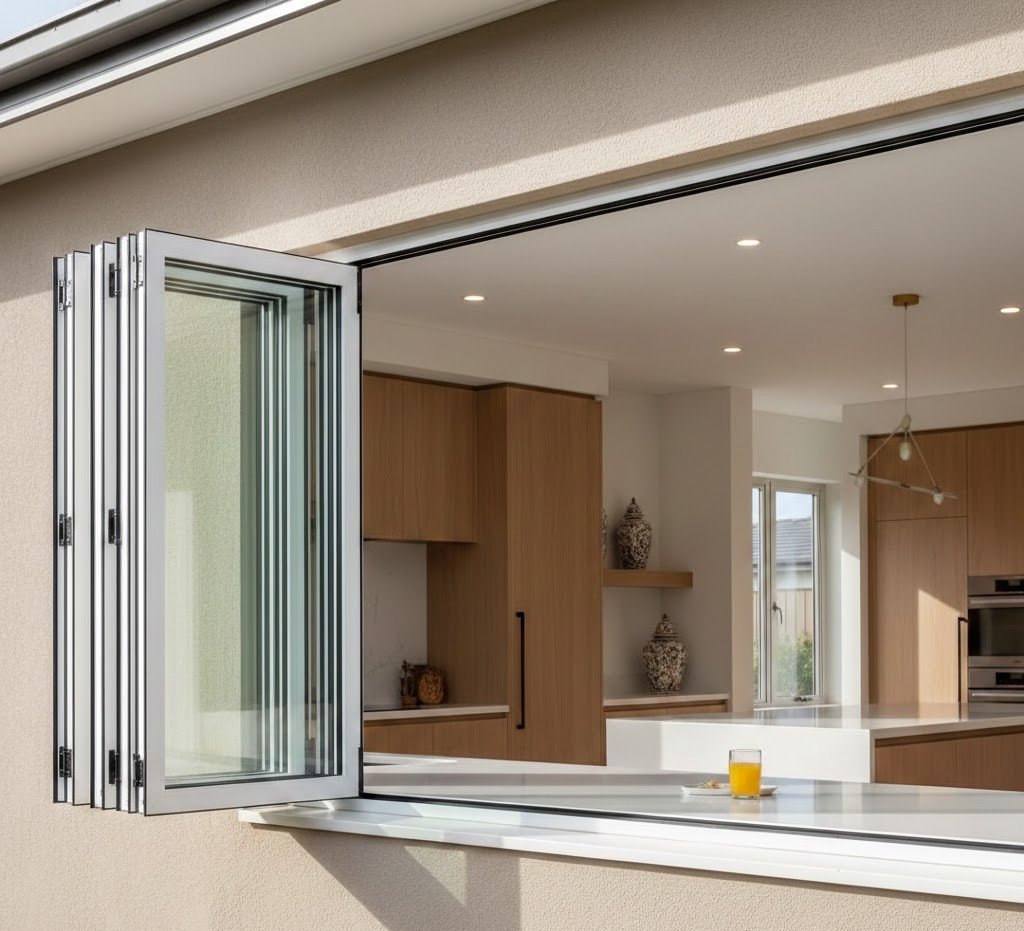
Aluminium bifold windows use multiple hinged sashes that fold and stack to one side (or split to both sides), moving along a track. When opened, the panels compress into a compact stack, leaving most of the opening clear.
Because of how they operate, bifold windows are best for:
- Kitchen pass-through counters
- Outdoor servery openings
- Entertainment areas and patios
- Cafés, bars, and restaurants
Before you select a system, it helps to understand the performance and design trade-offs involved in choosing the right system for your opening and climate.
Key Benefits of Aluminium for Bifold Systems
Strength That Supports Wide Openings
Bifold windows create load challenges: multiple panels, moving joints, and track hardware all must stay aligned. Aluminium’s high strength-to-weight ratio helps it handle that complexity without excessive frame bulk.
This strength enables:
- Wider openings with confident support
- Slimmer frame sightlines
- Better alignment over time
- Smoother operation under repeated use
In expert terms, aluminium reduces deflection under load, which is critical for keeping rollers, hinges, and seals working as designed.
Slim Sightlines and More Glass
Designers often choose bifold windows to maximize daylight and blur the line between indoors and outdoors. Aluminium allows thinner profiles than many alternatives, which increases glass area while keeping the frame rigid.
Practical benefits:
- Cleaner modern look
- Larger visible glass area
- Brighter interior spaces
- Better connection to outdoor views
If your project prioritizes minimal framing, aluminium is one of the most reliable ways to achieve that without compromising structure.
Durability in Wet, Hot, and Coastal Conditions
Aluminium doesn’t rot, swell, or crack like organic materials, and it’s not vulnerable to termites. With quality finishes and good drainage engineering, aluminium frames are well suited for kitchens and exterior-facing applications.
Why durability matters in bifolds:
- More moving parts means more reliance on stable geometry
- Wet zones (kitchens, bars) increase exposure to moisture and cleaning chemicals
- Exterior openings face wind-driven rain and temperature swings
When your design includes other frame types too, it can be useful to compare aluminium window options across different styles and performance targets.
Low Maintenance Without Losing Appearance
Aluminium frames are easy to maintain because the material is stable and finishes are designed for long-term exposure. Most maintenance is simple and periodic:
- Clean frame surfaces with mild detergent
- Keep tracks free of debris
- Check seals during seasonal changes
- Lubricate hardware as recommended
Unlike timber, you typically don’t need repeated repainting or sealing to preserve performance and appearance.
Security Benefits From Frame Rigidity
Security is not only about locks it’s also about how well a frame holds shape under stress. Aluminium’s stiffness supports strong locking hardware and reduces flex that can weaken seals or latches.
Security-relevant features often include:
- Multipoint locking systems
- Reinforced hinge points
- Laminated or tempered safety glass options
- Tight tolerances for better closure integrity
For bifold systems used at pass-through openings, a secure, well-aligned closure is a practical everyday advantage.
Thermal Performance Explained
A common concern is that aluminium conducts heat. That’s true of raw metal, but modern aluminium window engineering solves the problem with thermal breaks and advanced glazing. The result can be a system that performs very well, even in demanding climates.
What a Thermal Break Actually Does
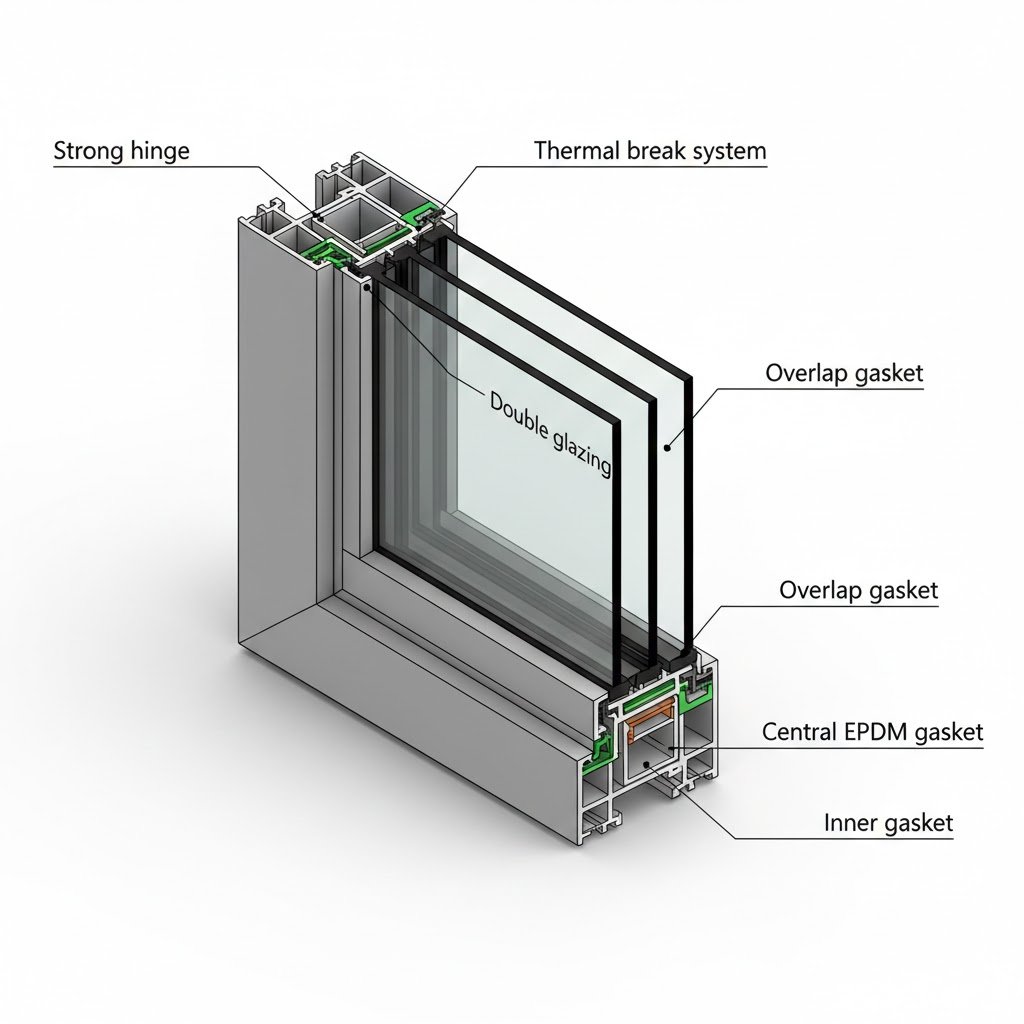
A thermal break is an insulating barrier commonly a polyamide strip between the interior and exterior aluminium sections. It interrupts heat transfer through the frame, reducing thermal bridging.
When a bifold window has a proper thermal break, you typically get:
- Improved indoor comfort near the window
- Lower condensation risk on cold days
- Better overall energy performance
- More stable interior surface temperatures
If you live in a climate with strong heating or cooling demand, a thermally broken aluminium system is often the most sensible specification.
U-Factor and SHGC in Plain Language
When professionals compare window energy performance, they focus on two numbers:
- U-Factor: how well the window resists heat loss (lower is better).
- SHGC: how much solar heat enters through the glass (lower reduces unwanted heat gain; higher can help in cold climates where winter sun is valuable).
Your glazing package influences these values more than most people realize. Key choices include: - Double vs triple glazing
- Low-E coatings
- Argon or krypton gas fills
- Spacer design and edge insulation
A strong aluminium frame paired with the right glass build can deliver comfort that rivals other materials, with the added benefit of higher structural stability.
Aluminium vs uPVC vs Timber: Which Is Better?
Different materials suit different priorities. The “best” choice depends on opening size, climate, aesthetics, and how much maintenance you’re willing to accept.
| Feature | Aluminium | uPVC | Timber |
| Structural strength | Excellent | Moderate | Moderate |
| Frame bulk | Slim possible | Typically thicker | Moderate |
| Maintenance | Low | Low | High |
| Moisture resistance | Very high | High | Variable |
| Thermal performance | Excellent (thermal break) | Good | Good |
| Long-term stability | Very high | Good | Depends on upkeep |
| Best fit | Large openings, modern sightlines | Budget-focused installs | Traditional design priorities |
Design Flexibility and Customization
Aluminium bifold windows offer broad customization because aluminium profiles and finishes can be engineered for both performance and aesthetics. This helps architects and homeowners match the window to the building style while keeping technical requirements intact.
Common customization areas:
- Color and finish selection
- Hardware style and handle options
- Panel count and stacking direction
- Glass specification for energy, privacy, or safety needs
If you want a deeper look at layout implications, panel count planning is one of the first decisions that shapes usability and appearance.
Sizing and Configuration That Actually Works
Sizing is not just an aesthetic decision it affects panel weight, hardware stress, and how well the system seals. A well-designed bifold window balances panel width, hinge spacing, track load limits, and structural support in the opening.
Key factors professionals check:
- Opening width and height
- Maximum practical panel weight
- Stacking space when fully open
- Track design and drainage path
- Frame reinforcement for large spans
Early planning is easier when you understand common sizing ranges and how they relate to panel count and performance goals.
Sustainability and Long-Term Value
Aluminium is a strong sustainability candidate because it’s highly recyclable and durable. Long service life reduces replacement cycles, and recycled aluminium retains useful properties for building applications.
Sustainability advantages typically include:
- High recyclability rate
- Reduced waste due to longevity
- Compatibility with energy-efficient glazing systems
- Lower maintenance material consumption over time
From a lifecycle perspective, a long-lasting aluminium bifold window that performs efficiently can be an environmentally sound choice, especially when paired with climate-appropriate glass.
How to Choose a Quality Aluminium Bifold Window
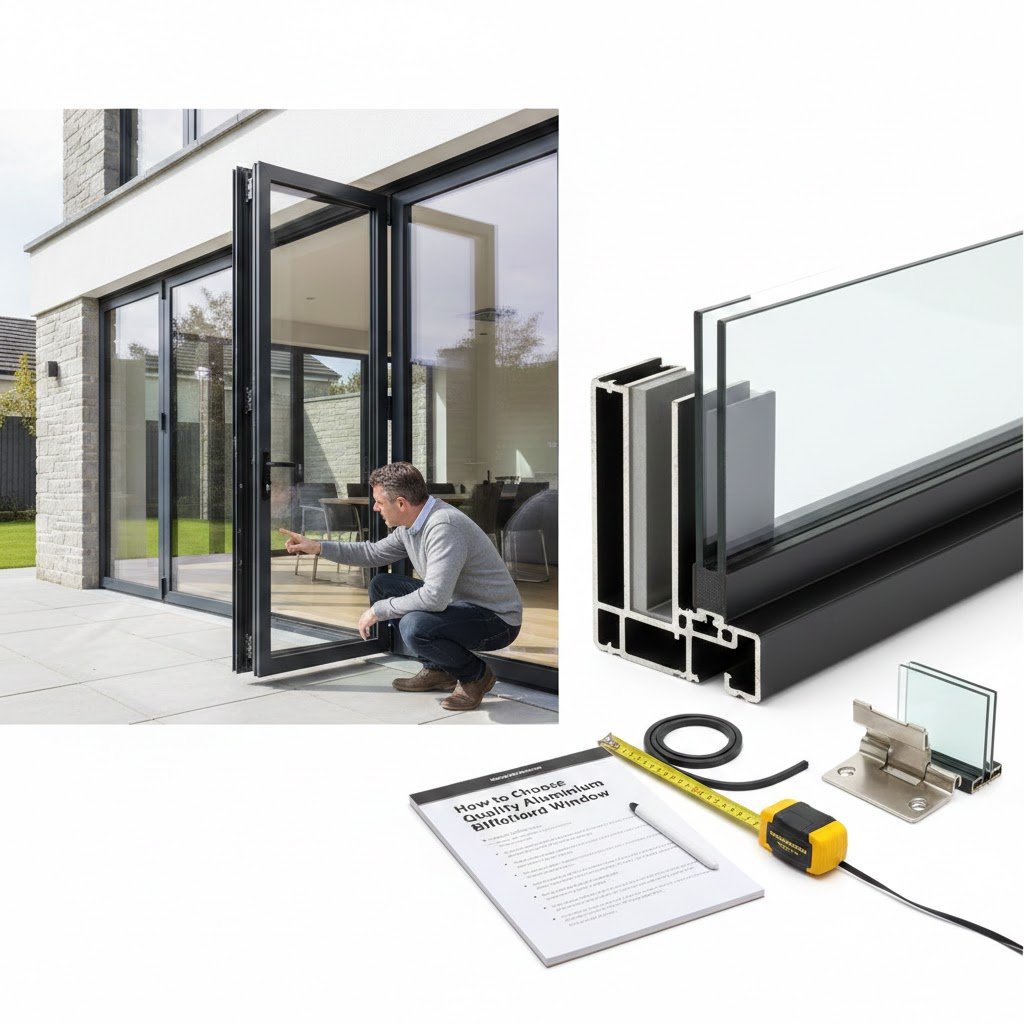
Not all aluminium bifold windows are engineered to the same standard. Because bifolds rely on moving components and precise alignment, system quality shows up quickly in how it feels and how it performs.
Frame and Drainage Engineering
A strong aluminium frame should be designed for real-world conditions wind, water, and repeated daily use. Look for:
- Thermal break construction where needed
- Robust corners and reinforcement for large spans
- Thoughtful water management and drainage paths
- Quality seals designed for long-term compression
Poor drainage design is a common cause of leaks in complex operable systems, so this is not a detail to overlook.
Hardware That Matches the Load
Bifold operation is only as good as the hardware. Hardware quality influences:
- Smooth sliding and folding motion
- Panel alignment over time
- Sealing consistency
- Resistance to corrosion and wear
Features to prioritize: - Durable rollers rated for panel weight
- Corrosion-resistant hinges and fasteners
- Precise tracks that stay true under load
- Secure locking hardware that closes consistently
Glass Specification for Comfort and Safety
Glass selection is where performance becomes real. For bifold windows, glazing is often chosen based on:
- Energy comfort (Low-E, gas fills, glazing layers)
- Safety needs (tempered or laminated)
- Privacy requirements (tints or obscure glass)
- Noise considerations (acoustic laminates, where applicable)
A high-quality aluminium system supports better glass packages without compromising frame stability, which is especially important as glazing gets heavier.
Installation That Protects Performance
Even a premium bifold system can fail if it’s installed out of square or without proper flashing. Good installation ensures:
- Panels align and move smoothly
- Seals compress evenly
- Drainage works correctly
- Long-term performance remains predictable
The most reliable results come from matching a well-engineered product with correct structural preparation and weatherproof detailing.
Why Select ORIDOW for Aluminium Bifold Windows
Choosing the right manufacturer like Oridow directly affects long-term performance, smooth operation, and structural reliability. They focus on engineered aluminium systems that balance aesthetics, durability, and practical functionality.
Key Reasons to Choose ORIDOW:
- Advanced Thermal Break Engineering
Designed to improve insulation performance and reduce thermal transfer in varying climate conditions. - Precision Fabrication Standards
Tight manufacturing tolerances support proper alignment, smoother operation, and long-term durability. - Customizable Configurations
Flexible sizing, panel counts, and opening layouts tailored to project-specific structural needs. - Durable Architectural Finishes
High-performance coatings designed for corrosion resistance, color retention, and minimal maintenance.
For projects requiring dependable performance and modern design flexibility, Oridow’s aluminium bifold window systems are engineered to meet contemporary architectural standards.
To maintain design consistency across an entire project, the broader collection of architectural aluminium products supports cohesive integration of windows and doors.
Frequently Asked Questions
Are aluminium bifold windows energy efficient?
Yes when the system uses a thermal break and the glazing is specified correctly for your climate. Energy performance is primarily driven by frame thermal design plus U-factor and SHGC outcomes from the glass package.
Are aluminium frames suitable for cold climates?
They can be excellent in cold climates when thermally broken. A non-thermally broken aluminium frame is more likely to feel cold and increase condensation risk, so thermal break selection is important.
Do aluminium bifold windows corrode near the sea?
Proper finishes and corrosion-resistant hardware significantly reduce corrosion risk. For coastal installs, the finish system and hardware grade matter as much as the base frame material.
How many panels should a bifold window have?
Panel count depends on opening width, desired clear opening, stack space, and practical panel sizes. More panels can reduce individual panel width, but adds hinges and complexity so balance is key.
Are bifold windows better than sliding windows?
Bifolds can open a larger percentage of the opening than sliders, which makes them ideal for pass-through and entertaining. Sliding systems can be simpler, with fewer moving joints, depending on the design goal.


