

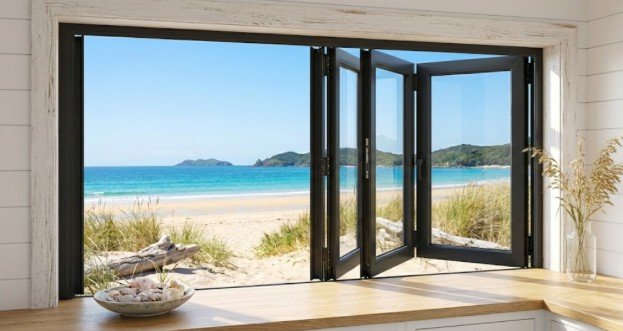
Aluminium bifold windows are available in both standard and fully custom sizes, which is why they are used in everything from compact kitchen openings to wide architectural spans. In real world applications, widths typically range from 1,800 mm to over 7,000 mm, while heights usually fall between 900 mm and 2,400 mm, depending on panel configuration and structural requirements.
Rather than being manufactured as one fixed unit, aluminum bifold windows are designed as modular systems. The final size depends on how many panels you select, how wide each panel is, and how the system folds when opened. This flexibility is a key reason aluminum bifold windows are widely specified across Australia, the UK, and the USA.
Key Takeaways:
- Aluminum bifold windows typically range from 1,800 mm to over 7,000 mm wide and 900 mm to 2,400 mm high.
- Total window width depends on panel count, panel width, glass weight, and structural wind load requirements.
- Custom manufacturing allows flexible panel configurations to suit kitchen serveries, entertaining areas, and large openings.
- Maximum size is limited by hardware capacity, building codes, and environmental exposure conditions
How Aluminum Bifold Window Sizing Works
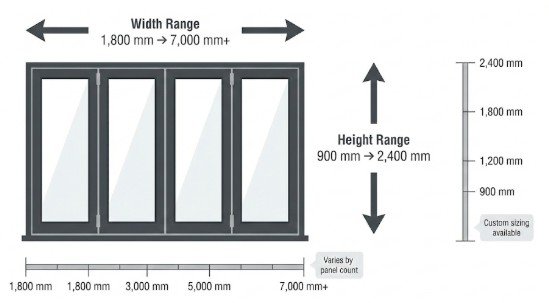
Aluminum bifold windows are sized by panel, not by a single-glazed frame. Understanding this makes it much easier to choose the right dimensions for your space.
Typical panel dimensions
Most modern aluminium systems support the following ranges:
- Panel width: 450 mm to 1,000 mm
- Panel height: 900 mm to 2,400 mm
Panel size is influenced by:
- Glass thickness and weight
- Wind load and exposure
- Hardware load capacity
Systems showcased on the bifold range demonstrate how slim aluminium profiles can support larger glass areas without sacrificing strength.
Standard Aluminium Bifold Window Sizes by Panel Count
The total width of an aluminium bifold window increases as panels are added. Below is a practical reference table based on common residential specifications.
|
Number of Panels |
Typical Total Width |
| 2 panels | 1,200 mm – 2,400 mm |
| 3 panels | 1,800 mm – 3,600 mm |
| 4 panels | 2,400 mm – 4,800 mm |
| 5 panels | 3,000 mm – 6,000 mm |
| 6–7 panels |
3,600 mm – 7,000 mm+ |
These are not strict limits. They reflect the most frequently requested sizes in modern homes.
Regional Aluminum Bifold Window Size Trends
While aluminium bifold windows are customisable, size preferences vary by region due to climate, architecture, and regulations.
Australia
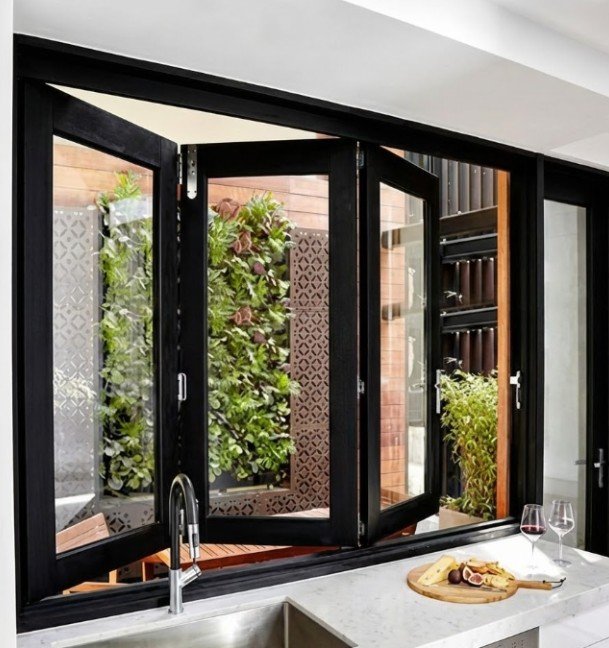
Australian homeowners often use bifold windows as kitchen servery or outdoor entertaining features.
Common size ranges:
- Widths between 2,400 mm and 4,800 mm
- Heights between 1,200 mm and 2,100 mm
Wind ratings play an important role, particularly in coastal areas.
United Kingdom
In the UK, aluminium bifold windows are frequently taller relative to width.
Typical dimensions include:
- Widths from 1,800 mm to 3,600 mm
- Heights up to 2,100 mm or more
Thermal performance requirements influence glass selection rather than overall size.
United States
In the USA, larger openings are increasingly popular, especially in warm climate states.
Common trends include:
- Widths exceeding 4,800 mm
- Heights reaching 2,400 mm
This reflects the demand for strong indoor outdoor connections in modern homes.
Standard Sizes vs Custom Aluminum Bifold Windows
Although standard size ranges exist, most aluminum bifold windows are made to order.
When standard sizes are suitable
- Replacing an existing opening
- Renovation projects with fixed structural dimensions
- Shorter lead time requirements
Standard sizing still allows flexibility in panel count and opening direction.
When custom sizes are the better choice
- Extra-wide or tall openings
- Maximising daylight and airflow
- Architectural designs with non-standard proportions
Design principles explained in howaluminum bifold windows work show how custom sizing improves both usability and aesthetics.
What Limits the Maximum Size of Aluminium Bifold Windows?
Even with aluminium’s strength, practical constraints still apply.
Structural limitations
Maximum size is influenced by:
- Glass weight, which increases rapidly with panel size
- Hardware ratings, including hinges and rollers
- Deflection control under wind pressure
High performance systems depend on precision components and durablebifold window hardware that ensure smooth, long-term operation.
Regulatory considerations
Local codes in Australia, the UK, and the USA may regulate:
- Maximum panel dimensions
- Safety glazing requirements
- Wind and impact resistance
These standards ensure large bifold windows remain safe and durable.
How to Choose the Right Size for Your Space
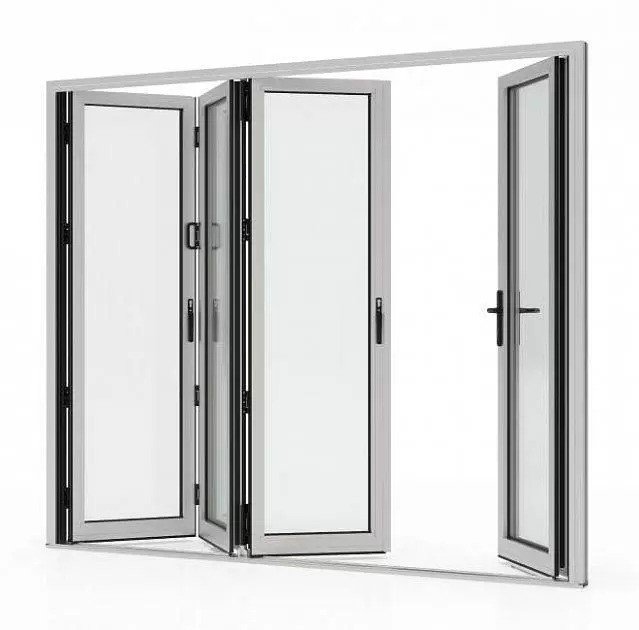
Choosing the right aluminum bifold window size means balancing structure, usability, and proportion. The objective is not simply to make the opening as wide as possible, but to ensure the window suits how you use the space while meeting performance standards.
1. Measure the Structural Opening Accurately
Always measure the structural opening, not the old frame.
- Check width and height at multiple points
- Confirm adequate lintel support for wider spans
- Account for sill height and finished floor levels
- Allow space for installation tolerances
Accurate measurements are critical because even small variations can affect alignment and long-term operation.
2. Define How the Window Will Be Used
Size should reflect function.
- For ventilation, moderate widths are often sufficient
- For kitchen serveries, 1,800 mm to 3,000 mm is common
- For entertaining spaces, wider openings improve flow
Also consider stacking direction and how much clear opening you need when fully folded.
3. Select the Right Panel Configuration
The same overall width can be achieved with different panel counts.
| Configuration | Benefit | Consideration |
| Fewer, wider panels | Cleaner sightlines | Heavier panels |
| More, narrower panels | Easier handling | Slightly more visible frames |
The right choice balances visual appeal with ease of use.
4. Consider Performance and Installation Factors
Final size is influenced by:
- Wind load requirements
- Glass thickness and weight
- Hardware capacity
- Local building regulations
Proper execution during theinstallation process ensures the selected size performs as intended and maintains smooth operation over time.
Why Aluminium Is Ideal for Large Bifold Window Sizes
Material choice directly affects how large a bifold window can be.
Aluminium compared to other materials
| Material | Large Panel Support | Frame Stability | Long Term Reliability |
| Aluminum | Excellent | Very high | Excellent |
| Timber | Moderate | Medium | Maintenance dependent |
| uPVC | Limited | Lower | Can flex over time |
Aluminium’s strength-to-weight ratio allows wider panels with slimmer frames.
Why Oridow Is the Right Supplier for Aluminium Bifold Windows
Oridow specialises in manufacturing high-performance aluminium bifold windows for global residential and commercial projects. Their systems are engineered in-house to overcome common limitations in standard bifold designs, particularly around panel size, durability, and smooth long-term operation with wide range of product options.
What sets Oridow apart:
- Factory-direct engineering with flexible sizing options
- Heavy-duty rollers and multi-point locking systems
- Precision corner joints and flush track designs
- Weather-resistant finishes for diverse climates
- Fast global delivery with clear installation guidance
- Dedicated pre-sale and post-sale technical support
Unlike generic suppliers, Oridow’s aluminium bifold windows are designed for energy-efficient homes, modern architecture, and current building standards across Australia, the UK, and the USA, delivering reliable performance at scale.
For projects that require clarity around specifications, performance, or configuration options, Oridow’s Expert team provides additional details aand technical insight.
FAQs
What is the maximum width for aluminium bifold windows?
Many systems can exceed 7,000 mm in total width, depending on panel configuration and hardware capacity.
Can aluminium bifold windows be floor-to-ceiling?
Yes. Heights up to 2,400 mm are common, with taller options possible when engineering requirements are met.
Are aluminium bifold windows custom-made?
- Most aluminium bifold windows are manufactured to order
- Custom fabrication allows precise sizing for each opening
- Panel count, width, height, and configuration can be tailored to your layout
Do larger bifold windows cost more?
- Larger sizes require more aluminium, glass, and hardware
- Heavier panels may need upgraded rollers and locks
- Increased cost is often offset by greater usability and visual impact
What size aluminium bifold window is best for a kitchen?
- Typical kitchen servery widths range from 1,800 mm to 3,600 mm
- Size depends on bench length, opening height, and how often it’s used
- Multi-panel setups offer flexibility for both small and large kitchens


