

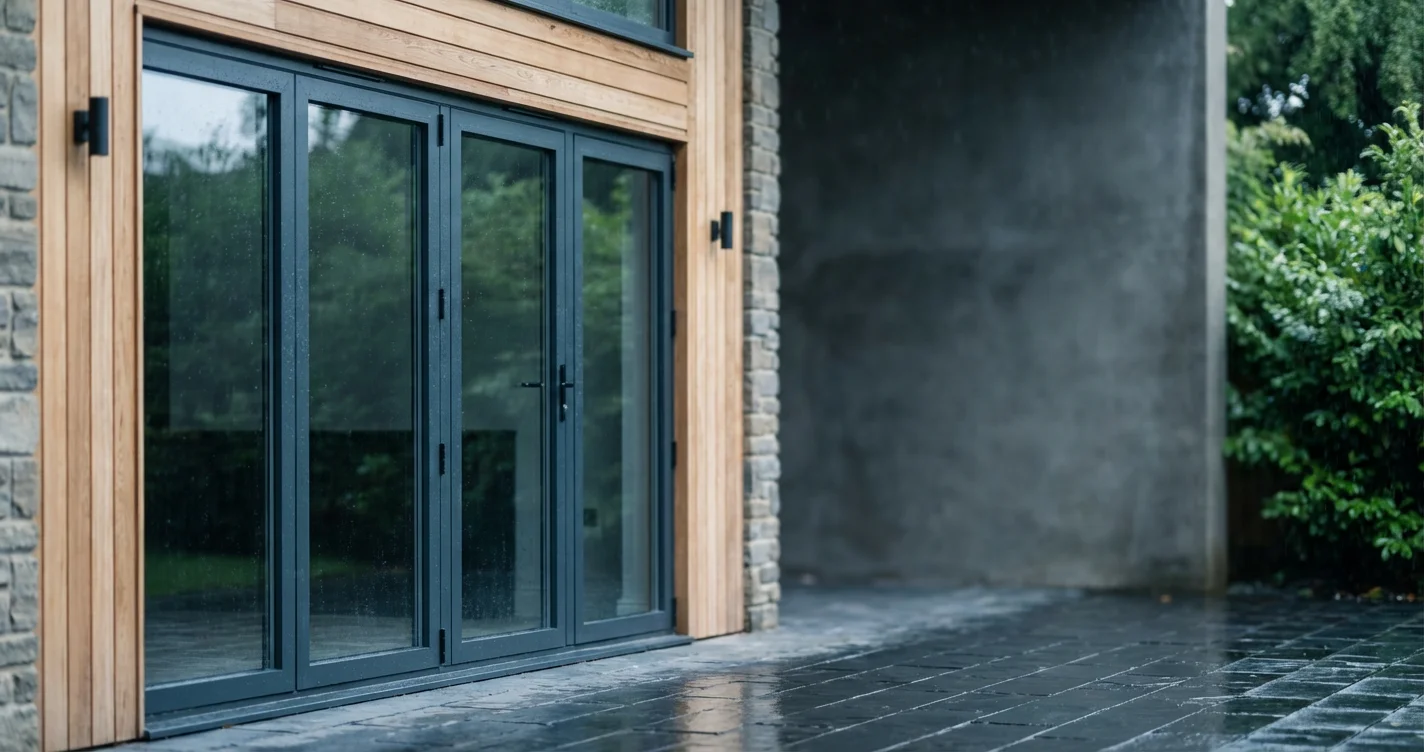
What Are Aluminium Bifold Doors and How Do They Work?
Definition and mechanism
- Define: a folding door system where multiple panels are hinged together and slide on a top-hung or bottom-rolling track, stacking to one or both sides when open
- Distinguish from sliding doors (panels stack, not slide past each other) and French doors (panel count, opening width)
- Include a 40–55 word snippet-optimised answer at the very top of this section
Why aluminium specifically?
- Material properties: high strength-to-weight ratio allows narrow sightlines; corrosion resistant; powder-coat compatible for any RAL colour
| Oridow uses 6063-T5 or 6061 aluminium alloy profiles — cite from product page where available |
- Compare briefly: aluminium vs. uPVC frames — why aluminium holds larger glazed panels without bowing
Common applications
- Residential: kitchen-to-garden, bi-level living spaces, glazed extensions
- Commercial: shopfronts, hospitality spaces, office partitions
- Signal trade audience: architects and contractors specify aluminium for projects requiring large clear-opening widths
Thermal Efficiency: How Warm Are Aluminium Bifold Doors?
| Highest-value informational section. Depth here builds trust with specifiers. |
The thermal bridge problem and how it is solved
- Aluminium is a conductor — without intervention, frames transmit cold from outside to inside
- Thermal break explained: a polyamide (PA66) or polyurethane strip inserted into the aluminium extrusion to interrupt the conductive path
- Analogy for general audience: thermal break = the double-skin of a thermos flask
| Oridow bifold doors incorporate a thermally broken profile — cite spec from oridow.com/how-thermally-efficient-are-aluminium-bifold-doors/ |
U-value benchmarks
Include the following comparison table:
| Configuration | Approximate U-value |
| Single glazed, no thermal break | 5.0–6.0 W/m²K |
| Double glazed, no thermal break | 3.0–3.5 W/m²K |
| Double glazed, thermally broken frame | 1.6–2.0 W/m²K |
| Triple glazed, thermally broken frame | 0.8–1.2 W/m²K |
- Explain what a lower U-value means (less heat loss)
| UK Part L: ≤1.4 W/m²K for new builds; EU EPBD sets comparable benchmarks; US ENERGY STAR standards by climate zone — writer to verify current figures |
Glazing options that affect thermal performance
- Double vs. triple glazing — weight and cost trade-offs
- Low-E coatings: reflect infrared, retain heat in winter
- Argon/krypton gas fill: denser than air, reduces convective heat transfer
- Warm-edge spacer bars vs. aluminium spacers
Condensation and cold-edge effects
- Explain edge condensation as a symptom of thermal bridging, not a defect in the glass itself
- How thermally broken frames with warm-edge glazing minimise this
Configurations and Panel Counts
How configurations are specified
- Standard notation: 2+0, 3+0, 2+1, 3+1, 4+0 — explain left/right stacking
- Traffic door (master door leaf): what it is and why it matters for everyday access
Configuration table
| Configuration | Total Panels | Max. Approx. Opening Width | Typical Use |
| 2+0 | 2 | Up to 2.4 m | Narrow openings, outbuildings |
| 3+0 | 3 | Up to 3.6 m | Standard patio openings |
| 2+1 | 3 | Up to 3.6 m | Centre-opening (equal stacks) |
| 3+1 | 4 | Up to 4.8 m | Wide openings, open-plan extensions |
| 4+0 or 0+4 | 4 | Up to 4.8 m | Full-stack to one side |
| 4+2 or 3+3 | 6 | Up to 7.2 m | Large glazed extensions, commercial |
Note: maximum widths are indicative; structural opening and panel weight constraints apply.
Inward vs. outward opening
- Space implications: inward requires internal clearance; outward clears internal floor space
| Oridow supplies both inward and outward opening variants — confirm from product page |
Threshold options
- Low-threshold (rebated): near-flush with floor, better accessibility (Part M / ADA compliance)
- Standard threshold: greater weather-seal performance in exposed locations
Aluminium vs. Other Bifold Door Materials
Angle: Objective comparison. Do not dismiss uPVC or timber — address the legitimate trade-offs. Readers who feel a comparison is balanced are more likely to trust the brand recommendation at the end.
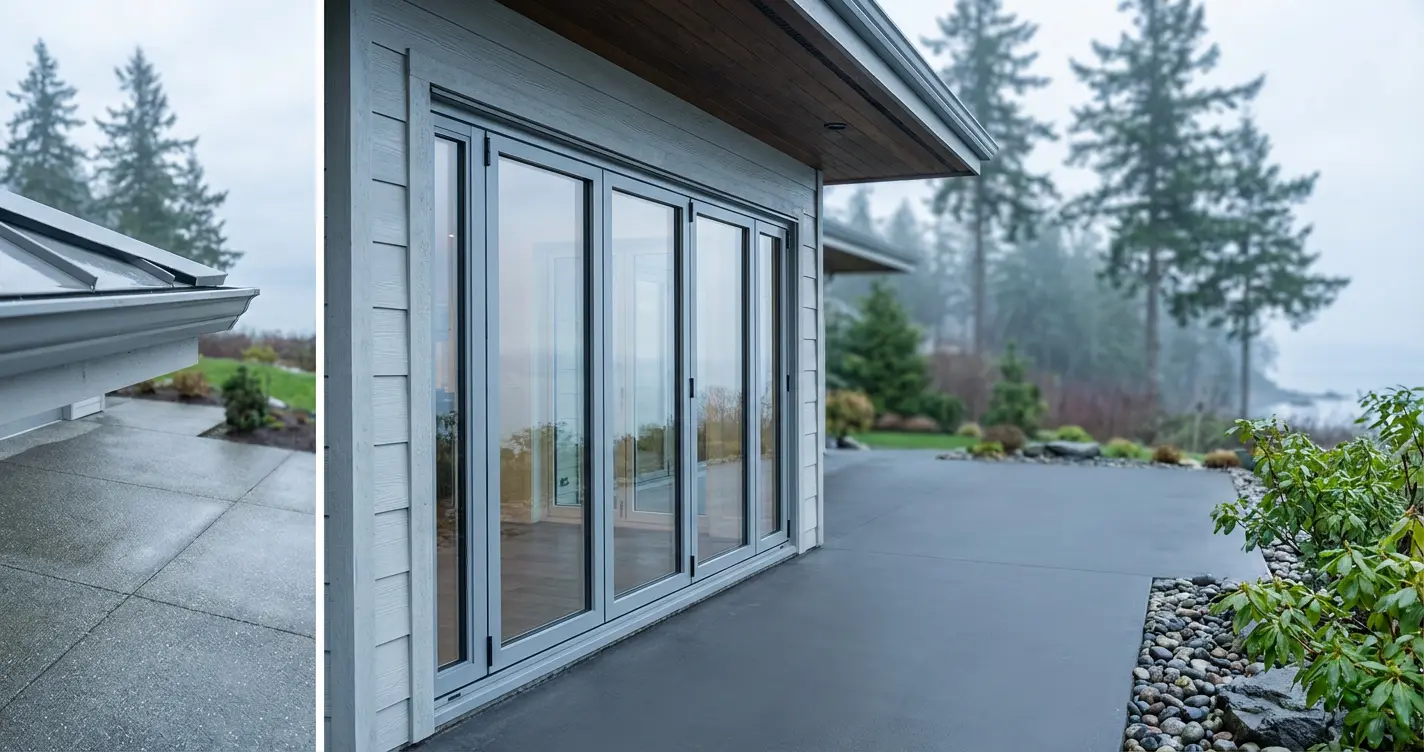
Comparison table
| Factor | Aluminium | uPVC | Timber |
| Sightline width | Narrow (45–65 mm typical) | Wider (65–90 mm) | Varies |
| Max. panel size | Large | Moderate | Moderate |
| Thermal performance | Excellent (with thermal break) | Good | Good (if maintained) |
| Maintenance | Very low | Very low | High |
| Lifespan | 30–40+ years | 20–25 years | 15–30 years (variable) |
| Colour options | Unlimited (RAL powder coat) | Limited | Paintable/stainable |
| Recyclability | Fully recyclable | Limited | Biodegradable |
| Cost | Mid–High | Low–Mid | Mid–High |
When to choose aluminium
- Large opening widths (>3 m)
- Contemporary architectural aesthetic requiring slim sightlines
- Low-maintenance priority
- Commercial and high-specification residential projects
Aluminium Bifold Door Costs: What Affects the Price?
- Number of panels — more panels = more hardware, more glass, more frame extrusion
- Overall size / sq. metre of glazing — larger panels require thicker glass and heavier-duty hardware
- Glazing specification — double vs. triple, low-E coating, gas fill
- Thermal break specification — deeper thermal break = higher-performance profile = higher cost
- Colour/finish — standard RAL colours typically included; dual-colour commands a premium
- Hardware grade — stainless steel vs. standard finish handles and hinges
- Threshold type — low-threshold systems are more complex to manufacture
- Supply chain model — buying direct from manufacturer (like Oridow wholesale) vs. through a distributor substantially affects unit cost
Trade and wholesale pricing
| Reference Oridow’s wholesale/trade supply model from oridow.com/aluminum-bifold-doors-wholesaler-profit/ — factory-direct supply protects installer margins vs. distribution chain markups |
- Signal audience: if reader is a contractor or reseller, direct-from-manufacturer is the cost lever
Installation: What Every Buyer and Installer Needs to Know
Structural opening requirements
- Aluminium bifold doors are heavy — structural lintel is non-negotiable for spans above ~1.8 m
- Concrete or steel lintel sizing: consult structural engineer for spans above 3 m
- Minimum reveal depth: confirm from Oridow product page
Top-hung vs. bottom-rolling track systems
- Top-hung: cleaner floor finish, no floor track dirt trap, preferred for flush threshold
- Bottom-rolling: lower cost, suitable for non-flush applications
| State which system Oridow supplies (confirm from product page) |
Installation sequence overview (numbered list in article)
- Verify structural opening dimensions match order specifications
- Install cill/threshold first; check level and DPC/flashing
- Hang frame; pack and level; check square
- Fit panels sequentially; adjust hinges
- Fit and align running gear; adjust rollers/hanging hardware
- Test full open/close cycle; adjust until smooth
- Fit perimeter seals; test weather performance
- Apply any sealant at reveals
Common installation mistakes to avoid
- Out-of-square opening (doors will bind)
- Insufficient lintel bearing length
- Skipping DPC at cill (water ingress)
- Over-tightening adjustment screws
Maintenance, Durability, and Lifespan
Routine maintenance schedule
| Task | Frequency |
| Wipe frame with mild soapy water | Every 3–6 months |
| Lubricate hinges and running gear | Annually |
| Check and clear drainage slots/weep holes | Annually |
| Inspect seals and replace if compressed/cracked | Every 3–5 years |
| Check threshold seal | Annually (especially after winter) |
Powder coat durability
- Quality powder coat rated to Qualicoat Class 1 or Class 2 (marine/coastal)
- Chalking or fading timescale: Class 1 typically 10+ years to visible degradation
| Cite Oridow warranty terms on finish from product page |
Warranty expectations
- Frame structural warranty: confirm Oridow’s warranty period
- Glazing unit seal warranty: typically 5–10 years against misting
- Hardware/ironmongery: typically 1–5 years
| Oridow warranty — cite exact figures from product page where available |
Buying Guide & Conversion Bridge
Angle: Most commercially important section. Transition from educating the reader to helping them act. Must not read like an advertisement.
What to look for in an aluminium bifold door supplier (checklist format)
- ☐ Full thermal break profile — not just thermally improved
- ☐ U-value documentation (ask for test certificates, not just claimed values)
- ☐ Hardware brand and grade (own-brand vs. named hardware supplier)
- ☐ Colour matching across frames, threshold, and cill
- ☐ Structural loading data / CE or ETA marking
- ☐ Minimum order quantities if buying trade/wholesale
- ☐ Delivery lead times and packaging for transit damage protection
- ☐ After-sales technical support
Trade and wholesale buyers: direct manufacturer advantages
- Margin protection: removing distributor layer preserves installer/trade margin
- Custom configurations available direct from factory
| Position Oridow as a direct manufacturer supplying trade — reference wholesale page context |
See Oridow’s wholesale aluminium bifold door supply
| “Oridow manufactures aluminium bifold doors at factory level, supplying installers, builders, and trade buyers directly. If you’re specifying doors for a project or sourcing at volume, explore the full range → https://oridow.com/aluminum-bifold-doors/“ |
Frequently Asked Questions
Q1: Are aluminium bifold doors thermally efficient?
Yes. Modern aluminium bifold doors with a thermally broken profile and double or triple glazing achieve U-values as low as 0.8–1.2 W/m²K, meeting or exceeding the thermal requirements of most building regulations. The key is the thermal break — a non-conductive barrier built into the aluminium frame that prevents cold transfer.
Q2: How long do aluminium bifold doors last?
Aluminium bifold doors typically last 30–40 years or more with routine maintenance. The aluminium frame will not rot, warp, or corrode under normal conditions, and a quality powder-coat finish resists UV degradation for 10+ years before requiring attention.
Q3: Can aluminium bifold doors be used externally?
Yes — aluminium bifold doors are one of the most popular external door systems for residential and commercial applications. The combination of corrosion resistance, weatherseals, and multipoint locking hardware makes them well-suited to exposed external openings.
Q4: What is the maximum width for an aluminium bifold door system?
Most manufacturers can supply systems up to 7–8 m wide across 6 or more panels, though structural and practical constraints apply. Above 3–4 m, an engineered lintel and professional structural assessment are required.
Q5: Do aluminium bifold doors require planning permission?
In most cases, replacing existing windows or doors with bifold doors does not require planning permission in the UK, US, or EU under permitted development rights — but creating a new opening always does. Listed buildings and conservation areas have stricter controls. Always verify with your local planning authority.
Q6: How much do aluminium bifold doors cost?
Cost depends on panel count, size, glazing specification, and whether you are buying at trade or retail. Buying direct from a manufacturer like Oridow eliminates distributor markups, which is the single biggest variable for trade and wholesale buyers.
Q7: Are aluminium bifold doors secure?
Yes, when correctly specified. Look for multi-point locking systems, anti-lift pins, shootbolt hardware, and laminated or toughened glass. Quality systems comply with PAS 24 (UK) or comparable security standards.


