

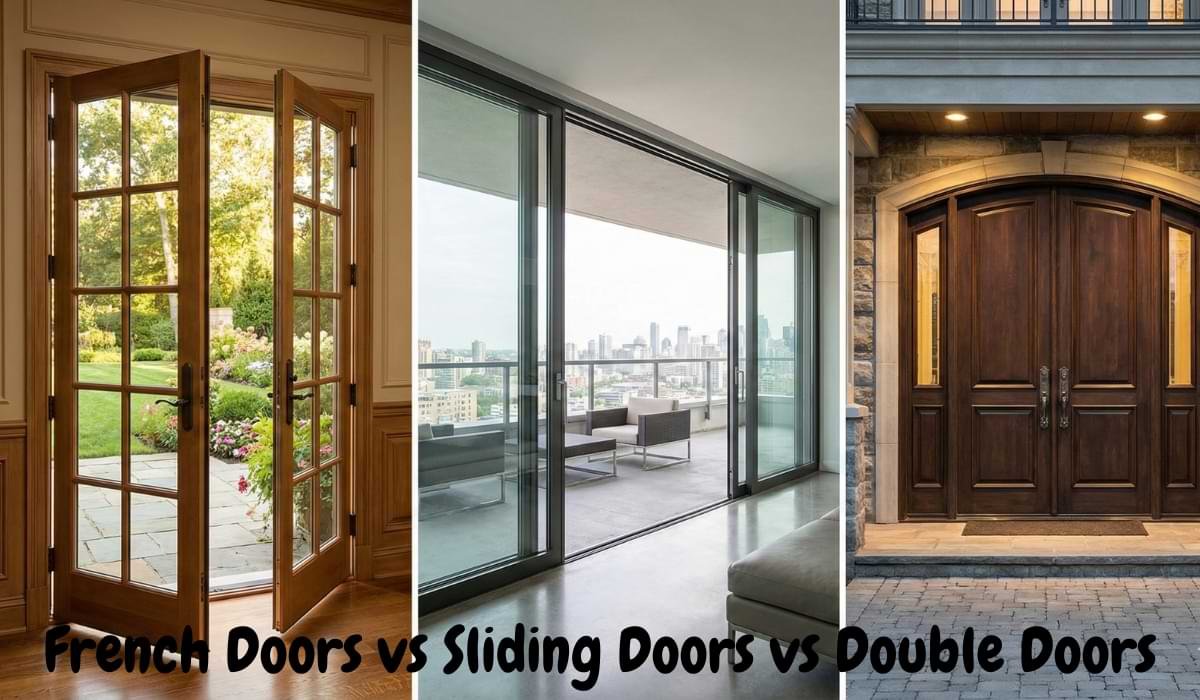
Choosing the right door for your home is not just about appearance it plays a crucial role in space planning, energy efficiency, natural lighting, security, and long-term comfort. With so many design options available today, homeowners often find themselves comparing French doors, sliding doors, and double doors. Each of these door types offers unique advantages, but they also come with limitations that may or may not suit your home’s layout and lifestyle.
Whether you are designing a new house, renovating an existing space, or upgrading a patio or entrance, understanding the difference between these three popular door styles can help you make a smarter, future-proof decision. In this guide, we break down each door type, explore its pros and cons, compare them side by side, and help you determine which option works best for your specific needs.
French Doors: Everything You Need to Know
French doors are a classic and elegant door style characterized by two hinged door panels that open from the center, usually featuring large glass inserts. Originally designed to allow natural light to flow between rooms, French doors have evolved into a popular choice for both interior and exterior applications. They are commonly used to connect living spaces to patios, gardens, balconies, or adjoining rooms.
What sets French doors apart is their ability to combine functionality and aesthetics. The wide opening they create enhances ventilation and accessibility, while the glass panels brighten interiors and create a strong visual connection with the outdoors. Modern French doors are available in various materials, including wood, uPVC, aluminum, and composite frames, allowing them to suit both traditional and contemporary homes.
French doors can open either inward or outward, depending on space availability and design preference. When properly installed with high-quality seals and hardware, they also provide strong insulation and security.
Key Features and Benefits of French Doors
-
Elegant and timeless design that suits both classic and modern interiors
-
Large glass panels that maximize natural light and outdoor visibility
-
Wide opening access, making movement and ventilation easy
-
Flexible installation options, opening inward or outward
-
Available in multiple materials to meet budget and design needs
-
Good energy efficiency when fitted with double-glazed glass
-
Enhances property value through improved aesthetics and functionality
Where French Doors Work Best
-
Patio and garden entrances
-
Living and dining room transitions
-
Balcony access in larger homes
-
Interior partitions where light flow is important
Professional Insight
French doors are ideal for homeowners who prioritize style, symmetry, and natural light and who have sufficient space for a swinging door design. While they require more clearance than sliding doors, their visual appeal and comfort benefits often make them a preferred choice.
Pros of French Doors
-
Timeless and elegant appearance
French doors add charm and sophistication, working well in both traditional and modern homes. -
Excellent natural light
Large glass panels allow sunlight to flow freely into interior spaces, making rooms feel brighter and more open. -
Wide opening and better ventilation
When both panels are open, French doors create a generous opening ideal for airflow and indoor–outdoor living. -
Strong insulation when properly sealed
With quality frames and double glazing, French doors can provide good thermal efficiency. -
Versatile design options
Available in wood, uPVC, aluminum, and composite materials, with various finishes and styles. -
Adds resale and aesthetic value
Their visual appeal often increases perceived home value and buyer interest.
Cons of French Doors
-
Requires swing space
The hinged design needs sufficient clearance to open, making it less ideal for small or narrow rooms. -
Higher cost compared to sliding doors
French doors especially high-quality or custom designs can be more expensive. -
Maintenance of hinges and seals
Hinges, locks, and weather seals require occasional care to maintain smooth operation. -
Glass needs frequent cleaning
Large glass surfaces can show fingerprints, dust, and weather marks easily. -
Not ideal for tight patios or balconies
Outward or inward swinging may interfere with furniture or walkways. -
Potential heat loss if poorly installed
Lower-quality installation or materials can reduce energy efficiency.

2. Sliding Doors
Sliding doors are a modern and space-efficient door solution that operates by moving horizontally along a track rather than swinging open. Typically designed with large glass panels, sliding doors are widely used to connect living spaces with patios, balconies, terraces, and gardens. Their sleek design and ease of operation make them especially popular in contemporary homes and apartments where space optimization is important.
One of the biggest advantages of sliding doors is their ability to maximize natural light and outdoor views without occupying additional floor space. Sliding door systems are available in a wide range of materials, including uPVC, aluminum, wood, and composite frames, allowing homeowners to choose based on budget, insulation needs, and design style. Modern sliding doors often come with advanced features such as multi-point locking systems, toughened or laminated glass, and improved sealing for energy efficiency.
Sliding doors can have two or more panels, with one or more panels sliding over fixed sections. While traditionally associated with patios, they are now also used as room dividers and interior partitions, especially in open-plan layouts.
Key Features of Sliding Doors
-
Horizontal sliding mechanism using a track system
-
Large glass panels for maximum daylight and outdoor visibility
-
Space-saving design with no swing clearance required
-
Smooth and quiet operation with modern rollers
-
Available in multiple materials and finishes
-
Suitable for both interior and exterior use
Pros of Sliding Doors
-
Excellent space efficiency
Ideal for small rooms, balconies, and compact layouts since the door does not swing open. -
Maximizes natural light and views
Large glass panes create a bright, open feel and provide unobstructed outdoor views. -
Modern and minimalist appearance
Clean lines and wide glass areas suit contemporary architectural styles. -
Easy operation
Smooth sliding systems make doors easy to open and close with minimal effort. -
Flexible design options
Available with multiple panels, finishes, and frame materials to match various interiors. -
Good accessibility
Low-threshold designs are suitable for elderly users and wheelchair access.
Cons of Sliding Doors
-
Track maintenance required
Dirt and debris can collect in the tracks and need regular cleaning. -
Limited opening width
Usually, only one side opens fully at a time, reducing clear passage. -
Lower insulation compared to hinged doors
Sliding systems may lose some heat at joints if not properly sealed. -
Security depends on lock quality
Requires strong locks and reinforced glass for better security. -
Glass cleaning can be frequent
Large glass surfaces show fingerprints and dust easily. -
Repairs can be complex
Roller or track damage may require professional servicing.
Where Sliding Doors Work Best
-
Apartments and small homes
-
Patios and balconies
-
Modern open-plan living areas
-
Homes with limited door clearance space
Professional Insight
Sliding doors are an excellent option for homeowners who prioritize space savings, modern aesthetics, and natural light. While they may require more attention to cleaning and security features, high-quality sliding door systems offer reliable performance and long-term comfort when properly installed.
3. Double Doors
Double doors consist of two hinged door panels that open outward or inward from a central point. Unlike French doors, which usually feature large glass panels, double doors can be fully solid, partially glazed, or fully glazed, making them highly versatile in both design and function. They are commonly used as main entry doors, but are also suitable for large interior openings where a bold architectural statement is desired.
Double doors are often chosen for their strong visual presence, robustness, and security. Because of their thicker construction and solid materials, they tend to feel more substantial and durable, especially for exterior entrances. These doors are available in a wide range of materials, including wood, steel, fiberglass, aluminum, and uPVC, allowing homeowners to balance aesthetics, durability, and budget.
When both panels are open, double doors create a wide and welcoming entrance, making them ideal for moving large furniture or accommodating high foot traffic. However, due to their hinged nature, they require sufficient clearance space to function effectively.
Key Features of Double Doors
-
Two-hinged door panels opening from the center
-
Available in solid, semi-glazed, or fully glazed designs
-
Strong structural build suitable for main entrances
-
Wide opening access for convenience and accessibility
-
Compatible with advanced security hardware
-
Customizable materials, finishes, and styles
Pros of Double Doors
-
Striking and elegant appearance
Double doors create a grand, impressive entrance that enhances curb appeal. -
Excellent security options
Solid-core panels, reinforced frames, and multi-point locks provide strong protection. -
Wide entry access
Ideal for large households, events, or moving bulky items. -
High durability
Strong construction materials ensure long-term performance. -
Design versatility
Available in modern, rustic, traditional, and luxury styles. -
Good insulation when properly sealed
Especially effective with insulated cores and quality weatherstripping.
Cons of Double Doors
-
Requires significant space to operate
Swing clearance is needed on one or both sides. -
Higher cost compared to single or sliding doors
Material and installation expenses are generally higher. -
Heavier structure
Requires strong hinges and professional installation. -
Less natural light with solid designs
Fully solid panels limit daylight unless glass inserts are added. -
Not ideal for narrow openings
Requires sufficient width to install properly.
Where Double Doors Work Best
-
Main home entrances
-
Large foyers and hallways
-
Homes that emphasize design impact
-
Properties where security is a top priority
Professional Insight
Double doors are best suited for homeowners who want a bold, secure, and visually commanding entrance. While they demand more space and investment, their durability, wide access, and architectural impact make them a premium choice, particularly for main entryways and large homes.
Comparison Table: French Doors vs Sliding Doors vs Double Doors
| Technical Parameter | French Doors | Sliding Doors | Double Doors |
|---|---|---|---|
| Opening Mechanism | Hinged, opens from the center (inward or outward) | Horizontal sliding on tracks | Hinged from the center, both panels swing |
| Space Requirement | Requires swing clearance | No swing space needed (space-saving) | Requires wide swing clearance |
| Frame Materials Available | Wood, uPVC, aluminum, composite | uPVC, aluminum, wood, composite | Wood, steel, fiberglass, uPVC, aluminum |
| Glass Configuration | Mostly full-glass panels | Large continuous glass panels | Solid, semi-glazed, or fully glazed |
| Maximum Opening Width | Medium | Very large possible | Very wide (limited by hinges) |
| Structural Strength | Moderate–High | Moderate (depends on frame material) | High |
| Thermal Insulation (U-Value) | High (with double/triple glazing) | Medium | High (especially solid core) |
| Energy Efficiency | High | Medium–High (depends on sealing) | High |
| Sound Insulation | Good | Moderate | Very good |
| Weather Sealing | Excellent (compression seals) | Moderate (brush/rubber seals) | Excellent |
| Security Level | Medium–High | Medium (lock dependent) | High |
| Locking System | Multi-point locking | Track lock + multi-point options | Heavy-duty multi-point locking |
| Threshold Options | Medium step or low threshold available | Ultra-low threshold possible | Medium to high threshold |
| Ease of Operation | Easy but weight-dependent | Very easy and smooth | Heavy; depends on door weight |
| Maintenance Needs | Hinges, seals, and glass cleaning | Track cleaning, rollers | Hinges, locks, frame alignment |
| Durability | High | High (track wear over time) | Very high |
| Installation Complexity | Moderate | Moderate–High | High |
| Typical Cost Range | Medium to high | Medium | High |
| Best Suited For | Patio, garden entry, elegant interiors | Small spaces, modern homes, balconies | Main entrances, large homes |
| Aesthetic Style | Classic, elegant | Modern, minimalist | Grand, bold |
| Accessibility | Moderate | Excellent (wheelchair-friendly) | Moderate |
| Limitations | Needs clearance space | One panel opens at a time | Requires wide opening & space |
Technical Summary
-
French Doors → Best balance of aesthetics & insulation
-
Sliding Doors → Best for space-saving & modern layouts
-
Double Doors → Best for security, durability, & main entrances
Expert Recommendation
-
Choose Sliding Doors for apartments, balconies, and compact spaces
-
Choose French Doors for patios, living areas, and stylish interiors
-
Choose Double Doors for main entrances, large homes, and security-focused applications
Frequently Asked Questions (FAQ)
1. Which door is best for small spaces?
Sliding doors are the most practical choice for small or compact spaces because they operate along a track and do not require clearance for opening. This makes them ideal for apartments, balconies, and tight layouts.
-
No swing space required
-
Ideal for compact rooms and narrow patios
-
Maintains floor space efficiency
-
Easy to operate in tight areas
2. Which door is more energy efficient?
French doors and double doors generally provide better insulation because their hinged design allows tighter seals compared to sliding systems.
-
Hinged doors form strong compression seals
-
Better thermal and sound insulation
-
Reduced heat loss with quality glazing
-
Suitable for climate-controlled homes
3. Are sliding doors secure?
Sliding doors can be secure when equipped with robust locking systems and reinforced glass, though hinged doors typically offer higher inherent security.
-
Security depends on lock quality
-
Toughened or laminated glass improves safety
-
Additional locks enhance protection
-
Hinged doors offer higher resistance by design
4. Which door adds more home value?
French doors and double doors usually add more resale value due to their visual appeal, structural presence, and premium feel.
-
Enhances aesthetics and curb appeal
-
Creates a sense of luxury and openness
-
Popular in buyer preferences
-
Strong architectural impact
5. Which door is best for patios?
The best door for a patio depends on available space and design preference.
-
Sliding doors work well for small patios
-
French doors suit larger patios with clearance
-
Both provide good outdoor access
-
Choice depends on layout and usage


