

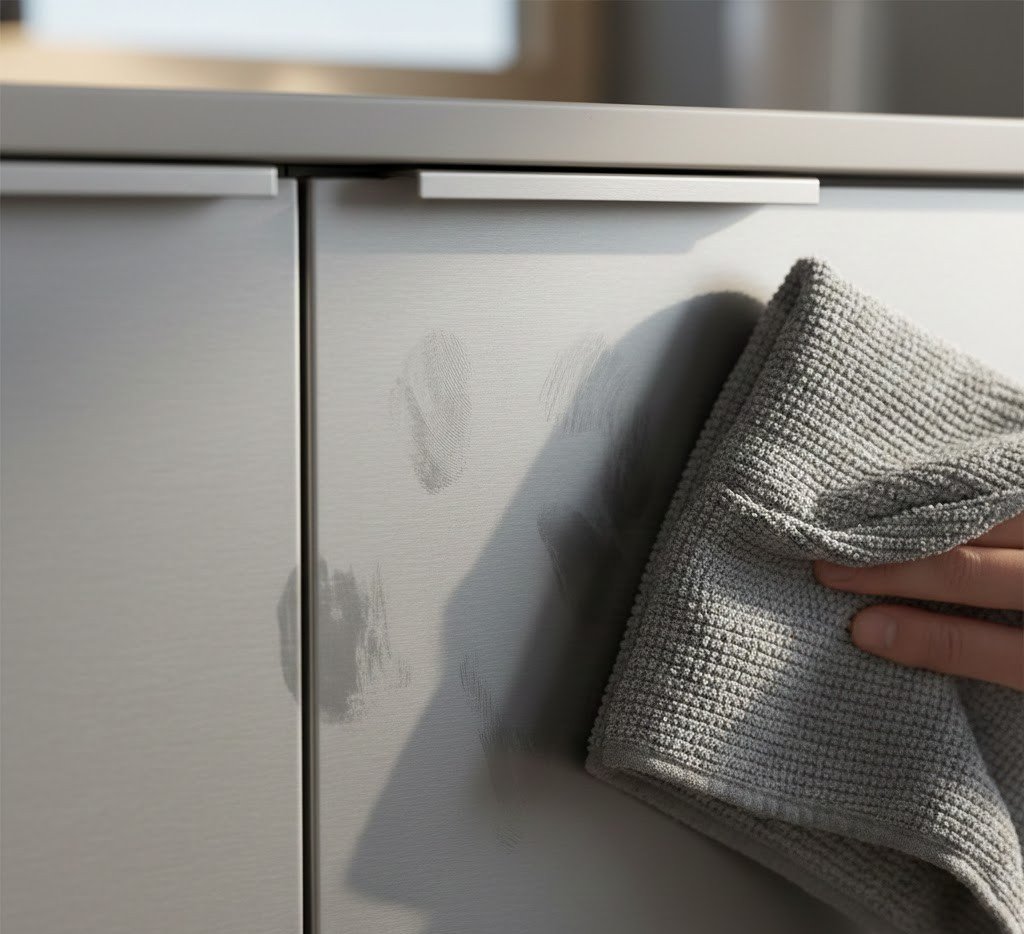
Aluminum cabinet fingerprints come off best with a microfiber cloth, warm water, and a few drops of pH-neutral dish soap then a clean rinse and a thorough dry. The key is matching your method to the finish (powder-coated, anodized, or brushed) and avoiding abrasive or high-alkaline/acid cleaners that can dull or etch the surface.
Fingerprints on aluminum cabinets are thin films of skin oils and waxy residues that attract dust and light-scatter, making smudges look darker and streakier especially on glossy or dark finishes.
Key Takeaways:
Why do aluminum cabinets show fingerprints so easily?
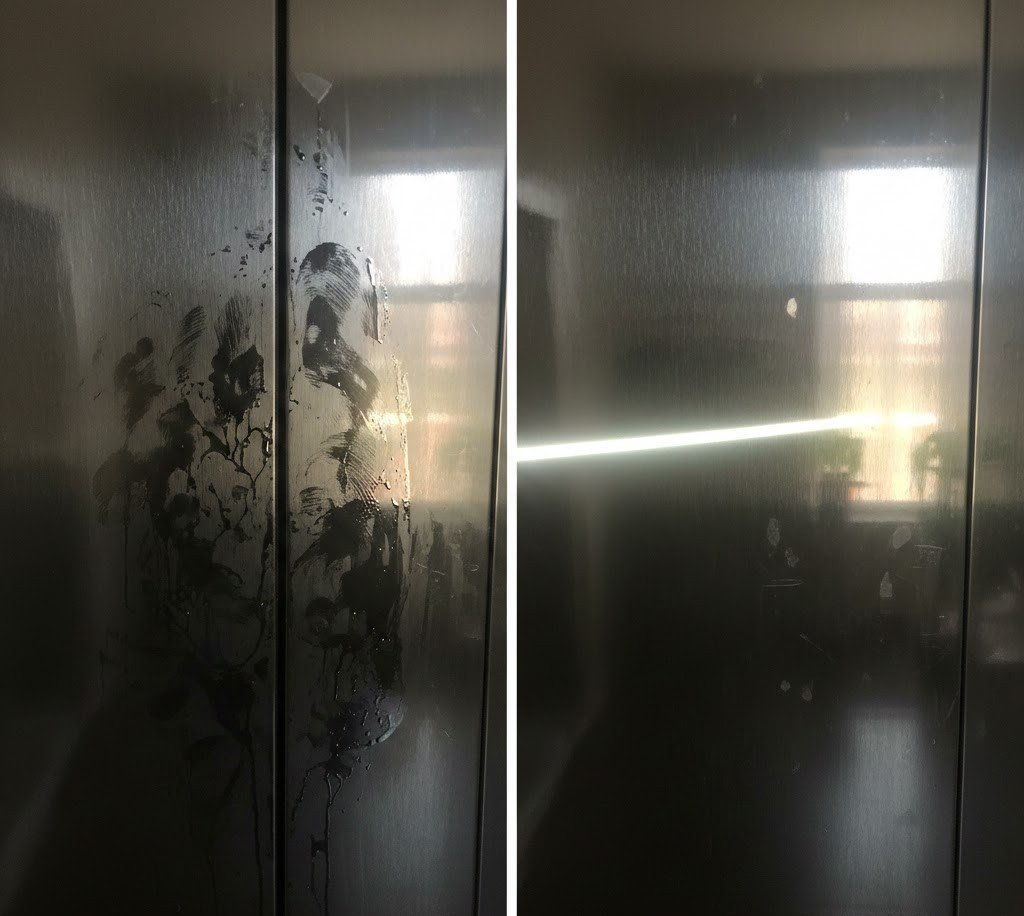
Fingerprints are mostly skin oils + fine particles. On aluminum cabinetry, they’re more noticeable because:
- Smooth finishes reflect light (smudges interrupt reflection and look like streaks).
- Cooking aerosols (oil vapor) mix with fingerprints and become sticky.
- Outdoor exposure (pollen, salt, soot) bonds to oils and leaves a hazy film.
- Brushed grain can “trap” residue between micro-grooves if wiped against the grain.
If you already have a maintenance routine, align this article with your broader care process in your aluminum care routine without changing products midstream.
What’s the safest way to remove fingerprints from aluminum cabinets?
Use the least aggressive method first, then move up only if needed:
- Daily: dry microfiber wipe (removes fresh oils before they spread).
- Weekly (typical kitchens): mild soap + warm water, rinse, dry.
- Stubborn smudges: spot clean with diluted degreaser or small amounts of 70% isopropyl alcohol (test first).
How do I know what aluminum finish I have?
Different finishes tolerate cleaners differently. Use these cues:
Is it powder-coated aluminum?
- Color is uniform (white, black, gray, custom colors)
- Often matte/satin/texture
- Feels slightly “sealed” and consistent
Is it anodized aluminum?
- Metallic look (silver/bronze/black tint) with depth
- Finish feels hard and “integrated” into the metal
- Often used for architectural durability
Is it brushed/hairline aluminum?
- Visible linear grain
- Fingerprints can look “striped” if wiped across grain
- Scratches show if you use abrasives
When in doubt, treat it like a premium finish and follow the mild method first this matches the typical expectations for aluminum cabinet builds used in kitchens and utility spaces.
Supplies checklist for streak-free cleaning
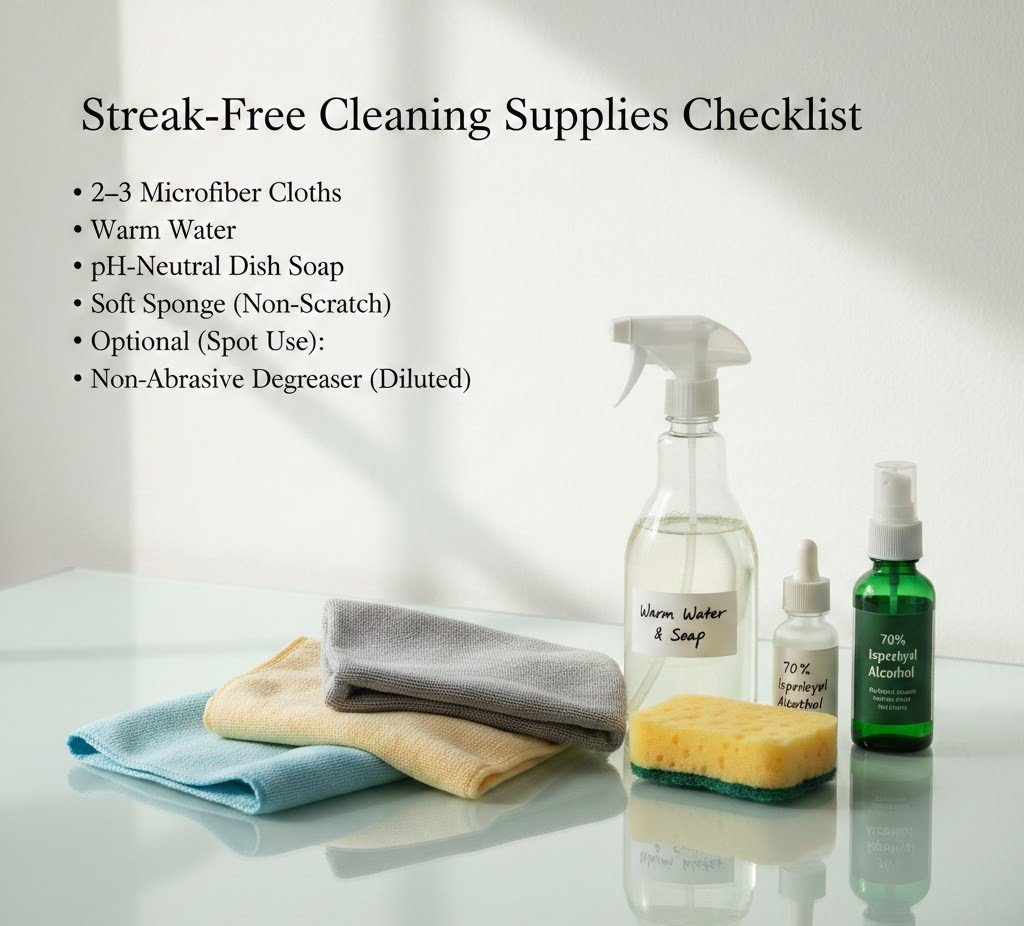
Keep it simple and consistent:
- 2–3 microfiber cloths (one for cleaning, one for drying/buffing)
- Warm water
- pH-neutral dish soap (a few drops per spray bottle)
- Soft sponge (non-scratch)
- Optional (spot use):
- 70% isopropyl alcohol (small amount on cloth, not poured on surface)
- Non-abrasive degreaser (diluted, tested first)
Step-by-step: remove fingerprints (least aggressive → stronger)
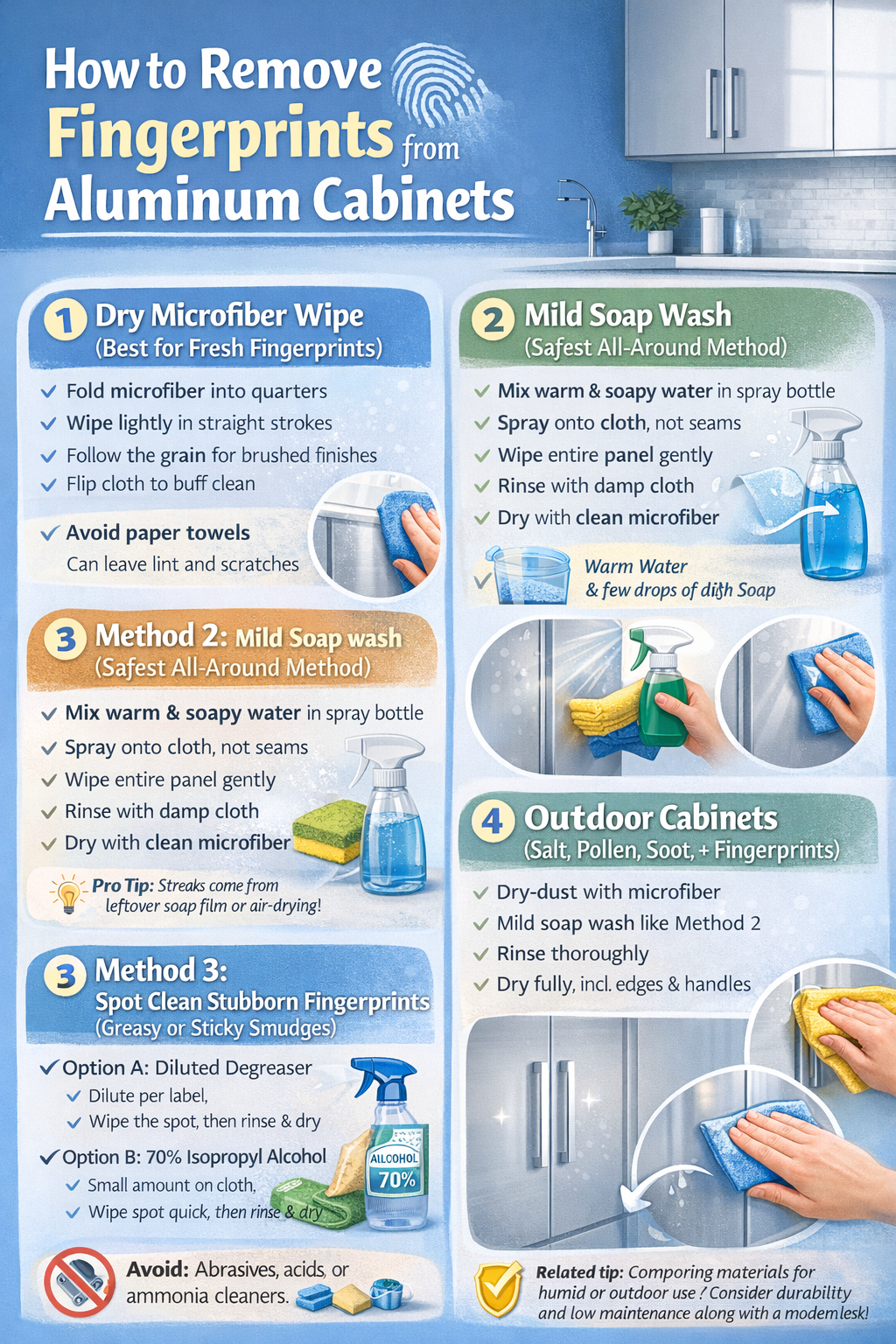
Method 1: Dry microfiber wipe (best for fresh fingerprints)
Use this when prints are new and not mixed with grease.
- Fold a clean microfiber into quarters.
- Wipe lightly using straight strokes.
- For brushed finishes, wipe with the grain.
- Flip to a clean side and buff once.
Avoid: paper towels (can leave lint and micro-scratch over time).
Method 2: Mild soap wash (the safest all-around method)
This is the “default” approach for most aluminum cabinet doors.
- Mix solution: warm water + a few drops of dish soap in a spray bottle.
- Spray onto the cloth (not directly onto seams).
- Wipe gently, covering the full panel.
- Rinse with a second cloth dampened with clean water.
- Dry immediately with a third microfiber to prevent streaks.
Pro tip: Streaks usually come from leftover soap film or air-drying.
Method 3: Spot clean stubborn fingerprints (greasy or sticky smudges)
Use this if mild soap didn’t lift the mark.
Option A (preferred): diluted degreaser
- Dilute per label.
- Apply to cloth, wipe the spot, then rinse and dry.
Option B: 70% isopropyl alcohol (small-area only)
- Put a small amount on a microfiber (do not soak).
- Wipe the fingerprint area quickly.
- Immediately follow with a damp water cloth.
- Dry and buff.
Safety: Ventilate the area; keep alcohol away from flames and hot appliances.
Method 4: Outdoor cabinets (salt, pollen, soot + fingerprints)
Outdoor aluminum cabinets often need a rinse step to remove gritty particles first.
- Dry-dust with microfiber to remove loose grit.
- Soap wash using Method 2.
- Rinse thoroughly (residue can look like haze in sunlight).
- Dry fully especially edges, handle bases, and bottom rails.
If you’re weighing materials for outdoor or humid environments, many buyers compare durability and upkeep in material choice factors.
What cleaners should I avoid on aluminum cabinets?
Avoid anything that can scratch, etch, dull, or weaken sealants.
- Abrasive pads (steel wool, scouring sponges)
- Abrasive powders (scratches brushed and coated finishes)
- Strong acids (can etch metal and stain)
- Strong alkaline cleaners (can fade or haze some finishes)
- Bleach (unnecessary and can discolor)
- Solvent-heavy products (may attack gaskets/adhesives)
Rule: If a product says “heavy-duty,” “oven,” or “industrial,” test it in a hidden spot first or skip it.
Finish-by-finish cleaning guide
| Aluminum finish | Best fingerprint remover | Wipe direction | Common mistake | What to avoid |
| Powder-coated | Mild soap + warm water | Any, gentle strokes | Air-drying leaves streaks | Abrasives, strong alkalis |
| Anodized | Mild soap + rinse + dry | Gentle, consistent strokes | Leaving soap film = haze | Strong acids, harsh solvents |
| Brushed/hairline | Mild soap + microfiber | With the grain | Wiping across grain = streaky look | Abrasives, rough paper towels |
| Mixed materials (handles, seals) | Mild soap (separate cloth) | Care around edges | Overspray into seams | Solvents on gaskets |
How can I prevent fingerprints from coming back quickly?
Preventing fingerprints is mostly about touchpoints and residue control:
- Use handles/pulls instead of pushing panels.
- Keep a dedicated microfiber nearby for quick daily wipes.
- Dry cabinets after cleaning don’t let water evaporate on the surface.
- Reduce greasy air:
- Use range hood effectively.
- Wipe splatter before it polymerizes into film.
For households that prioritize sustainability alongside low-maintenance materials, aluminum is often discussed in sustainability advantages because it’s durable and widely recyclable.
Troubleshooting: why do fingerprints leave streaks or haze?
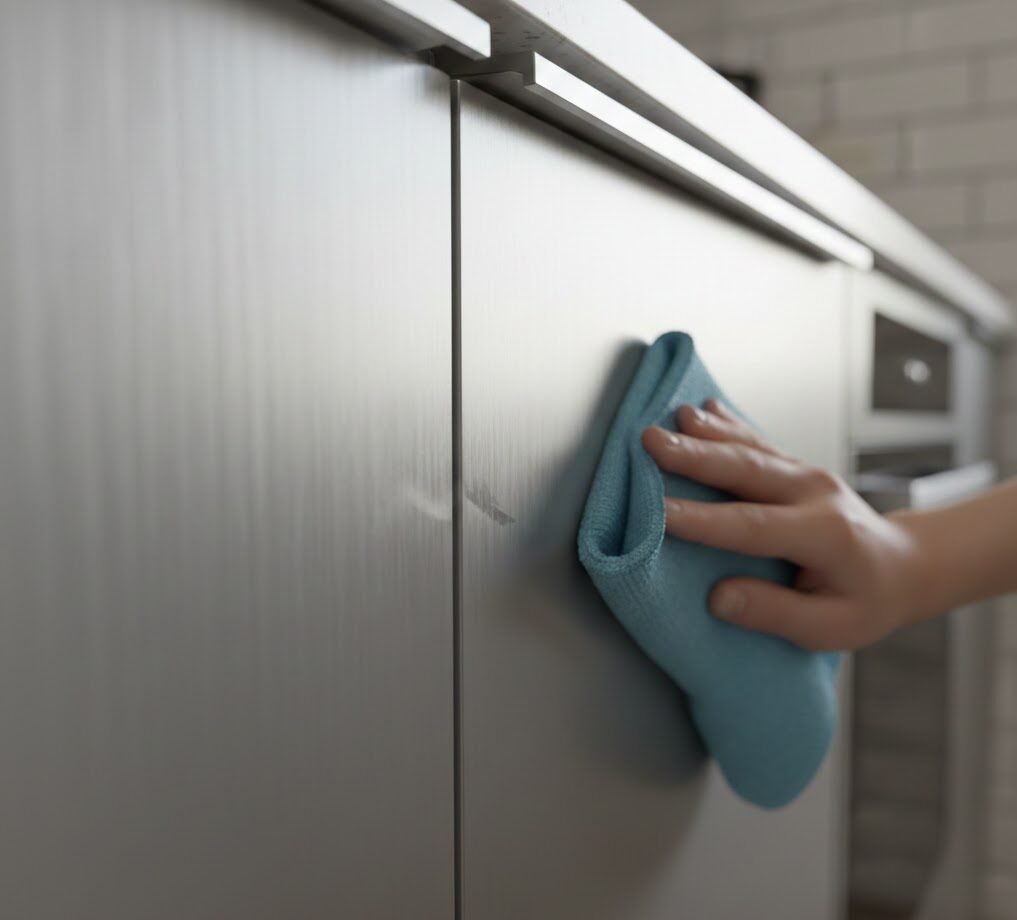
“I cleaned it, but it looks streaky.”
Most common causes:
- Too much soap or cleaner (film left behind)
- Not rinsing with clean water
- Using a dirty cloth (oil gets redistributed)
Fix:
- Re-wipe with a damp clean-water cloth, then dry and buff.
“There’s a cloudy haze that won’t go away.”
Common causes:
- Cleaner residue baked on by heat/sunlight
- Degreaser not fully rinsed
Fix:
- Repeat Method 2 with extra rinse passes, then dry immediately.
“It looks scratched after cleaning.”
Common causes:
- Abrasive sponge or paper towel
- Grit (dust/sand) wiped across the surface
Fix:
- Stop abrasives; switch to microfiber and gentle strokes.
- For brushed finishes, always wipe with grain to minimize visibility.
How often should I clean aluminum cabinets?
A practical schedule that works for most kitchens:
- Daily/As needed: dry microfiber wipe on touch areas
- Weekly: mild soap wash on doors and drawer fronts
- Monthly: deeper clean around handles, edges, and seams
- Seasonal (outdoor/coastal): extra rinse and dry to remove airborne residue
If you’re planning a purchase and want to factor maintenance into your decision,buying decision tips can help align finish choice with real-world use.
Conclusion
Fingerprints on aluminum cabinets are easiest to remove and prevent when you match the method to the finish, start gently, and always rinse and dry for a streak-free result. A simple routine (microfiber + mild soap + rinse/dry) keeps powder-coated, anodized, and brushed aluminum looking clean without risking dulling, haze, or micro-scratches.
If you want finish-specific care guidance for your cabinet model or your environment (high-heat kitchens, outdoor setups, coastal air), Connect with Oridow Support Team for compatibility and maintenance recommendations tailored to your installation.
FAQ
Can I use vinegar to remove fingerprints from aluminum cabinets?
Vinegar is acidic and may not be ideal for every finish. If you use it at all, keep it highly diluted, test in a hidden spot, and rinse/dry immediately mild soap is the safer default.
Can I use glass cleaner on aluminum cabinet doors?
Some glass cleaners contain solvents or additives that can leave streaks or affect adjacent seals. If you try one, test first and follow with a clean-water wipe and dry buff.
Is rubbing alcohol safe on powder-coated aluminum?
Often, small spot use is fine, but it can dull some coatings if overused. Apply alcohol to a cloth (not the surface), wipe briefly, then rinse and dry.
What’s the best way to clean brushed aluminum without streaks?
Wipe with the grain, use mild soap, rinse thoroughly, and dry immediately. The grain direction matters more than the product.
Why do fingerprints look worse on black or glossy aluminum cabinets?
Dark and glossy surfaces reflect more light, so oil films show higher contrast. Matte or textured finishes typically hide smudges better.
What if fingerprints keep coming back even after cleaning?
That usually means there’s a thin greasy film (cooking aerosols or residue) still on the surface. Do a full-panel mild soap wash, rinse twice, and dry/buff.
Should I use wax or polish to reduce fingerprints?
Only if the product is compatible with your finish and you’re willing to maintain it. Many polishes can increase shine but also make smear patterns more noticeable if not buffed evenly.
How do I clean around seams and gaskets safely?
Spray cleaner onto the cloth, not into seams. Use a lightly damp cloth for edges, then dry to prevent trapped moisture.


