

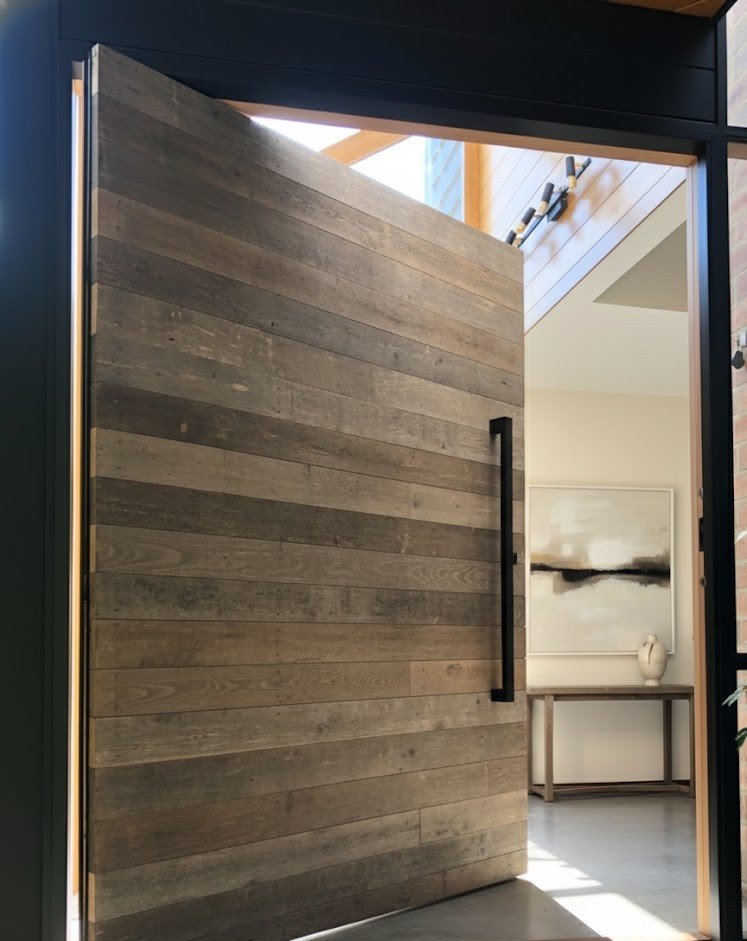
Pivot doors have moved beyond being a design statement. Today, they are a preferred choice in modern architecture because they combine structural engineering, smooth operation, and strong visual impact.
If you are considering a pivot door, you likely want more than just aesthetics. You want to understand how it works, how it supports heavy door panels, and whether it will perform reliably over time.
In this guide, I explain how pivot doors work from a practical and architectural perspective, so you can make an informed decision with confidence.
What Is a Pivot Door?
A pivot door is a door that rotates on pivot hardware installed at the top and bottom of the door panel instead of traditional side hinges. This configuration allows the door to rotate around a fixed axis, distributing weight vertically rather than transferring it to the frame.
Pivot doors are often associated with modern design, but their popularity is driven just as much by engineering advantages as by aesthetics.
How Pivot Doors Differ From Hinged Doors
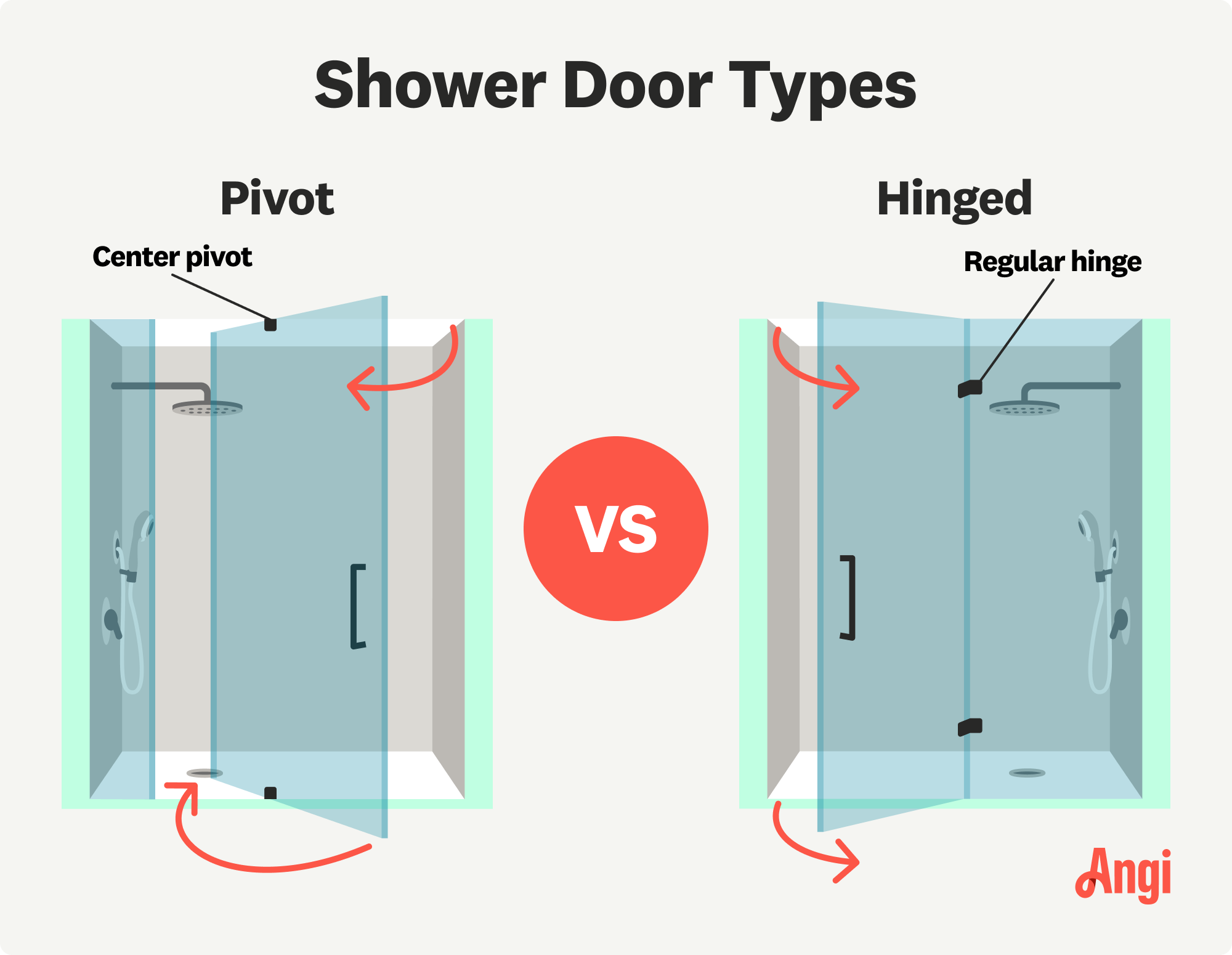
| Feature | Pivot Door | Hinged Door |
| Rotation method | Top and bottom pivots | Side hinges |
| Weight distribution | Floor-supported | Frame-supported |
| Door size | Large and oversized | Standard |
| Visual impact | Architectural focal point | Traditional |
How Pivot Doors Work
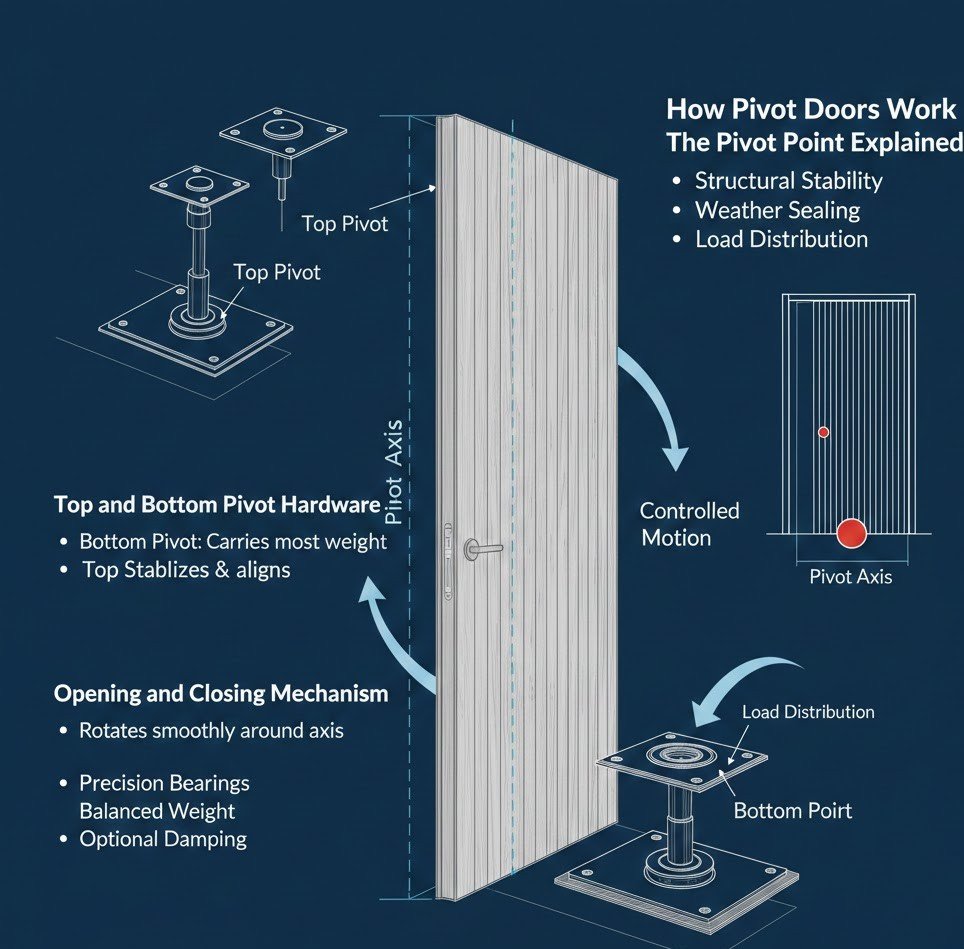
Understanding the mechanics behind pivot doors helps explain why they can support heavier panels and larger dimensions than conventional doors.
The Pivot Point Explained
The pivot point is the vertical axis around which the door rotates. In most exterior applications, the pivot point is offset several inches from the door edge rather than centered.
This offset placement improves:
- Structural stability
- Weather sealing
- Load distribution
If you are evaluating entrance systems, understanding this mechanism is essential before selecting custom pivot door solutions for a project.
Top and Bottom Pivot Hardware
Pivot doors rely on two main hardware components:
- Bottom pivot
This component carries most of the door’s weight and transfers it directly to the floor or slab. - Top pivot
This component stabilizes the door and controls alignment during rotation.
Because the weight is supported from below, pivot doors place far less stress on the surrounding frame.
Opening and Closing Mechanism
When you open a pivot door, it rotates smoothly around the pivot axis rather than swinging outward from one side. This controlled motion is the result of precision bearings, balanced weight distribution, and optional damping systems.
This is why large pivot doors often feel surprisingly light to operate.
Key Pivot Door Hardware Components
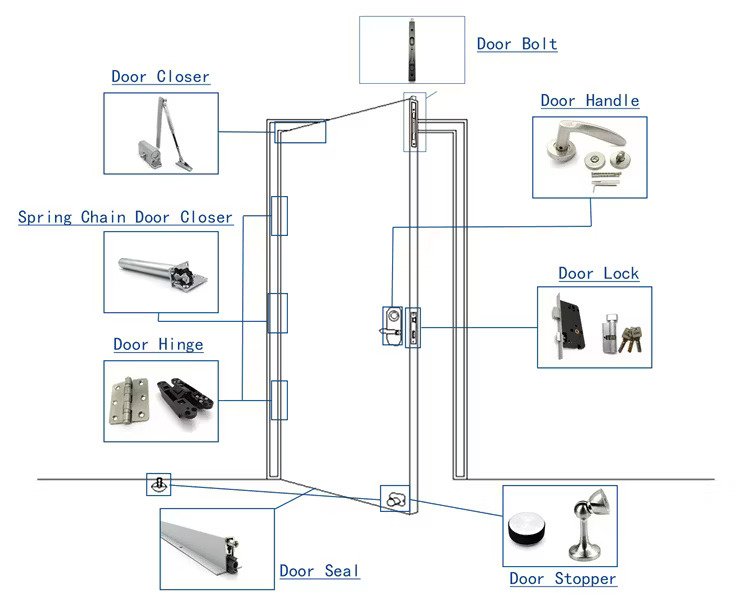
A pivot door system performs only as well as the hardware supporting it.
Bottom Pivot System
- Load-bearing component
- Anchored into reinforced flooring
- Designed for long-term durability
Top Pivot and Guide
- Maintains vertical alignment
- Controls rotational path
Soft-Close and Damping Systems
- Prevent slamming
- Improve safety
- Extend hardware lifespan
Floor Plates and Thresholds
- Protect pivot hardware
- Improve weather resistance
Beyond appearance, these elements are part of the key quality considerations that determine whether a pivot door performs reliably over time.
How Much Weight Can Pivot Doors Support?
Pivot doors are specifically engineered to support heavy door panels.
Typical weight capacities:
- Residential systems: 150 to 500 kg
- Architectural-grade systems: up to 1,000 kg or more
Weight capacity depends on:
- Hardware design
- Door material
- Structural support
- Installation accuracy
This load-handling capability is one of the most significant functional design advantages compared to traditional hinged doors.
Pivot Doors vs Hinged Doors
| Criteria | Pivot Doors | Hinged Doors |
| Maximum panel size | Very large | Limited |
| Structural load | Floor-supported | Frame-supported |
| Design flexibility | High | Moderate |
| Maintenance | Moderate | Low |
| Architectural impact | Strong | Conventional |
If you want an entrance that makes a statement while remaining functional, pivot doors offer clear advantages.
Installation Basics
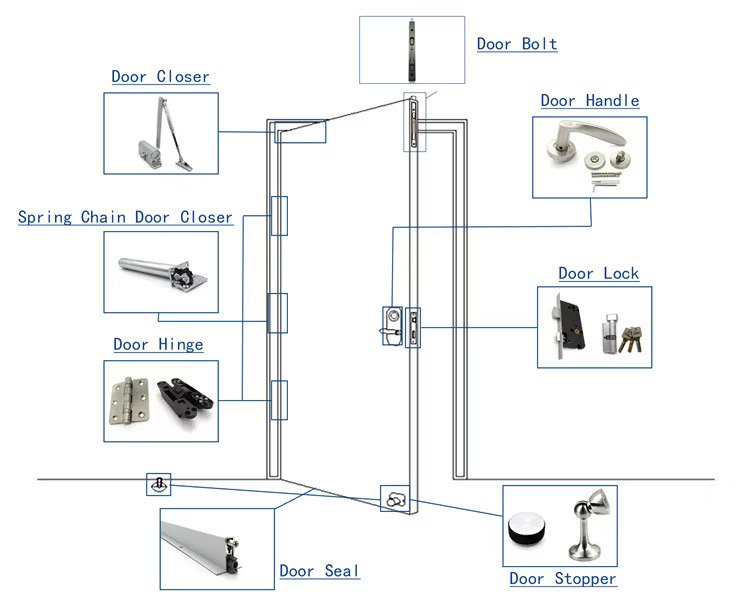
Pivot doors require precise planning and professional installation.
Key requirements include:
- Reinforced flooring or concrete slab
- Accurate pivot alignment
- Proper structural framing
Pivot doors are not suitable for DIY installation. Professional expertise ensures safety, performance, and longevity.
Where Are Pivot Doors Commonly Used?
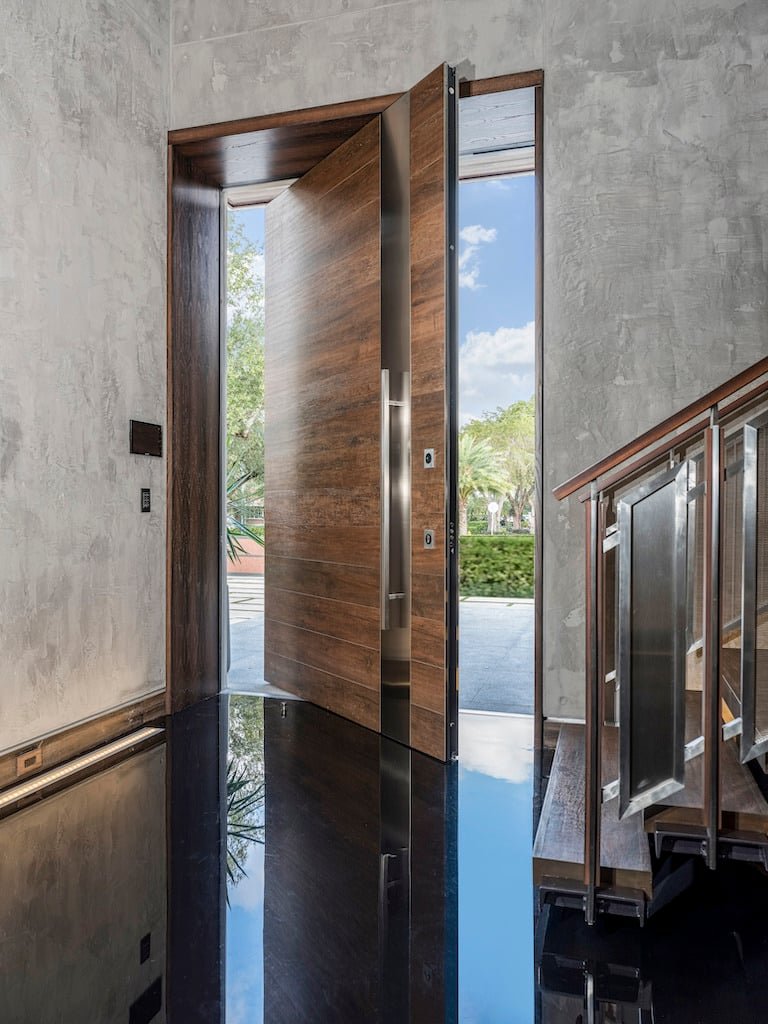
Pivot doors are frequently used in:
- Luxury residences
- Modern villas
- Hospitality projects
- Retail environments
- Public-facing architectural spaces
They are especially effective in high-traffic commercial spaces where durability and visual impact must coexist.
Benefits of Pivot Doors
Pivot doors offer a combination of performance and design flexibility:
- Support for oversized door panels
- Smooth and controlled operation
- Minimal visible hardware
- Customizable materials and finishes
- Long service life
When paired with precision-built door systems, these benefits are amplified through consistent engineering and material quality.
Common Myths About Pivot Doors
Myth 1: Pivot doors are unstable
Properly engineered pivot systems are highly stable due to floor-supported load transfer.
Myth 2: Pivot doors do not seal well
Modern pivot doors use advanced sealing systems that perform well in exterior conditions.
Myth 3: Pivot doors are only decorative
Pivot doors are fully functional and often outperform hinged doors in large openings.
Are Pivot Doors Right for Your Project?
Pivot doors are a good choice if:
- You want a large or oversized entrance
- Architectural impact is a priority
- Your structure supports floor-mounted hardware
They may not be ideal if:
- Space is extremely limited
- Structural reinforcement is not possible
- Budget constraints are restrictive
For complex requirements, professional project-specific guidance helps ensure the door system matches both design intent and performance needs.
Verified Architectural Data on Pivot Door Performance
Pivot doors are widely used in professional architectural projects because they can support very large and heavy door panels that conventional hinged doors cannot reliably handle.
For example, a recent architectural showcase of pivot doors published on ArchDaily includes multiple built examples where door panels exceed typical residential sizes and weights:
- A pivot entrance measuring 2,800 mm high and 2,050 mm wide and weighing 300 kilograms was documented with a smooth, controlled pivot mechanism in operation.
- Another award-winning pivot installation featured a stone-clad panel measuring 2,400 mm high and 1,500 mm wide with a weight of 500 kg, supported by a professional pivot hardware system ensuring smooth movement despite the mass.
These project examples demonstrate that properly engineered pivot systems are not only capable of handling several hundred kilograms of door weight, but also maintain performance and operational precision at large scales.
Why Oridow Is the Best Choice for Pivot Doors
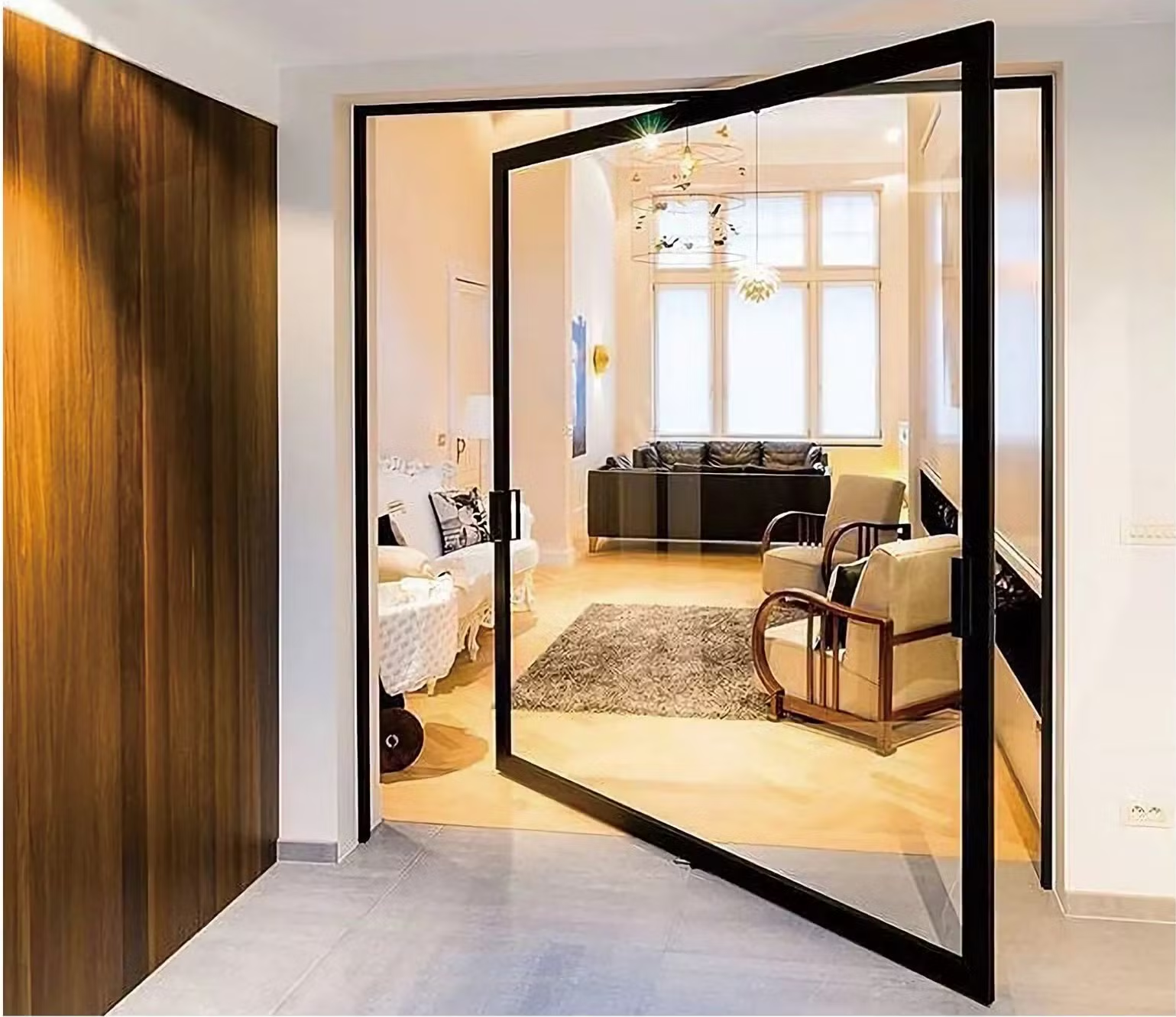
Choosing a pivot door is not only about appearance. Engineering precision and long-term reliability matter just as much.
I have seen pivot doors fail due to poor hardware tolerances, inadequate materials, or improper load calculations. Oridow approaches pivot doors as integrated systems rather than isolated components.
What sets Oridow apart:
- Engineered pivot hardware for heavy loads
- High-performance materials suitable for exterior use
- Smooth, controlled operation with optional soft-close systems
- Custom solutions aligned with architectural requirements
- Focus on durability, safety, and long-term performance
If you want a pivot door that performs as confidently as it looks, Contact with oridow support team to get more information
Frequently Asked Questions
How long do pivot doors last?
With quality hardware and professional installation, pivot doors can last for decades.
Are pivot doors secure?
Yes. Properly designed pivot doors are stable and secure for residential and commercial use.
Can pivot doors be used outdoors?
Exterior pivot doors are specifically engineered for weather resistance and durability.
How far from the edge is a pivot door placed?
The pivot point is typically positioned 3 to 6 inches from the door edge. The exact placement depends on door size, weight, and desired opening behavior.
Are pivot doors energy efficient?
Pivot doors can be energy efficient when equipped with proper seals, insulated cores, and precision alignment. Performance depends more on system quality than door style.


