

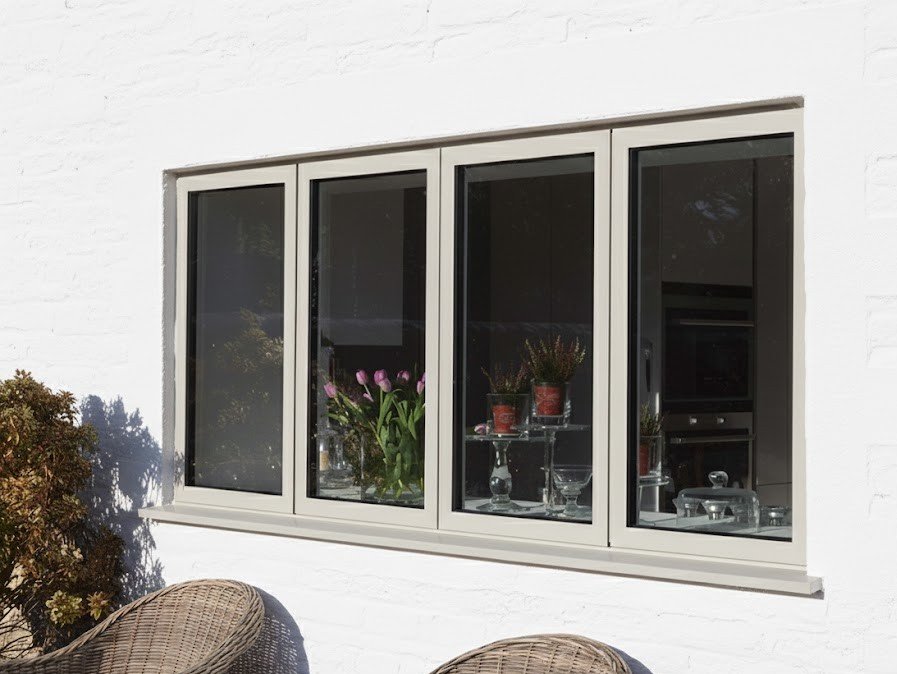
Aluminium bifold windows are advanced architectural systems engineered to open wide spans of glass while maintaining strength, security, and weather performance. Widely used across Australia, the UK, and the USA, they are no longer considered a niche upgrade but a core design solution for modern residential and light-commercial projects.
Unlike conventional window styles, aluminium bifold windows function more like a movable wall system. Their performance depends on precise coordination between tracks, hinges, rollers, frame profiles, and locking hardware—making correct specification essential for long-term reliability.
What are aluminium bifold windows and how do they function?
Aluminium bifold windows are multi-panel window systems connected by hinges and guided by tracks, allowing the panels to fold and stack neatly to one side or both sides of an opening.
At a functional level, the system relies on three coordinated actions:
- Sliding panels move horizontally along a track
- Folding hinges allow panels to pivot together
- Securing multi-point locks holds everything tightly in place
Unlike standard sliding or hinged windows, bifold windows can open almost the entire width of an opening. This is why they are often used over kitchen serveries, entertaining areas, and patios where airflow and openness matter.
The same core engineering principles are used in residential bifold systems designed for doors, adapted specifically for window-scale applications.
Comparison Box: Aluminium Bifold Windows vs Other Window Types
| Feature |
Aluminium Bifold Windows |
Casement Windows | |
| Opening width | Fully retracts for wide openings | Partial opening | Limited swing |
| Mechanism | Hinges + tracks + rollers | Simple sliding track | Single-hinge system |
| Indoor outdoor flow | Excellent | Moderate | Low |
| Structural strength | High due to aluminium frames | Medium | Medium |
| Ideal use | Serveries, alfresco zones | Bedrooms, living rooms | Small openings |
Why this matters for you:
If maximising open space and flexibility is important, bifold systems clearly outperform traditional window designs.
The core components that make aluminium bifold windows work
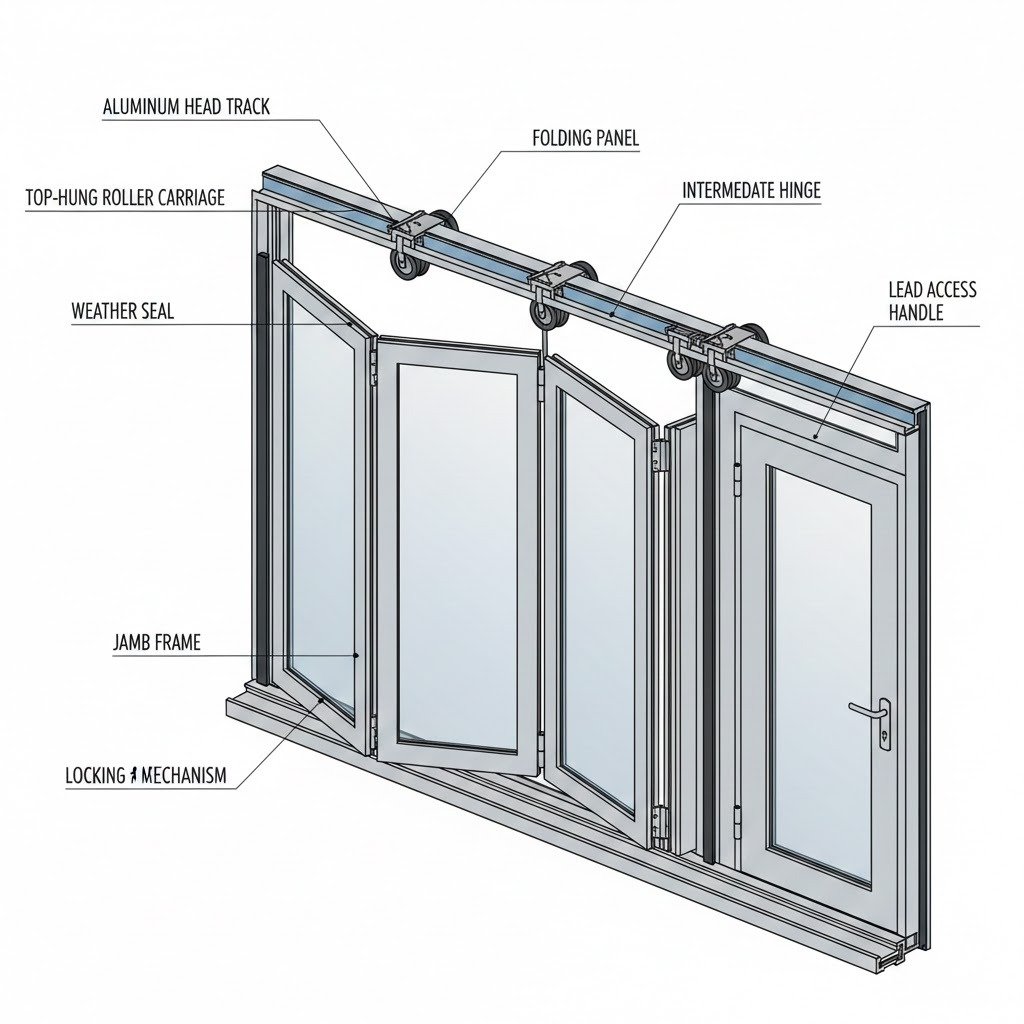
Understanding the components helps explain why quality engineering has such a direct impact on long-term reliability.
Track systems and load distribution
The track system supports and guides the movement of panels. Aluminium bifold windows typically use one of two configurations:
- Top-hung systems, where the weight is carried from above
- Bottom-rolling systems, where the weight sits on the floor track
Top-hung designs are widely preferred for premium residential projects. They provide smoother operation and reduce wear, especially important in dusty or high-traffic areas common in Australian and US homes.
Comparison Box: Top-Hung vs Bottom-Rolling Mechanisms
|
Aspect |
Top-Hung System |
Bottom-Rolling System |
| Weight support | From the head | From the sill |
| Smooth operation | Excellent | Can degrade over time |
| Floor obstruction | Minimal | Visible track |
| Maintenance needs | Lower | Higher |
Expert insight:
Top-hung systems offer better long-term alignment and are now the standard for high-quality aluminium bifold windows.
Hinges and pivot points
Each panel is joined by precision hinges engineered to support weight while maintaining smooth movement. The pivot panel plays a critical role, guiding how all other panels follow and stack.
High-grade hinges are designed to:
- Handle repeated opening cycles
- Maintain alignment over time
- Resist corrosion in coastal or humid climates
Rollers and carriers
Rollers allow panels to glide effortlessly along the track. In quality systems, these rollers are adjustable, letting installers fine-tune the alignment after installation.
This adjustment capability significantly reduces friction and prevents binding or dragging during operation.
Aluminum frame profiles
Aluminium frames provide the rigidity that keeps the entire system stable. Compared to timber or uPVC, aluminium offers:
- Greater resistance to warping
- Slimmer frame profiles
- Consistent performance in extreme temperatures
This structural stability supports larger glass panels without compromising security or movement.
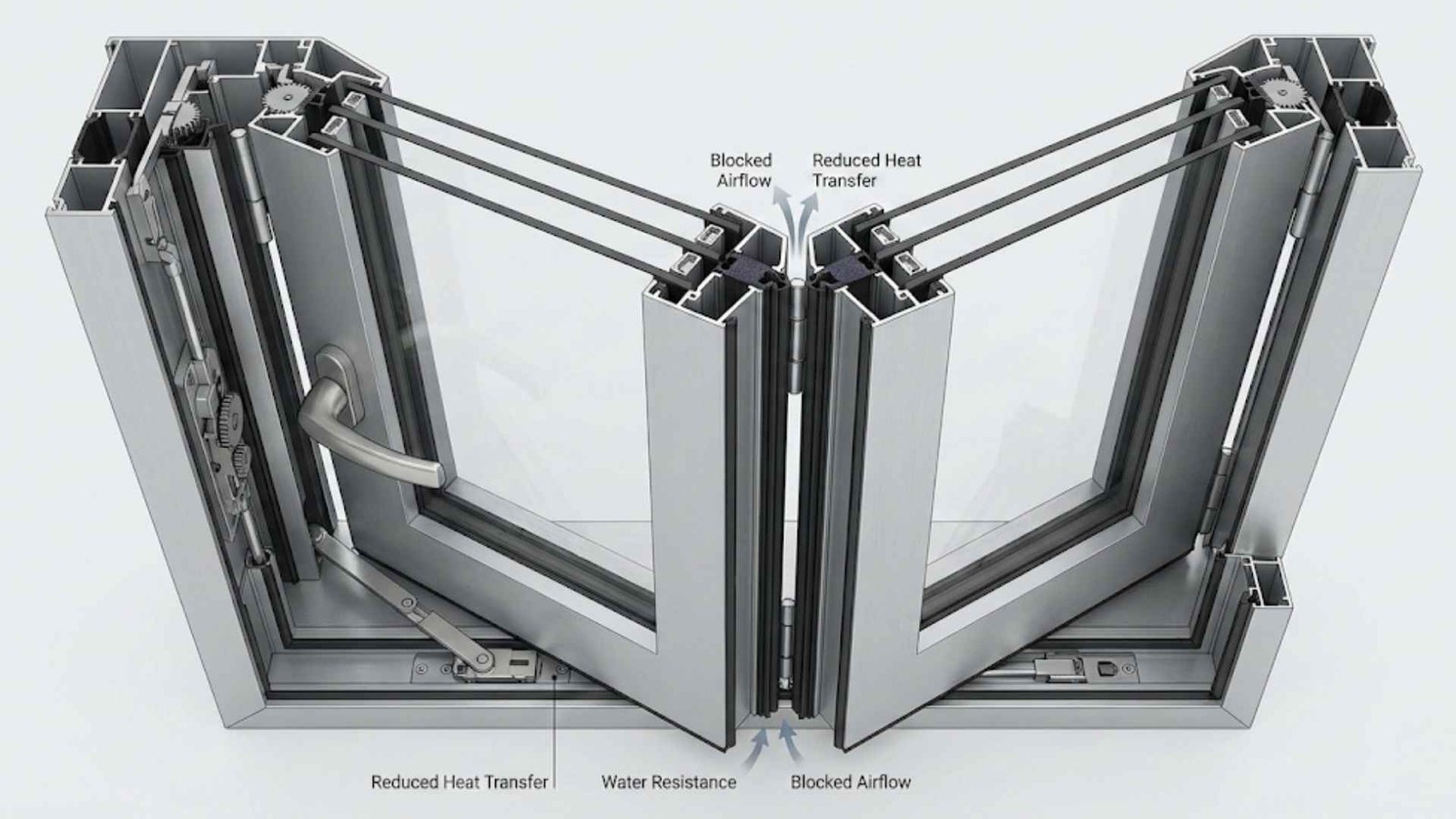
How locking and sealing mechanisms protect your space
A bifold window system must seal just as effectively as it opens.
Multi-point locking systems
When closed, aluminum bifold windows engage locking points at multiple locations along the frame. Turning the handle secures the panels simultaneously at the head, sill, and jamb.
This is distributed locking:
- Improves security
- Enhances weather sealing
- Reduces frame movement
Weather seals and thermal performance
Compression seals fitted between panels block wind, water, noise, and dust. Many modern systems also incorporate thermal breaks inside the aluminum profiles, limiting heat transfer.
These features allow bifold windows to perform well across varied climates, from cold UK winters to hot Australian summers. The same sealing principles are explained in detail through this breakdown of weather resistance.
How aluminium bifold windows open and fold step by step
The operation is intuitive once you understand the sequence:
- Unlock the handle to disengage all locking points
- Slide the lead panel along the track
- Hinges pull adjacent panels into a folding stack
- Panels park neatly to the designated side
Different configurations allow left, right, or centre openings, with panels folding inward or outward depending on layout and space constraints.
Installation factors that affect performance
Even the best system depends on proper installation. Incorrect alignment can result in poor movement and premature wear.
Critical installation factors include:
- Square and level openings
- Secure track fixing
- Accurate roller adjustment
Professional installers follow precise sequences to ensure smooth long-term operation. The same fundamentals are outlined in this practical guide to proper setup, which applies equally to window systems.
Why aluminum bifold systems are trending globally
The demand for aluminium bifold windows continues to rise across Australia, the UK, and the USA.
Key drivers include:
- Increased focus on indoor-outdoor living
- Preference for minimal, modern aesthetics
- Proven durability in extreme weather conditions
Aluminium’s recyclability also contributes to its growing use in sustainable residential projects. Many of the same benefits are highlighted when comparing bifold systems for doors, including these practical advantages.
Why Oridow is the right supplier for aluminium bifold doors
Selecting the right supplier is essential for consistent performance and longevity. Oridow focuses on engineered aluminium systems designed around precision, strength, and usability.
What sets Oridow apart:
- Precision-engineered aluminium profiles that support large glazed panels without distortion
- Advanced multi-point locking hardware for improved security and airtight sealing
- Climate-tested performance suitable for Australian, UK, and US conditions
- High-grade rollers and hinges for smooth, reliable folding action over time
- System compatibility across architectural openings for consistent design
- Technical guidance and support throughout selection and installation
Oridow’s approach prioritizes structural integrity and long-term reliability rather than surface-level aesthetics. Their full range of compatible options can be explored across their product selection.
For project-specific guidance, contact to their their technical support team.
Key takeaways before choosing aluminium bifold windows
Before making a decision, keep these essentials in mind:
- Track design directly affects smoothness
- Aluminium frame quality impacts lifespan
- Multi-point locks improve both security and sealing
- Installation accuracy determines long-term performance
When all elements work together, aluminium bifold windows deliver effortless operation and structural confidence.
Frequently Asked Questions
Can aluminium bifold windows be installed in existing homes?
Yes, aluminium bifold windows can be retrofitted into existing homes, but structural assessment is essential.
- Load-bearing walls may require lintels or reinforcement
- Accurate measurements are critical for smooth operation
- Professional installation is strongly recommended
Retrofitting is common for kitchen serveries and renovations.
Are aluminium bifold windows hard to operate?
No. Well-designed systems use balanced rollers and precision tracks, making even large panels easy to move.
Do aluminium bifold windows provide good insulation?
Yes. Modern designs use thermal breaks and high-performance glazing to maintain indoor comfort.
Are aluminium bifold windows secure?
Multi-point locking systems provide high levels of resistance when closed, meeting residential security standards.
Do aluminium bifold windows leak or let in drafts?
High-quality aluminium bifold windows do not leak when correctly specified and installed.
- Multi-point locking compresses seals evenly
- Modern systems use advanced weather seals and drainage paths
- Proper installation is critical for long-term weather resistance
Most leakage issues are caused by poor installation, not the system itself.


