

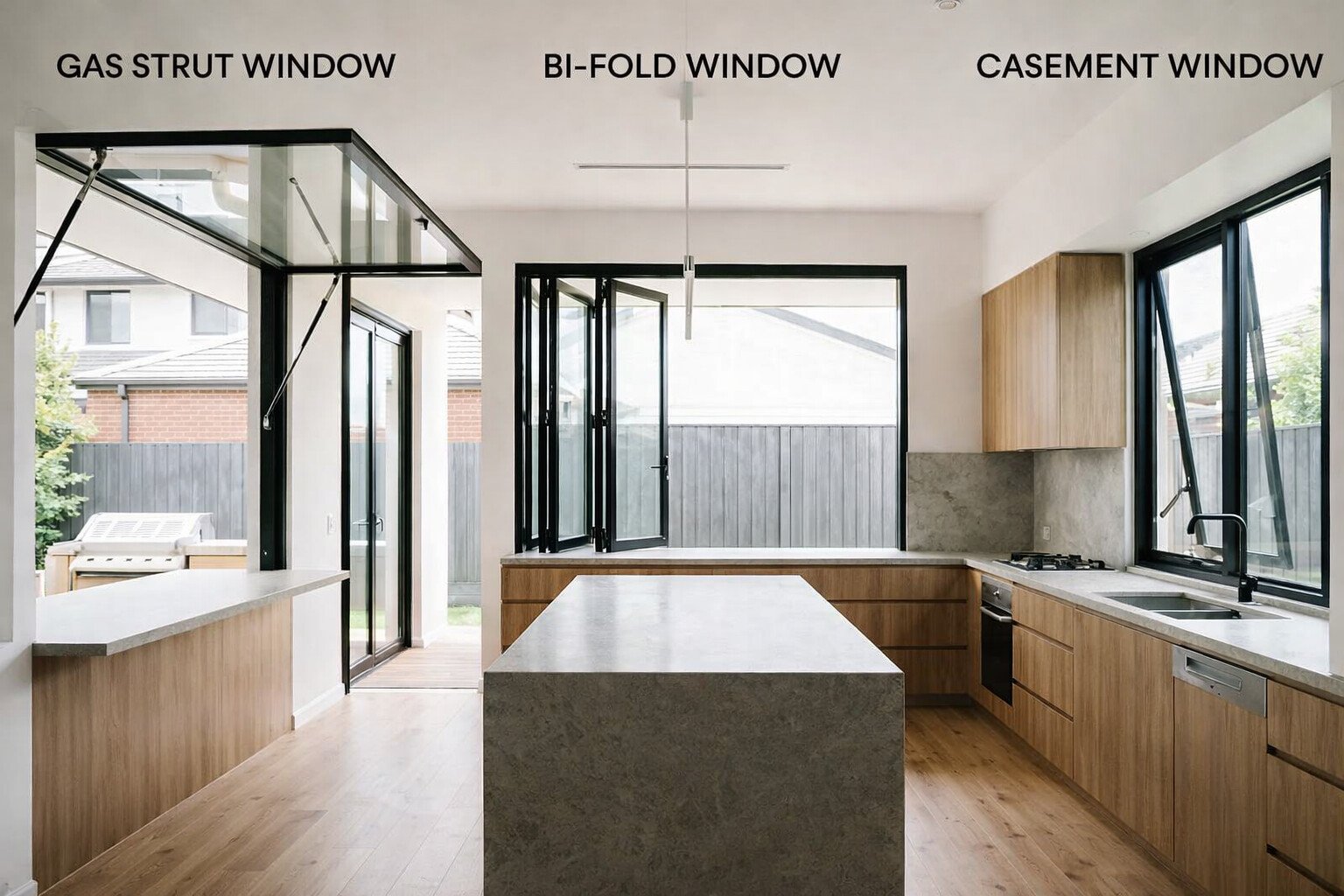
If you’ve ever wondered why some spaces feel effortless while others don’t, the opening system plays a big role. Gas strut, bi-fold, and casement designs each change how a space opens, connects, and flows. Picking the wrong one can limit both comfort and function.
In this comparison, we break down what truly matters beyond aesthetics. You’ll discover how each option performs in real-world settings. By the end, you’ll know exactly which solution supports your vision.
Understanding the Differences Between the Three Window Types
Gas Strut Windows
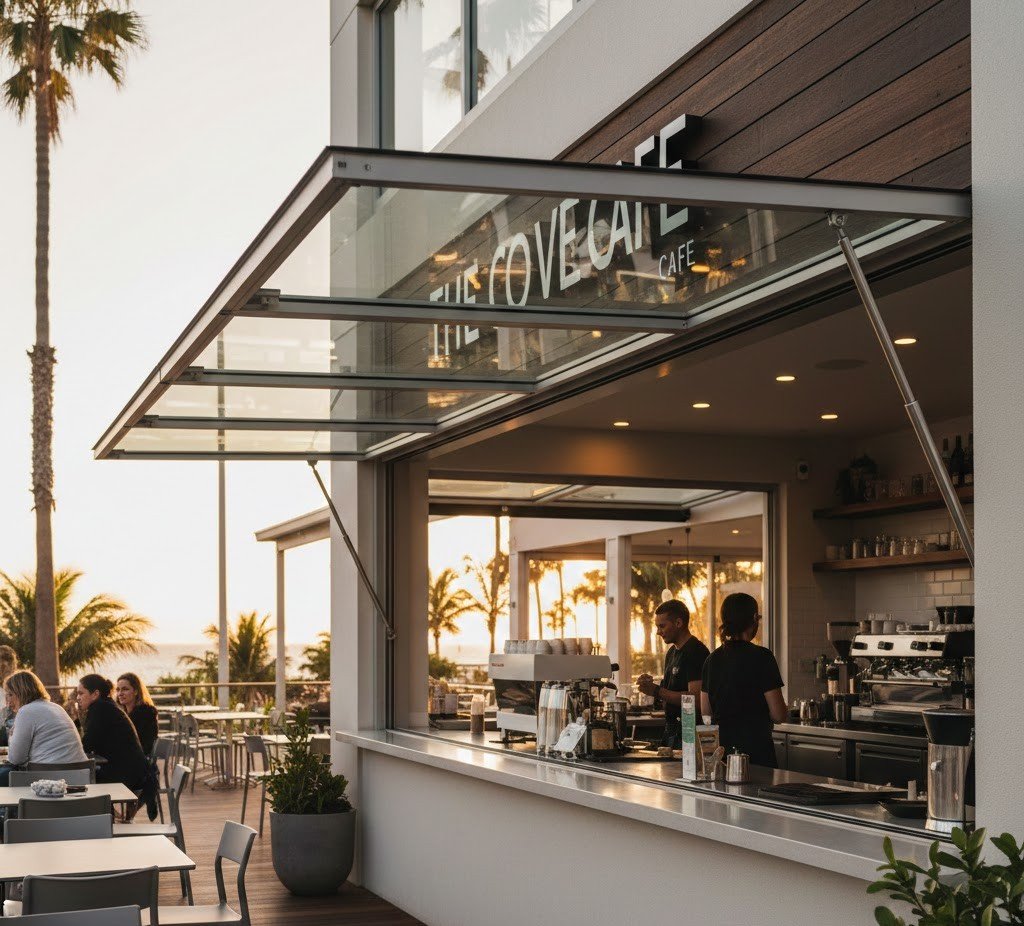
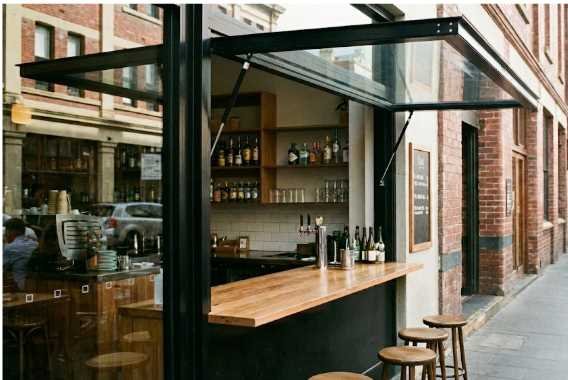
Gas strut windows are top-hinged systems that open upward using gas-assisted struts. When fully open, the sash remains suspended overhead, creating a clean, unobstructed opening below.
Key characteristics
- Full clear opening with no side obstruction
- Smooth lifting motion assisted by gas struts
- Locks securely in the open position
- Designed for frequent opening and closing
Common applications
- Kitchen servery windows
- Café and bar service counters
- Alfresco dining areas
- Pool houses and outdoor kitchens
Their popularity continues to grow in Australia, the UK, and the USA as open-plan and indoor-outdoor living becomes the standard rather than the exception.
Bi-Fold Windows
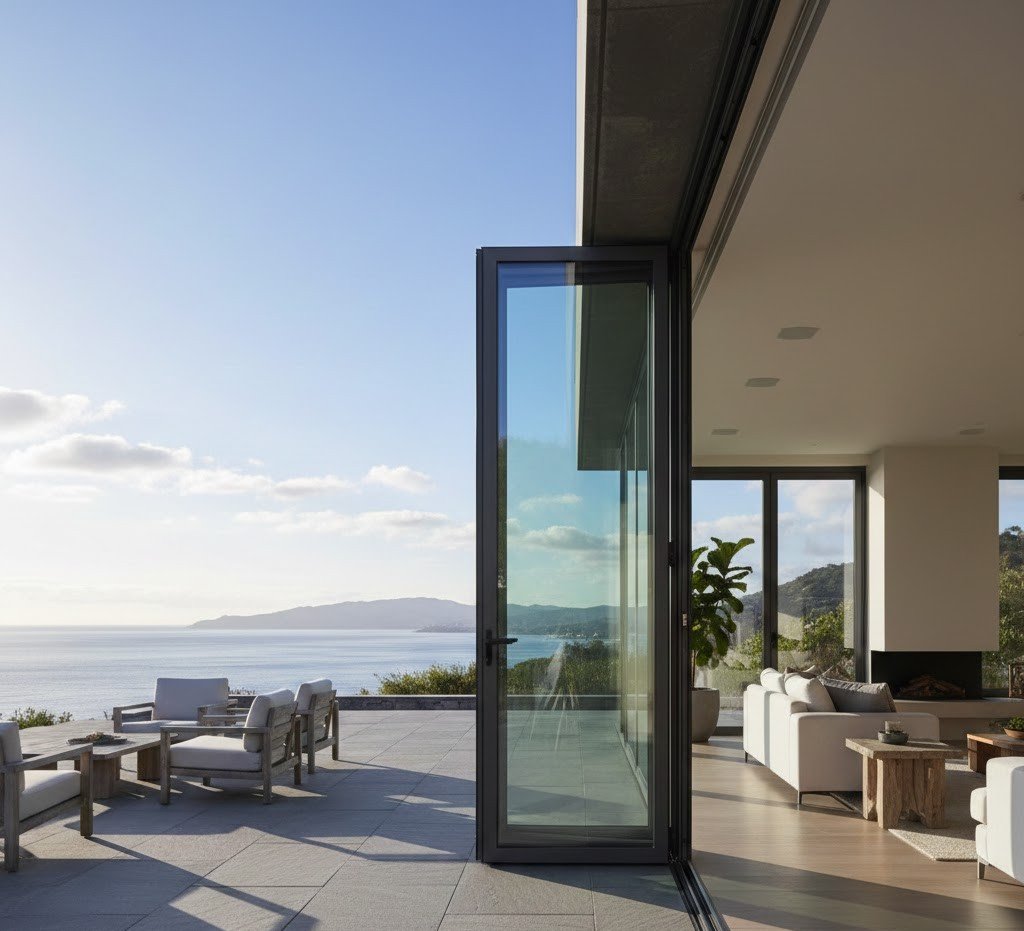
Bi-fold windows are made up of multiple panels that slide and fold along a track before stacking to one side.
Key characteristics
- Multiple hinged panels
- Flexible opening width
- Panels stack to one or both sides
- Requires floor or sill tracking
Common applications
- Large residential kitchens
- Living rooms facing patios
- Dining areas needing wide openings
Bi-fold systems provide flexibility but require more space for panel stacking and long-term maintenance.
Casement Windows
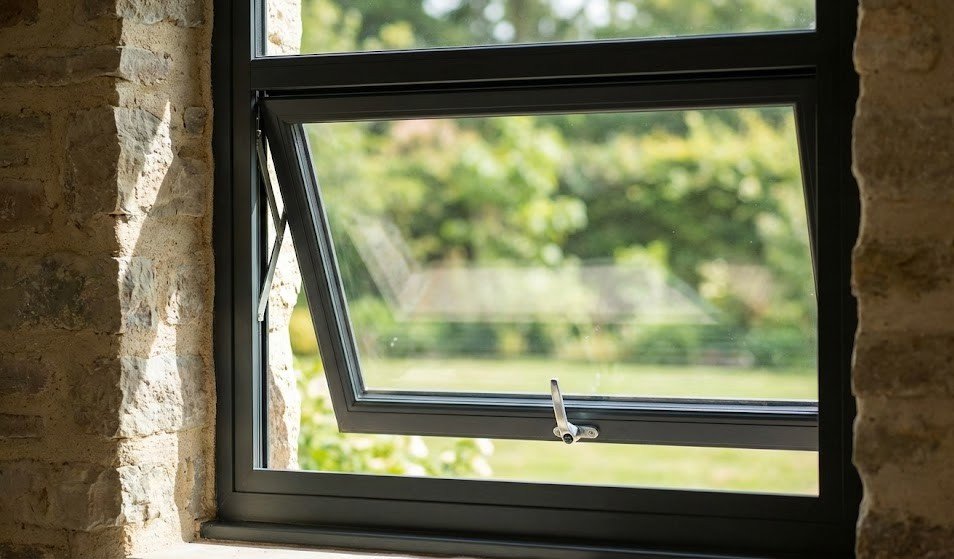
Casement windows are side-hinged and open outward, usually operated by a crank or lever.
Key characteristics
- Single or paired sashes
- Tight compression seals when closed
- Excellent airflow control
- Simple mechanical design
Common applications
- Bedrooms and bathrooms
- Energy-efficient homes
- Office and study spaces
Casement windows prioritise performance, insulation, and reliability over dramatic openness.
Detailed Comparison Table
| Performance Factor | Gas Strut Windows | Bi-Fold Windows | Casement Windows |
| Opening mechanism | Upward lift | Folding panels | Side-hinged |
| Clear opening space | Full | Partial due to stacking | Limited |
| Indoor-outdoor connection | Excellent | Very good | Minimal |
| Daily ventilation | Moderate | Moderate | Excellent |
| Energy efficiency when closed | High | Medium | High |
| Hardware complexity | Medium | High | Low |
| Maintenance needs | Low to medium | Medium to high | Low |
| Best use case | Entertainment and service | Wide residential openings | Everyday comfort |
| Typical budget range | Premium | Mid to high | Affordable |
Which Window Type Creates the Best Indoor-Outdoor Flow?
Indoor-outdoor flow is one of the biggest drivers behind window selection today.
Gas strut windows
- Completely remove the visual barrier between inside and outside
- Allow easy serving of food and drinks
- Keep the opening clear for movement and interaction
This is why gas strut designs dominate cafés, bars, and modern alfresco kitchens. Their functionality is further explained in how gas struts work.
Bi-fold windows
- Offer wide openings but leave stacked panels at the side
- Slightly reduce usable opening width
- Require clearance space for folded panels
Casement windows
- Not intended for full opening transitions
- Best suited for airflow rather than access
Best choice by openness
- Maximum connection: Gas strut
- Large flexible opening: Bi-fold
- Controlled separation: Casement
Ventilation, Comfort, and Climate Performance
Climate considerations are critical, especially across markets like coastal Australia, cooler UK regions, and mixed US environments.
Ventilation efficiency
- Casement windows excel because their outward angle captures and directs breezes
- Bi-fold windows allow airflow when open but are often kept closed in colder weather
- Gas strut windows provide strong airflow during use but are typically opened during entertaining rather than for constant ventilation
Thermal performance
- Casement windows typically deliver the tightest seals
- Gas strut windows perform well when engineered with quality seals
- Bi-fold windows rely on multiple seals, increasing wear points
For daily comfort and energy efficiency, casement windows remain the most reliable option.
Cost, Maintenance, and Lifespan Considerations
A window system should be evaluated over its entire lifespan, not just upfront cost.
Casement windows
- Lower initial investment
- Simple hardware reduces failure points
- Minimal maintenance
- Proven long-term durability
Bi-fold windows
- Higher installation and material costs
- Multiple rollers, tracks, and hinges
- Regular maintenance required
- Higher likelihood of alignment issues over time
Gas strut windows
- Premium initial cost
- Heavy-duty struts designed for repeated lifting
- Fewer moving components than bi-fold systems
- High functional and lifestyle return
Gas strut windows often justify their cost in spaces designed for entertaining or commercial use, especially in outdoor living environments.
Best Window Type by Space and Use Case
| Space Type | Area | Recommended Window Type | Why It Works Best |
| Residential | Kitchen to outdoor area | Gas strut | Creates a fully open servery, ideal for entertaining and seamless indoor-outdoor flow |
| Residential | Living room opening to the garden | Bi-fold | Provides wide access while maintaining flexibility in opening size |
| Residential | Bedrooms and bathrooms | Casement | Delivers controlled ventilation, privacy, and strong energy efficiency |
| Commercial | Cafés and bars | Gas strut | Enables fast service, clear visibility, and direct customer interaction |
| Commercial | Restaurants | Gas strut or bi-fold | Supports both serving efficiency and adaptable dining layouts |
| Commercial | Offices | Casement | Offers reliable airflow, acoustic control, and low maintenance |
Gas strut systems are particularly effective in hospitality environments where speed, visibility, and interaction matter.
Materials, Safety, and Structural Integrity
Material choice directly affects safety and performance.
Aluminum frames
- Strong yet lightweight
- Resistant to corrosion
- Ideal for large openings
- Minimal maintenance
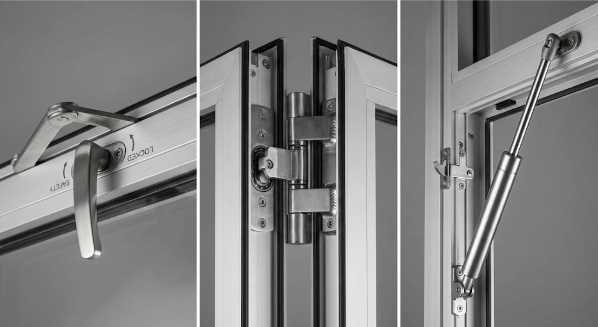
Aluminium bi-fold designs, such as modern folding systems, rely on structural strength to support multiple panels.
Gas strut engineering
- Reinforced frames prevent flexing
- Balanced strut pressure ensures smooth lifting
- Secure locking prevents accidental closure
Understanding these details explains why gas strut windows require precision manufacturing rather than generic fabrication.
Design and Architectural Trends Driving Demand
Modern architecture increasingly prioritises adaptability. Spaces are no longer designed for a single purpose.
Gas strut windows support:
- Flexible living environments
- Entertainment-focused home design
- Café-style residential kitchens
- Multi-use commercial spaces
This aligns with global trends toward experiential living and open social spaces.
Key Factors to Consider Before Choosing

Available wall and ceiling space
Each system needs room to operate. Gas struts require vertical clearance, bi-folds need space to stack, and casements need swing room. Always measure before deciding.
Frequency of use
High-use areas need smooth, durable systems. Choosing the wrong option can lead to faster wear and daily inconvenience.
Safety and load requirements
Larger or heavier panels need stronger hardware and proper support. Safety features and correct installation are essential.
Weather exposure
Exposure to wind, rain, or sun affects performance. Choose systems that seal well and resist corrosion in harsh conditions.
Budget and long-term maintenance
Look beyond upfront cost. Maintenance, durability, and replacement parts impact long-term value.
Clean, practical, and easy to scan happy to tighten it further or turn this into a quick checklist if you want.
Why Oridow Is the Right Supplier for Gas Strut Windows
Supplier expertise plays a major role in long-term performance. Oridow focuses on engineered aluminium window systems tailored for international standards and demanding use cases.
Their gas strut windows are developed with:
- Reinforced aluminium frames for stability
- Carefully balanced strut mechanisms
- Custom sizing for residential and commercial projects
- Strong attention to safety and durability
These engineering priorities are reflected in the documented key features that support consistent operation and longevity.
With solutions spanning residential and commercial needs, Oridow provides a comprehensive product range suited to diverse climates and architectural styles. If you’re planning a project or need expert guidance on specifying gas strut windows, you can get tailored support by reaching out through the contact page.
Which Window System Is Right for You?
Each window type serves a distinct purpose. Gas strut windows deliver unmatched openness and interaction. Bi-fold windows balance flexibility with visual impact. Casement windows remain the most efficient option for everyday comfort and airflow.
The best choice depends on how often the window is opened, how the space is used, and the level of connection you want between indoors and outdoors. Matching function to lifestyle ensures long-term satisfaction rather than short-term appeal.
For projects where experience, accessibility, and modern design matter, gas strut windows continue to set the benchmark.
Frequently Asked Questions
Are gas strut windows suitable for residential use?
Yes. They are commonly used in kitchens, alfresco areas, and home bars where entertaining and openness are priorities.
Do gas strut windows perform well in colder climates?
When properly sealed and closed, they perform effectively. They are typically opened during active use rather than for constant ventilation.
Are bi-fold windows harder to maintain than other systems?
Yes. Their multiple tracks and hinges require more regular cleaning and adjustment compared to casement or gas strut windows.
Which window type offers the best energy efficiency?
Casement windows generally provide the highest everyday energy efficiency due to their tight compression seals and controlled airflow.


