


If you’re planning to add gas strut windows to a home, hospitality venue, or outdoor serving space, you’ll quickly encounter two categories: commercial-grade and residential-grade. While they may appear similar, they’re engineered for very different expectations around use, safety, and longevity.
Understanding the difference early helps you avoid issues related to compliance, performance, and premature wear. This distinction matters even more in markets like Australia, the UK, and the USA, where usage patterns, climate exposure, and building standards can vary significantly.
What is the difference between commercial-grade and residential gas strut windows?
The difference lies in how each system is designed to perform under load, frequency, and risk.
Commercial-grade gas strut windows
Commercial systems are purpose-built for repeated, public-facing use.
- Designed for high-frequency opening and closing
- Manufactured from reinforced aluminium framing
- Use heavy-duty industrial gas struts and hardware
- Engineered to meet commercial building and safety standards
- Common in cafés, bars, kiosks, food trucks, and hospitality venues
These windows are often part of a service counter or transaction zone, so structural stability is critical.
Residential gas strut windows
Residential systems are optimised for private living environments.
- Suitable for lower daily cycle counts
- Lighter aluminium profiles for easier manual operation
- Prioritise aesthetics and indoor–outdoor flow
- Designed to comply with residential building regulations
- Popular in kitchens, patios, and alfresco areas
In short, residential windows focus on comfort and appearance, while commercial windows focus on durability and safety.
Which gas strut windows work best for cafés, bars, and serving areas?
Hospitality environments place unique demands on windows. In many cases, a gas strut window functions as more than an opening, it becomes an interface between staff and customers.
Commercial-grade gas strut windows are better suited because they:
- Withstand continuous operation during service hours
- Support additional loads from benches or serving ledges
- Resist frame movement caused by leaning or repeated contact
- Reduce liability risks through compliant structural design
Installation accuracy becomes especially important in these spaces. Incorrect mounting height or load distribution can compromise even high-quality systems. Industry-standard gas strut window installation methods highlight how precise placement directly influences long-term performance.
Residential-grade windows generally lack the reinforcement required for these conditions and are best reserved for private use.
How materials, durability, and cycle life compare
This is where the engineering differences become most apparent.
Aluminium frame construction
Commercial-grade units use thicker, reinforced aluminium sections that resist flexing over time. This is particularly important for exposed installations and wind-prone regions common across Australia and coastal parts of the UK and USA.
Residential frames are lighter and slimmer. They work well in homes but can fatigue faster under constant load or misuse.
Gas strut performance
Commercial struts are rated for higher force capacity and extended cycle life, allowing consistent opening and holding strength even after years of use.
Residential gas struts are calibrated for ease of lifting and smooth motion. They perform exceptionally well in homes and indoor outdoor living spaces designed for relaxed entertaining.
Hardware and environmental resistance
Commercial hardware is often corrosion resistant, making it better suited for coastal or exposed installations. This reduces maintenance demands and preserves safety margins.
Regardless of grade, following proven long term window care practices significantly improves lifespan and reliability.
Is the higher cost of commercial-grade windows justified?
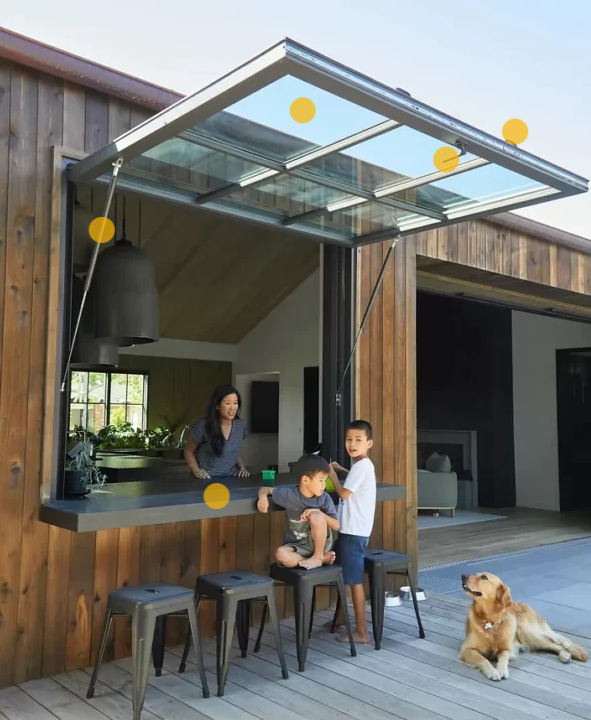
From a lifecycle perspective, commercial-grade windows usually deliver greater value where demand is high.
Although the upfront cost is higher, they offer:
- Longer operational lifespan
- Fewer service interruptions
- Lower risk of compliance or insurance issues
- Predictable performance under constant use
Using residential-grade systems in commercial settings often leads to early replacement or retrofits, which increases total project cost rather than reducing it.
A practical framework to choose the right window grade
Before deciding, consider these questions:
- How often will the window be operated each day?
Frequent use points to commercial-grade. - Will customers or staff interact with it directly?
Public contact increases structural requirements. - Is it part of food or drink service?
Serving functions demand commercial durability. - Is the installation exposed to wind or salt air?
Environmental stress favours reinforced systems. - Does failure impact revenue or safety?
If yes, reliability outweighs initial cost savings.
Reviewing available specifications across a complete architectural window range helps clarify technical differences early in the planning stage.
Why Oridow is the right supplier for aluminum bifold doors and gas strut windows
Correct grading only works when supported by proper engineering and manufacturing expertise.
Oridow specialises in aluminium systems designed to perform across both residential and commercial environments. Their gas strut windows incorporate reinforced frames, balanced strut configurations, and hardware selected for long-term reliability.
With experience supporting projects in hospitality, residential developments, and mixed-use buildings, Oridow understands how real-world usage affects window performance. Their systems are engineered to meet expectations across Australian, UK, and US conditions, without compromising on usability or design.
For projects requiring accurate specification and dependable execution, engaging with an experienced technical support team ensures the system matches actual usage demands.
Final thoughts
Commercial-grade and residential gas strut windows are not interchangeable products. Each is engineered for a different level of usage, risk, and responsibility.
Selecting the appropriate grade protects performance, ensures compliance, and reduces long-term costs. With the right specification, gas strut windows become a durable and functional asset rather than a future liability.
Frequently Asked Questions
Can residential gas strut windows be used in commercial spaces?
Generally no. Residential systems are not designed for constant public use and may fail to meet commercial safety standards.
Do commercial gas strut windows require special installation?
Yes. Correct load distribution, reinforcement, and mounting height are essential for commercial performance and safety.
How long do commercial-grade gas strut windows last?
With proper installation and maintenance, they commonly last 10–20 years, depending on usage and environment.
Are gas strut windows suitable for coastal climates?
Yes, when built with corrosion-resistant aluminium and hardware appropriate for salt exposure.
What is the most common mistake when choosing gas strut windows?
Underestimating how often the window will be used. Usage intensity should drive the grade selection, not appearance alone.


