

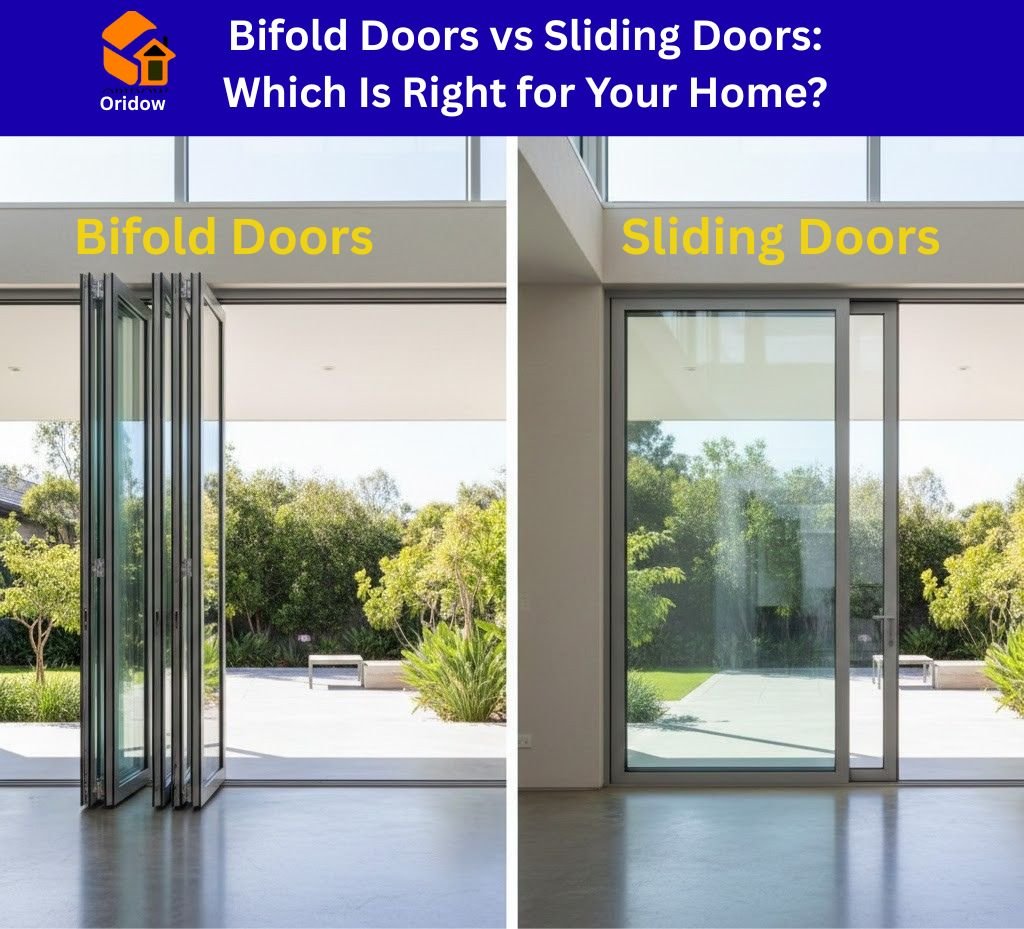
- Bifold doors use hinged panels that fold and stack aside, allowing 90–100% of the opening width to be fully open.
- Sliding doors move along horizontal tracks with at least one fixed panel, typically providing 50–65% clear opening space.
- Energy efficiency and weather performance depend on thermal breaks, glazing quality, seals, and installation rather than door style alone.
Choosing between bifold doors and sliding doors can feel confusing, especially when both look modern and promise to open up your home. Homeowners in Australia, the UK, and the USA often struggle to decide which option truly fits their lifestyle, space, and climate. A choice that looks perfect in photos can feel limiting once you start using it every day.
That is why understanding how each door actually works in real homes matters. When you know how bifold and sliding doors differ in opening space, usability, energy performance, and long-term value, the right option becomes much clearer. Let’s break it down in a practical way so you can choose with confidence and avoid costly regret later.
How do bifold and sliding doors actually work?
Understanding how each system moves makes the decision much easier.
How bifold doors operate
Bifold doors are made up of several narrow panels that are hinged together. The panels slide along a track and then fold to one or both sides, like a concertina. In many aluminium systems you can choose:
- Inward or outward opening
- Left, right, or split stacks
- Low threshold options for smoother transitions
- Different panel counts for wide or compact openings
Aluminum Bifold doors
Because the panels park out of the way, you can open up to 90 to 100 percent of the width. That is why bifolds are especially popular in Australia and warmer parts of the USA where indoor outdoor living is a daily habit.
How sliding doors operate
Sliding doors move horizontally along tracks, and at least one panel always stays fixed. When you slide one panel, it passes in front of or behind another panel instead of folding away. The result:
- Large, uninterrupted glass panels
- A wide but not fully open doorway
- Very simple movement with fewer moving parts
You will usually get 50 to 65 percent of the opening as a walk through space, which is still generous for balconies and smaller patios.
Which is better for space, light, and everyday living?
This is one of the most common questions that appears in People Also Ask results.
When bifold doors work best
Choose bifold doors if you want your kitchen, dining area, or lounge to blend into the garden. They are ideal when you:
- Host barbecues or family gatherings
- Want maximum airflow in summer
- Need flexible opening options, from one traffic door to a full-width opening
Because the panels can be customised in size and configuration, aluminium bifolds suit both compact townhouses and wide-span suburban homes. Many homeowners pair them with matching windows from the same door collection for a consistent look.
When sliding doors make more sense
Sliding doors shine in homes where:
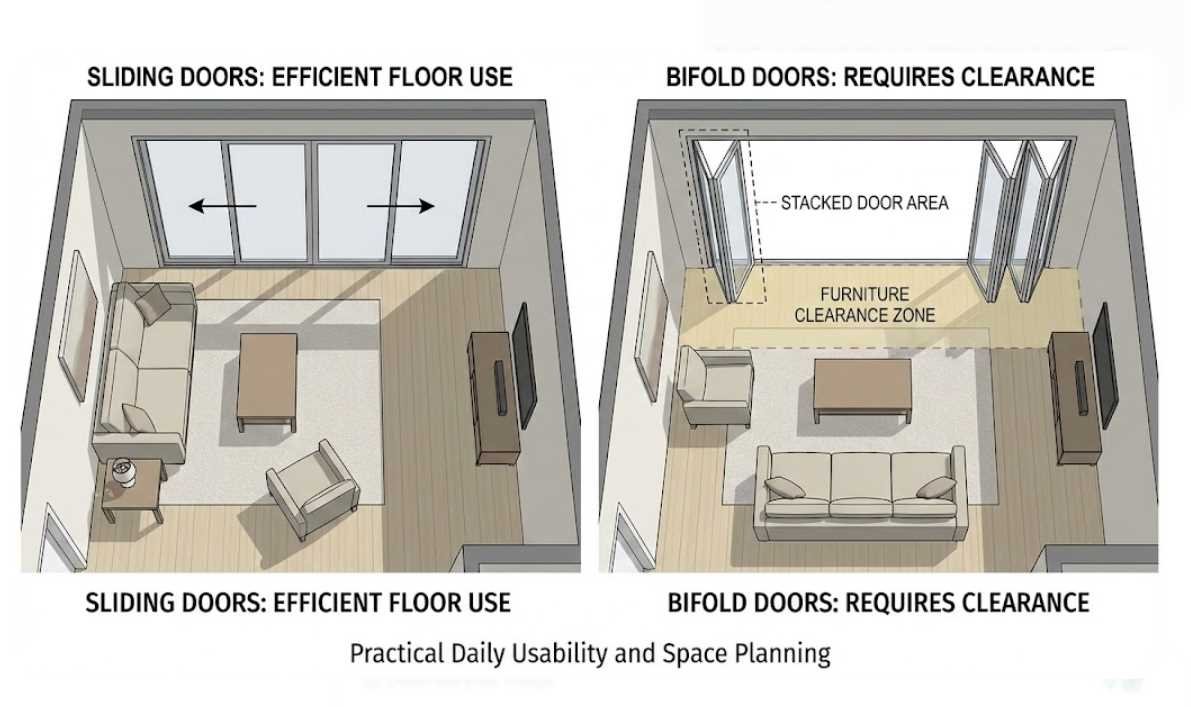
- Floor space near the opening is tight
- Furniture sits close to the glass line
- You want big panes of glass with minimal framing
They are also a smart choice for upper floors and apartments in the UK and US cities where you may not need a huge opening but still want a wide view and good natural light.
Are bifold or sliding doors better for energy efficiency and weather?
With rising energy costs across the UK, USA, and Australia, insulation and weather resistance are essential.
Energy performance
Modern aluminium bifold doors are engineered with:
- Thermal break profiles
- Double or triple glazing
- Quality gaskets and compression seals
Sliding doors can perform similarly when built to the same specification. In practice, performance depends more on the quality of the system and glass than on whether it is a bifold or sliding design. A well made aluminium system in either style will outlast and outperform dated uPVC or timber in harsh climates.
Aluminum Bifold doors
Weather resistance
Bifold doors used to be blamed for leaks, but that mostly came from older designs and poor installation. High quality aluminium systems with continuous seals, drainage paths, and robust hardware now handle:
- Strong winds
- Driving rain
- Coastal conditions
This is especially important in storm-prone coastal regions, where a carefully engineered weatherproof design can keep your interior dry even during extreme weather.
Which option is easier to live with and maintain?
Maintenance and daily usability are key for long term happiness with your doors.
Ease of operation
- Sliding doors: You simply slide one or two panels to open the space. There are fewer hinges, which means less adjustment over time.
- Bifold doors: You can use a single access door for quick trips in and out, or fold the whole set back when you need the full opening. This flexibility is a big plus for families and entertainers.
Correct installation makes a huge difference. Following professional installation tips or using an experienced installer helps the doors glide smoothly for years.
Ongoing maintenance
- Keep tracks free of dirt and grit
- Check rollers and hinges every year
- Wipe down seals and frames periodically
Aluminium frames do not warp, swell, or rot, which is why they are favoured in coastal Australian homes and humid US climates. With basic care, a quality system can stay in service for decades.
How do you decide which door style suits your home?
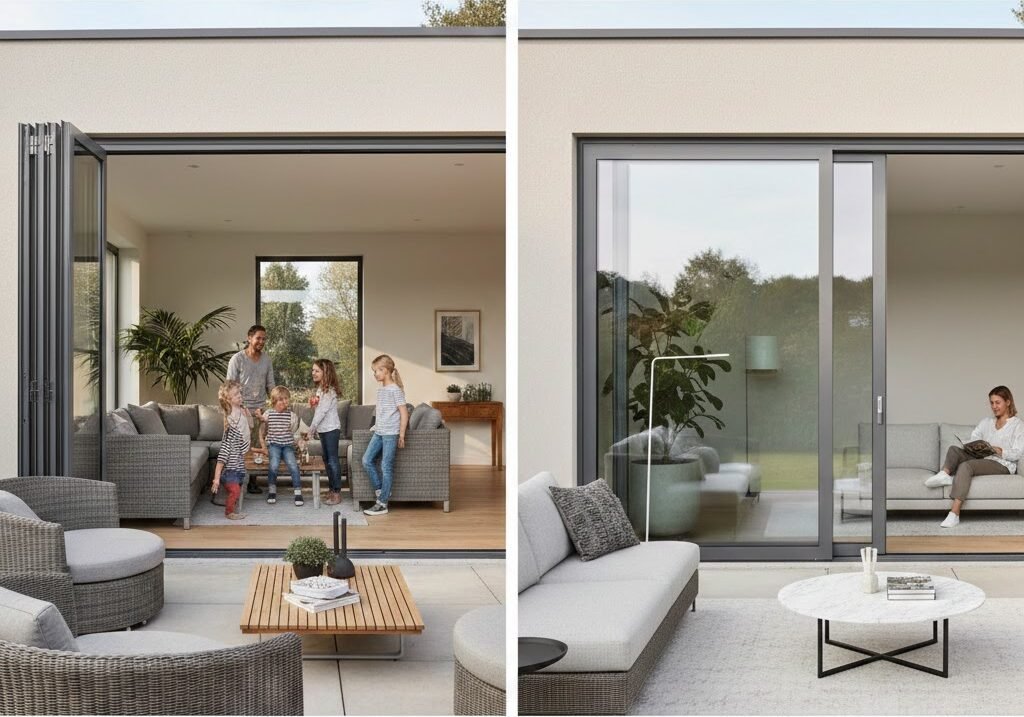
When you are still torn between bifold and sliding doors, run through these questions:
- How often will the doors be fully open?
- Most weekends and evenings: bifolds are usually worth it.
- Only occasionally: sliding may be simpler.
- Is the opening wide or modest?
- Very wide spans often look great with a mix of fixed and sliding panels.
- Standard patio openings are ideal for bifolds that open the whole space.
- How tight is your interior layout?
- If furniture or a breakfast bar sits close to the opening, sliding doors avoid conflict.
- If you have clear wall space for stacking, bifolds are fine.
- What kind of look do you want?
- Clean, modern glass walls favour sliding doors.
- Dynamic, openable facades suit bifolds, especially in entertaining zones.
For more help weighing the pros and cons of aluminium bifolds in particular, many homeowners refer to a concise benefits guide before finalising their plans.
Why Oridow is best for aluminium bifold doors
Choosing the right bifold doors is about long-term performance, not just appearance. Oridow focuses on durable aluminium systems designed for homes in Australia, the UK, and the USA.
What sets Oridow apart
- Custom-built solutions
The bifold system available in the aluminium range is made to suit your opening, with flexible panel sizes and stacking options. - Durable aluminium frames
High-grade aluminium construction resists corrosion, warping, and temperature extremes, making it suitable for demanding climates. - Smooth daily operation
Precision rollers and hinges are engineered for consistent movement and long-term alignment with regular use. - Built for harsh climates
Advanced sealing and drainage design used in the weather protection system helps prevent drafts and water ingress. - Consistent design across spaces
Matching windows and doors from the wider product range help maintain a unified architectural look. - Practical guidance before install
Homeowners and builders can get project-specific advice from the Oriodw expert team .
This combination of custom sizing, climate-ready engineering, and practical support makes Oridow aluminium bifold doors a strong long-term choice.
Final thoughts
Both bifold and sliding doors can transform the way you use your home, but they do it in different ways. Bifold doors excel when you want to open your room completely to the outside and create a true indoor-outdoor hub for living and entertaining.
Sliding doors are brilliant when you want big, clear views, simple operation, and a more modest budget. Look at how you live day to day, the climate you are in, and how much flexibility you really want, then choose the system that will still feel right ten years from now.
FAQs
Are bifold doors more secure than sliding doors?
High quality aluminium bifold doors use multi point locking across several points of the frame, which provides strong resistance to forced entry. Sliding doors can be just as secure when they include reinforced frames, anti lift tracks, and reliable locking systems, so always compare security features, not just style.
Do bifold doors take up more space than sliding doors?
Bifold doors need stacking space to park the folded panels at one or both sides of the opening. Sliding doors stay within the line of the wall because panels overlap on their tracks, so they usually work better when internal or external space around the opening is limited.
Which type of door gives better views?
Sliding doors tend to offer the cleanest views because they use larger glass panels with fewer vertical frames. Bifold doors introduce more sightlines, but they can completely open up when folded back, which gives you an unrestricted connection to the outside whenever they are fully open.
Can I use aluminium bifold doors in cold or wet climates?
Yes. With thermally broken frames, quality glazing, and advanced sealing, aluminium bifold doors perform well in cold, wet, and windy climates as long as they are installed correctly. Many systems are specifically tested for air, water, and wind resistance so they can handle everything from UK rain to coastal storms.


