


Gas strut windows are becoming more common in homes and commercial buildings. They allow fresh air, clear views, and a smooth connection between indoor and outdoor spaces. Many homeowners and builders wonder if these windows are safe during high winds or storms.
The short answer is yes. Gas strut windows can be safe in windy conditions when they are well designed, correctly installed, and used as intended. Their safety depends on the quality of the materials, the level of wind exposure, and how the window is handled during severe weather.
What Are Gas Strut Windows and How Do They Handle Wind?
Gas strut windows are top-hinged systems that open outward and upward, supported by pressurized gas struts. They are widely used in outdoor kitchens, cafés, bars, and residential entertaining areas because they create large, unobstructed openings.
From an engineering standpoint, wind resistance is a measurable performance factor. Quality manufacturers design these windows to meet specific wind load requirements based on:
- Panel size and weight
- Opening angle and hinge placement
- Gas strut pressure and resistance
- Frame material strength, typically aluminum
In markets such as Australia, the UK, and the USA, fenestration products are expected to comply with building codes that account for wind pressure and structural performance. Well-engineered systems are tested to meet these expectations rather than relying on assumptions.
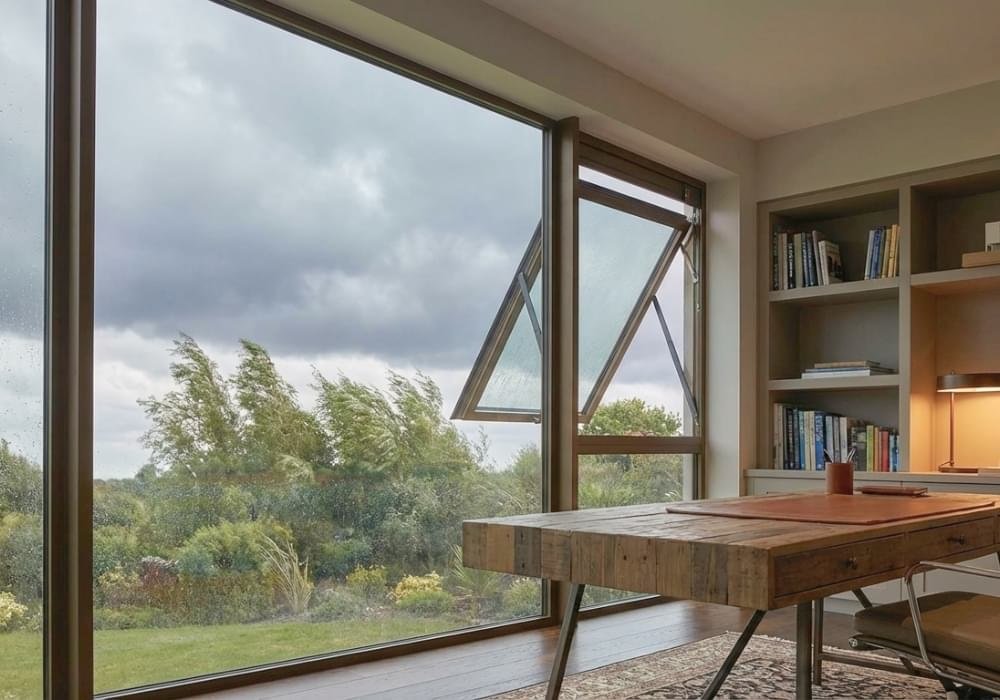
Can Gas Strut Windows Stay Open in Strong Winds?
Gas strut windows can remain open in moderate wind conditions when they are correctly specified and installed. The gas struts are designed to provide controlled resistance, helping the sash stay stable rather than moving freely.
However, it is important to recognize real-world limits:
- Strong gusts can create uplift forces on large open panels
- Sudden wind direction changes increase stress on hinges and struts
- Storm conditions may exceed safe operating thresholds
As a general best practice, gas strut windows should be closed and secured during storms, cyclonic conditions, or severe weather warnings. This is consistent with how other outward-opening architectural elements are managed and is considered responsible use rather than a product limitation.
What Design Features Improve Wind Safety?
Not all gas strut windows offer the same level of wind performance. Safety in high-wind environments depends heavily on engineering and material quality.
Key design elements that improve safety include:
- Architectural-grade aluminum frames that resist flexing
- Calibrated gas struts matched to sash weight and size
- Continuous hinge systems that distribute load evenly
- Secure locking mechanisms for closed-position strength
Well-designed gas strut windows also limit overextension, preventing the panel from opening beyond a safe angle when wind pressure changes.
These details matter most in larger openings, where wind forces increase with surface area.
What Design Features Improve Wind Safety?
Wind safety in gas strut windows is not accidental. It is the result of deliberate engineering choices that control movement, distribute pressure, and prevent structural stress. When evaluating performance in windy or exposed environments, design details matter more than appearance.
Structural Engineering That Manages Wind Load
Well-designed gas strut windows are engineered to handle wind forces by distributing pressure evenly across the system rather than concentrating it at one stress point.
Key structural elements include:
- Reinforced aluminum frames that resist bending
- Continuous hinge systems that spread wind load along the top edge
- Controlled opening angles that limit uplift force
These features are especially important for larger openings, where wind pressure increases significantly with surface area.
Hardware and Component Design That Enhances Stability
Beyond the frame itself, internal components play a critical role in how the window behaves when wind conditions change.
Critical hardware features include:
- Gas struts calibrated to the sash weight
- High-tension fixings that reduce vibration
- Locks designed to resist wind pressure when closed
High-quality gas strut windows integrate these components as a system rather than relying on generic hardware.
Design Features and Their Wind Safety Benefits
| Design Feature | Function | Wind Safety Benefit |
| Aluminum frame | Structural support | Resists flexing under pressure |
| Calibrated gas struts | Controlled opening and hold | Prevents sudden movement in gusts |
| Continuous hinge | Load distribution | Reduces stress at single hinge points |
| Limited opening angle | Movement control | Minimizes uplift force |
| Secure locking system | Closed-position strength | Protects during storms |
When these elements work together, the window remains stable during everyday wind conditions and predictable to operate.

Are Gas Strut Windows Suitable for Outdoor Living Areas?
Gas strut windows are commonly used in alfresco kitchens, bars, and entertaining spaces where weather exposure varies throughout the year. When placed thoughtfully, they provide flexibility without compromising safety.
Many designs incorporate roof cover or side protection that naturally reduces direct wind impact. This makes them especially effective for outdoor entertaining while still allowing airflow and connection between spaces.
In these environments, wind safety is enhanced through a combination of smart placement, quality engineering, and responsible operation.
How Maintenance Affects Wind Performance?
Regular maintenance plays a critical role in how well gas strut windows perform under wind pressure. Even the most well-engineered system can lose stability over time if key components are not inspected and maintained.
Wind performance is not only about resisting force. It is also about controlled movement, consistent resistance, and structural alignment, all of which depend on ongoing care.
Why Maintenance Directly Impacts Wind Safety
Gas strut windows rely on balanced forces between the sash, hinges, and struts. When one component degrades, wind loads are no longer distributed evenly.
Poor maintenance can lead to:
- Increased panel movement during gusts
- Uneven load on hinges and fixings
- Reduced resistance from weakened gas struts
- Difficulty keeping the window securely open or closed
In wind-prone regions, these issues can appear gradually and often go unnoticed until performance is compromised.
Key Components That Influence Wind Performance
Certain parts of a gas strut window are more directly affected by wind exposure and environmental conditions. Regular checks help prevent minor wear from turning into functional risk.
| Component | Role in Wind Performance | What to Check Regularly |
| Gas struts | Control opening resistance and hold position | Loss of pressure, uneven lift |
| Hinges | Distribute wind load across the frame | Loosening, corrosion, alignment |
| Frame joints | Maintain structural rigidity | Movement, gaps, fastener security |
| Locks | Secure window during wind events | Smooth engagement, firm closure |
| Seals | Reduce vibration and air pressure | Cracking, compression loss |
Each of these components works together. When one underperforms, wind stress shifts to other areas, increasing long-term wear.
How Environmental Exposure Accelerates Wear
Outdoor installations are exposed to more than just wind. Salt air, moisture, temperature changes, and dust all contribute to component fatigue.
Common environmental effects include:
- Salt corrosion affecting metal hardware in coastal areas
- Temperature fluctuations reducing gas strut efficiency
- Dust buildup increasing friction at hinges and seals
This is why maintenance schedules should be adjusted based on location rather than treated as a one-size-fits-all task.
Recommended Maintenance Practices for Wind Reliability
Consistent care helps ensure the window behaves predictably during windy conditions.
Best practices include:
- Inspecting struts annually for smooth and balanced movement
- Tightening hinge fixings to maintain load distribution
- Cleaning seals and contact points to reduce vibration
- Replacing worn components before failure occurs
Following established window maintenance guidance helps preserve wind resistance and extends the operational life of the system.
Long-Term Benefits of Proper Maintenance
Well-maintained gas strut windows offer more than just safety. They also deliver:
- Consistent opening and closing behavior
- Reduced strain on hardware during gusty conditions
- Improved sealing and noise reduction
- Longer service life with fewer repairs
In regions where wind exposure is common, maintenance is not optional. It is a key part of ensuring that gas strut windows continue to perform safely and reliably over time.
Why Oridow Is the Right Supplier for Aluminum Gas Strut Windows?
Choosing the right supplier affects safety, durability, and long-term performance. This is especially important in areas exposed to strong winds. Oridow focuses on engineered window systems, not mass-produced designs.
Engineered aluminum construction
Oridow windows use architectural-grade aluminum frames. These frames are built to handle wind pressure while staying strong over time.
Balanced strut configuration
Each gas strut is matched to the window’s size and weight. This improves control during daily use and reduces sudden or unsafe movement.
Application-driven design
Oridow designs its systems for real-world settings. These include outdoor kitchens, hospitality spaces, and coastal homes where wind is a key factor.
Flexible product range
Oridow’s product range allows builders and homeowners to choose window styles based on opening size, usage, and site conditions.
Access to technical support
Oridow offers direct access to its support team. This helps ensure the correct window is selected and installed properly.
Frequently Asked Questions
Are gas strut windows dangerous in storms?
No, but they should not be left open during storms or extreme wind conditions. Closing them during severe weather is standard best practice.
Can strong wind damage gas struts?
Repeated exposure to excessive wind loads can shorten strut lifespan. Proper use and regular inspection help prevent premature wear.
Are aluminum gas strut windows stronger than timber options?
In most cases, yes. Aluminum provides higher structural stability and is less susceptible to warping in windy environments.
Do gas strut windows meet building codes?
High-quality systems are designed to comply with regional building standards. Always confirm wind ratings and specifications before installation.


