

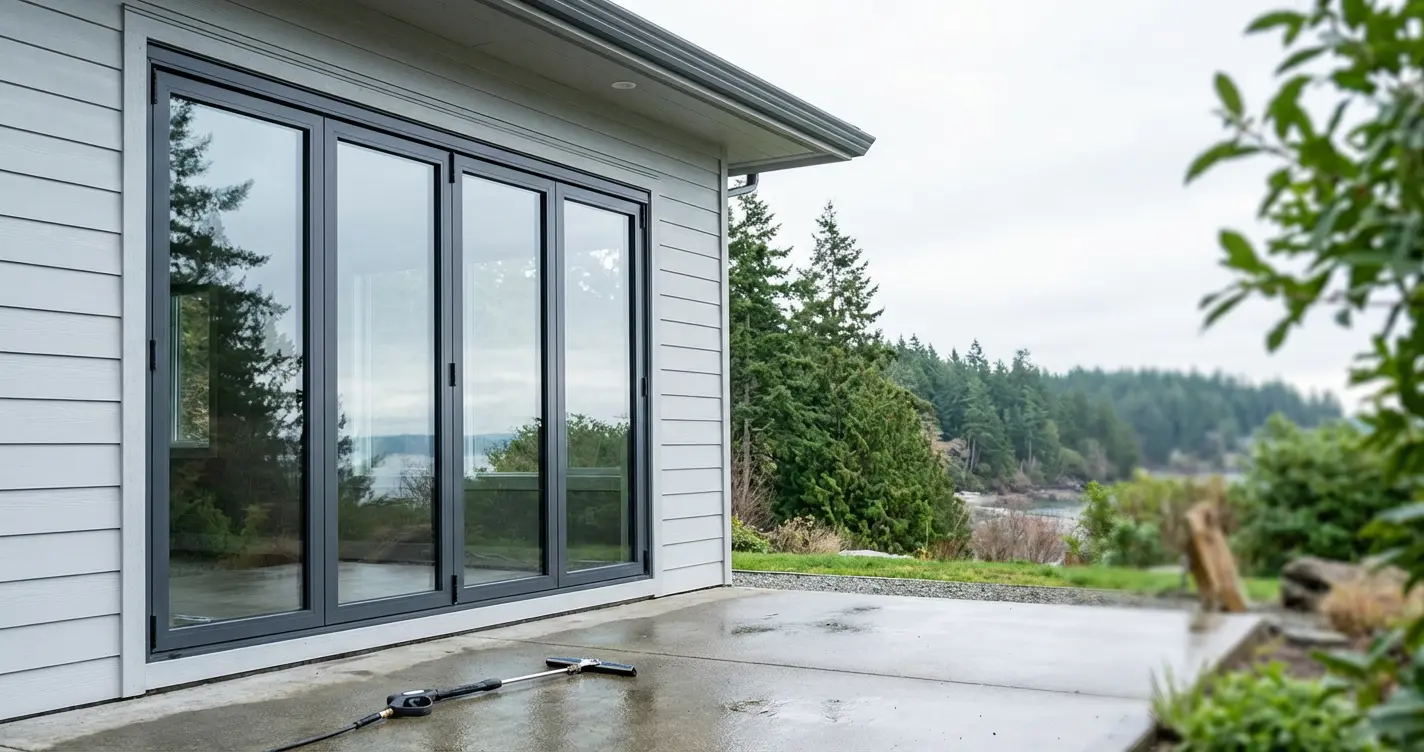
Aluminium bifold windows are one of the most versatile and stylish glazing solutions available today. Whether you’re opening up a kitchen to the outdoors, improving airflow through a living space, or simply replacing dated windows with something sleeker and more energy efficient, a well-chosen bifold system delivers on every front.
This guide covers everything homeowners, renovators, and developers need to know — from how bifold windows work and where they perform best, to energy efficiency, kitchen pass-throughs, and what to expect from installation.
What Are Aluminium Bifold Windows?
Aluminium bifold windows consist of two or more glazed panels connected by hinges that fold against each other when opened. Unlike a standard casement or sliding window, bifold windows concertina neatly to one or both sides, creating a wide, unobstructed opening.
The aluminium frame is the preferred choice for this type of system because it offers:
- High strength-to-weight ratio — supporting large glass panels without bulky frames
- Corrosion resistance — suitable for coastal, humid, and high-rainfall environments
- Slim sightlines — maximising glass area and natural light
- Low maintenance — no warping, swelling, or painting required
- Thermal break technology — improving insulation performance in modern systems
Aluminium Bifold Windows for Kitchen Pass-Throughs
One of the most popular applications for aluminium bifold windows is the kitchen pass-through — an opening between the kitchen and an outdoor entertaining area, a garden bar, or a courtyard. Done well, a pass-through transforms how a home functions, making outdoor entertaining effortless and keeping the indoor space feeling connected to the outside even when the windows are closed.
Why Bifold Windows Work So Well as Pass-Throughs
A bifold window can fold completely out of the way, leaving the entire opening clear. This is ideal above a countertop or bar ledge where you need a flat, unobstructed surface to pass food, drinks, or plates through. Other window types — such as awning or sliding windows — leave hardware in the way or only open partially.
Key benefits of bifold windows in kitchen pass-through applications:
- Full open width with no central frame obstruction
- Panels fold flat against the wall or stack neatly to one side
- Can be configured to open inward or outward depending on available space
- Works with countertop heights — sill-level installations are straightforward
- Creates a bar-style opening that seamlessly connects indoor and outdoor entertaining
Are Bifold Windows Suitable for Small Kitchens?
Yes — bifold windows are actually an excellent choice for small kitchens. Because the panels fold and stack rather than swinging outward like a casement, they require minimal clearance. This makes them practical even in compact spaces where an outward-opening window would cause problems.
In a small kitchen, a bifold pass-through window can also create the impression of more space by opening the room visually to an outdoor area or courtyard. Natural light floods in, and on warm days, the entire wall can open up to extend the kitchen into the outdoors.
A few practical considerations for small kitchens:
- Measure the stacking space on each side of the opening carefully — panels need somewhere to fold to
- A two or three-panel configuration works well in tighter openings
- Outward-opening bifold windows may be more practical if internal bench space is limited
- Ensure the sill height suits your countertop or bar for a clean, functional finish
Energy Efficiency Benefits of Aluminium Bifold Windows
Modern aluminium bifold windows are far more energy efficient than older aluminium systems. Advances in thermal break technology, glazing options, and sealing design have transformed aluminium into a high-performance glazing choice for energy-conscious homes.
Thermal Break Technology
The key to energy efficiency in aluminium frames is the thermal break — a non-conductive material (typically PA66 GF25 polyamide) inserted between the inner and outer sections of the frame. Without a thermal break, aluminium conducts heat and cold directly through the frame, creating energy loss and condensation.
With a quality thermal break, the system achieves much lower U-values (the measure of heat transfer through a building element), significantly reducing heating and cooling costs.
Glazing Options
Aluminium bifold windows are compatible with both double and triple glazing, allowing homeowners to choose performance levels that suit their climate:
- Double glazing — suitable for most Australian, UK, and US climates; good thermal and acoustic performance
- Triple glazing — ideal for colder climates or rooms where acoustic insulation is a priority
- Low-E glass — a coating that reflects heat back into the room in winter and blocks solar heat in summer
- Laminated glass — adds acoustic dampening, useful for urban environments or road-facing rooms
Sealing and Weatherproofing
Energy efficiency is only as good as the sealing. Quality aluminium bifold systems use multi-point EPDM gaskets that compress evenly around the perimeter when the windows are closed, eliminating draughts and preventing moisture ingress.
Integrated drainage channels within the frame design direct any water away from the seal zone, protecting the thermal performance and structural integrity of the installation over the long term.
Climate-Specific Considerations
Different markets place different demands on energy performance:
- Australia — UV resistance, thermal control, and corrosion resistance in coastal areas are key priorities
- United Kingdom — moisture protection and insulation against cold, damp winters are essential
- United States — requirements vary by state, but thermal performance and Energy Star compliance are increasingly standard
How to Operate a Bifold Window
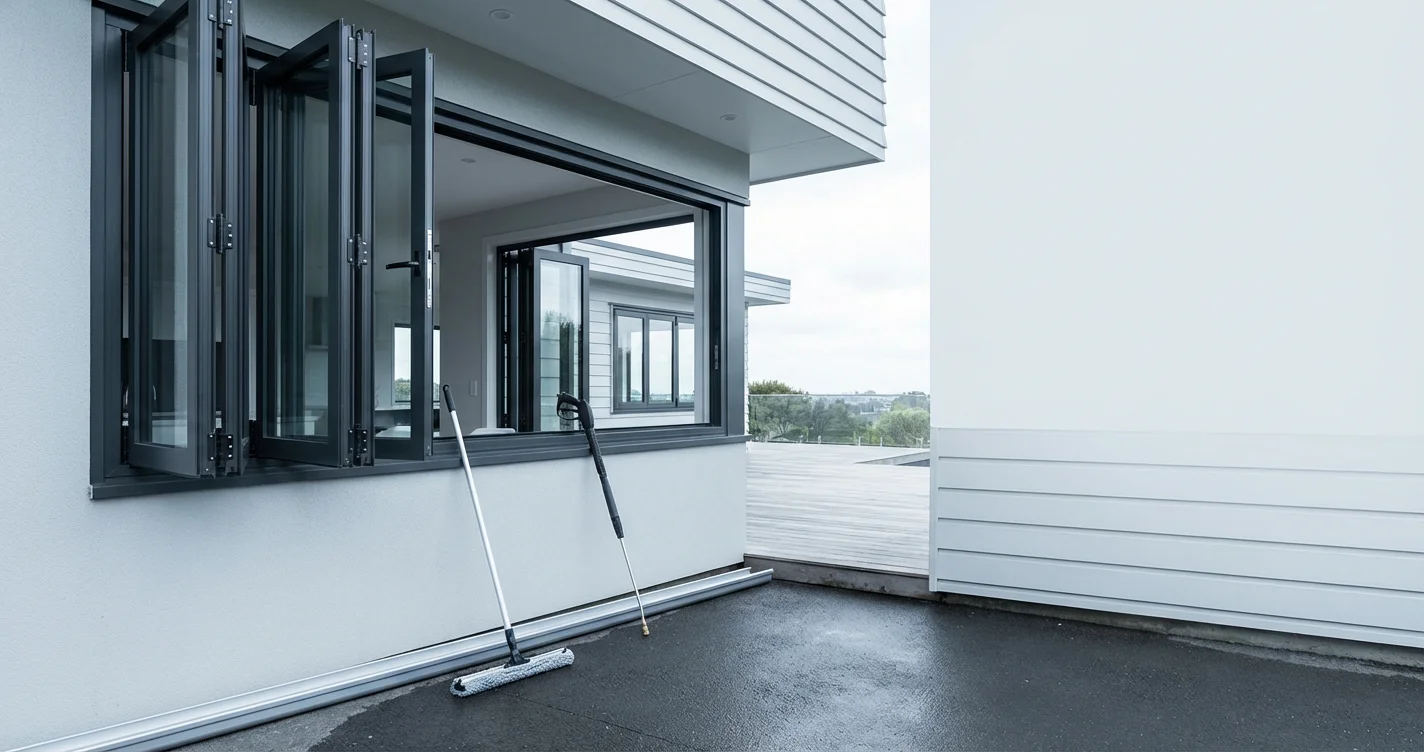
Bifold windows are designed to be intuitive, but understanding the mechanics helps you get the best from your system — and spot any issues early.
Opening the Window
- Disengage the multi-point lock by turning or lifting the handle — most systems use a single handle to release all locking points simultaneously
- Push or pull the leading panel (the panel closest to the open end) in the direction it travels
- As the leading panel moves, the remaining panels fold against it, stacking neatly to one or both sides depending on the configuration
- For top-hung systems, the panels glide along the top track with minimal floor-level obstruction
Closing and Locking
- Unfold the panels from the stacked position, guiding each one back along the track
- Bring the leading panel back into the closed position, aligning it with the frame
- Engage the handle to activate the multi-point lock — you should feel or hear each locking point engage
- Check that the seals are sitting evenly around the frame before leaving the window unattended
Partial Opening
Most bifold windows allow partial opening. You can fold back just one or two panels to create a smaller aperture, leaving the rest of the window closed. This is useful for ventilation without fully opening the space — handy in light rain or cooler weather.
Can Bifold Windows Open Outwards?
Yes — aluminium bifold windows can be configured to open either inward or outward. The direction of opening is determined at the design stage and depends on the specific application and available space.
Outward-Opening Bifold Windows
Outward-opening systems are the most popular choice for residential bifold windows. Panels fold to the outside of the building, freeing up interior floor space entirely and keeping wet panels outside in rainy conditions. These are a particularly strong choice when:
- Interior space is limited and you don’t want panels folding into the room
- The window is positioned above an outdoor countertop (such as a kitchen pass-through bar)
- The external area has sufficient clearance for the stacked panels
Keep in mind that outward-opening windows need an overhang or shelter above them to prevent rain entering when the window is open. They also require clearance outside, so aren’t suitable where the opening directly faces a narrow path or wall.
Inward-Opening Bifold Windows
Inward-opening systems are less commonly chosen, but suit specific situations well — particularly where there are obstacles or furniture outside, or where you want easy access to clean the exterior glass from inside. Panels fold into the interior space and stack flush against the internal wall.
The main consideration with inward-opening systems is interior clearance — furniture, countertops, or fixtures within the fold zone can obstruct operation if not planned for in advance. In rainy climates, wet panels opening inward can also drip onto flooring or soft furnishings, which is worth accounting for.
Installation: What to Expect
Professional installation is what separates a bifold window that performs flawlessly for decades from one that sticks, leaks, or loses its seal within a few years. The installation process covers six core stages:
- Site assessment and precise measurement
- Structural preparation of the opening, including lintel assessment
- Frame placement and anchoring to structural supports
- Track and panel installation with roller alignment
- Hardware fitting and calibration — hinges, locks, handles
- Weatherproofing, sealing, and final quality testing
A straightforward window replacement typically takes a few hours to one full day, depending on the size and number of panels. Projects requiring structural changes — new lintels, enlarged openings, or load-bearing wall modifications — may take two to three days or more depending on complexity.
Performance: Proper vs. Poor Installation
| Performance Area | Proper Installation | Poor Installation |
| Panel movement | Smooth and balanced | Stiff or dragging |
| Energy efficiency | Airtight — low energy loss | Draughts and heat transfer |
| Water resistance | Fully sealed | Leakage risk |
| Hardware lifespan | Long-term durability | Early wear and failure |
| Structural integrity | Even load distribution | Frame stress over time |
Frequently Asked Questions
Can bifold windows open outwards?
Yes — and outward-opening is actually the most popular choice for residential bifold windows. Panels fold and stack outside the building, freeing up interior space and keeping wet panels outside in rainy weather. Inward-opening configurations are also available and suit situations where external clearance is limited or outdoor furniture would obstruct the stacked panels. The direction is specified at the point of order, so it’s important to confirm your requirements before manufacturing.
Are bifold windows suitable for small kitchens?
Absolutely. Bifold windows are well-suited to small kitchens because they don’t swing open into the room — they fold and stack, requiring minimal clearance. A two or three-panel configuration fits comfortably into most compact kitchen openings. As a pass-through, they also open the kitchen visually, making the space feel larger and more connected to the outdoors.
How do I operate a bifold window?
To open, disengage the handle to release the multi-point lock, then push or pull the leading panel along the track. The remaining panels fold against it and stack to one side. To close, unfold the panels back along the track, bring the leading panel flush with the frame, and engage the handle to activate all locking points. Most systems also allow partial opening — folding back one or two panels for ventilation without fully opening the window.
How long does installation take?
A straightforward window replacement typically takes a few hours to one full day. Larger systems or projects involving enlarged openings, new lintels, or structural changes may take two to three days or more. Site access and preparation quality will also influence the timeline.
Do aluminium bifold windows require structural support?
Yes. Because bifold windows create wide, unobstructed spans, the opening must be properly supported by a lintel or structural beam. In many renovation projects across Australia, the UK, and the US, building codes require a structural assessment before installation proceeds. A qualified installer will assess the opening and advise on any reinforcement required.
Are aluminium bifold windows energy efficient?
Yes, when manufactured with thermal break technology and properly installed. Energy performance depends on the quality of the frame’s thermal break, the glazing specification (double or triple), the compression seal system, and the quality of weatherproofing applied during installation. A well-sealed, thermally broken aluminium bifold window performs to a high standard in most residential climates.
Can aluminium bifold windows be installed in existing homes?
Yes. Retrofit installation into existing openings is common and straightforward for most properties. Where an enlarged opening is desired, structural modifications may be required. A pre-installation site assessment confirms what’s feasible and what permits may be needed for your specific location.
Final Thoughts
Aluminium bifold windows offer a combination of performance, flexibility, and visual appeal that few other window types can match. From creating seamless kitchen pass-throughs to significantly improving a home’s energy efficiency, the right system — properly specified and professionally installed — will perform reliably for decades.
The key decisions are choosing a system with genuine thermal break technology, ensuring the glazing specification matches your climate, and working with an installer who understands the structural requirements of wide-span openings. Get those elements right, and a bifold window becomes one of the most rewarding upgrades a home can receive.


