

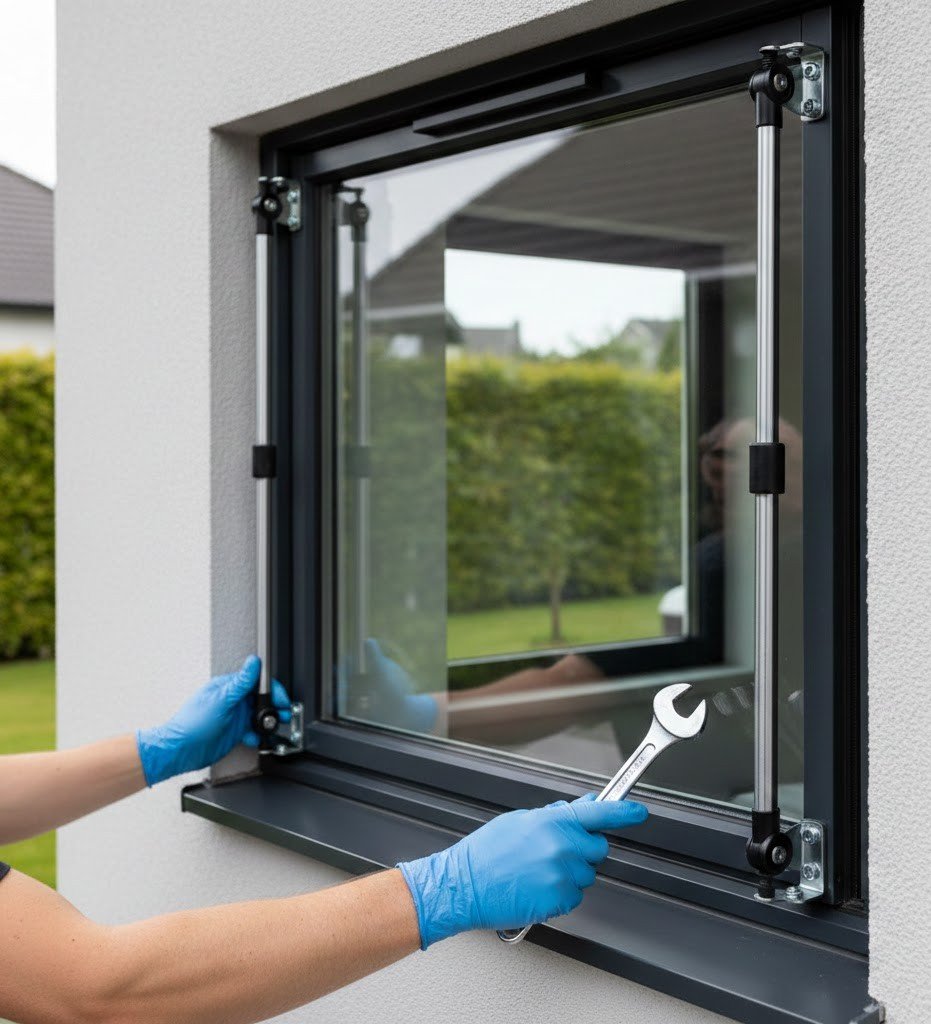
Yes, a gas strut window can usually be replaced without a professional as long as the window structure itself is not damaged.
Gas struts are critical components in awning, top-hung, and outward-opening aluminum systems. In many modern homes and commercial kitchens, gas-assisted window systems are engineered to provide controlled lift, improved ventilation, and safe operation.
They regulate opening force, stabilize the sash, and enhance user safety. In commercial-grade fenestration, struts are engineered to balance:
- Glass weight
- Sash dimensions
- Wind pressure exposure
- Opening angle geometry
Improperly rated or failing struts are a leading cause of operational issues in aluminum windows. Hardware studies show incorrect force calibration can reduce service life by up to 40%, especially in large glazed panels.
Key Takeaways:
- Gas strut windows can be DIY-replaced if the frame and hinges are structurally intact.
- Correct length and Newton rating must match sash weight to prevent slamming or hinge damage.
- Always support the sash and use two people to prevent injury or glass breakage.
- Install with the rod facing downward to maintain lubrication and extend service life.
What Does a Gas Strut Do in a Window System?
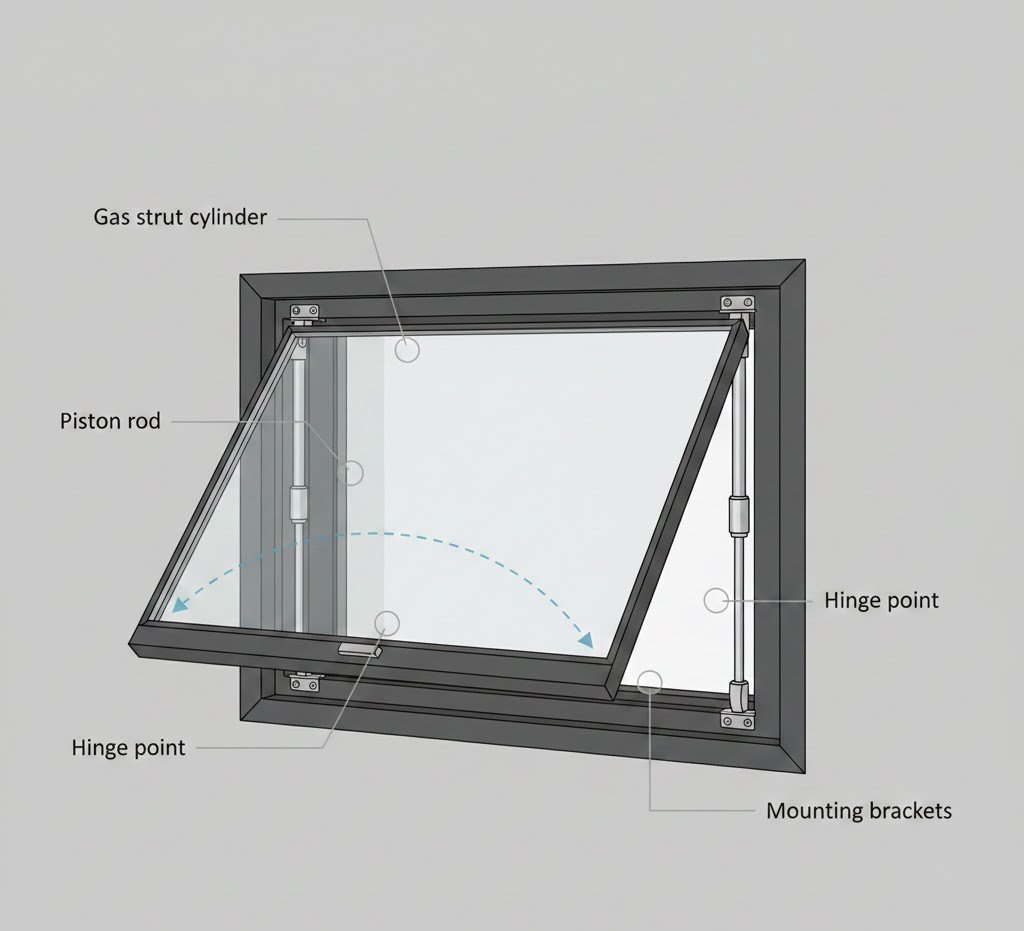
A gas strut supports, lifts, and stabilizes the window sash during operation.
Inside the cylinder, compressed nitrogen provides controlled resistance. When the window opens, the strut assists lifting. When closing, it ensures smooth deceleration and proper sealing pressure.
In systems that compare awning vs strut windows, the key difference lies in operational support. Traditional awning windows rely more heavily on hinges, while gas strut systems distribute load more evenly.
Struts directly influence:
- User safety
- Seal compression
- Hinge lifespan
- Ease of operation
- Structural stress control
In commercial environments, they must also account for wind suction and facade pressure loads.
Can You Replace a Gas Strut Window Yourself?
Yes replacing only the gas strut is generally a manageable maintenance task.
Most struts attach via ball joint sockets secured with retaining clips. Removal and installation require minimal tools.
DIY replacement is appropriate when:
- The aluminum frame is structurally sound
- Hinges are aligned
- Mounting brackets are intact
- Only the lift pressure has failed
However, if the unit is part of a custom-engineered aluminum strut window unit with oversized glazing, professional assistance may be advisable due to sash weight and performance tolerances.
Safety Considerations Before Replacing
Yes, safety preparation is the most important step before removing a gas strut.
Once the strut is detached, the window sash loses its lifting support. In aluminum systems with double or laminated glazing, sash weight can range from 20 kg to over 70 kg depending on size and glass specification.
Understand the Risk Factors
Gas strut windows are often installed in:
- Kitchen pass-through openings
- Exterior facade elevations
- Balcony or high-rise applications
- Commercial serving counters
These locations increase fall risk, wind exposure, and structural load variables.
Key Safety Measures
Before beginning replacement:
- Use Two People
One person must firmly support the sash at all times. - Stabilize the Opening Angle
Do not overextend the window beyond its designed opening range. - Avoid Wind Conditions
Wind pressure can suddenly shift the sash, especially in outward-opening units. - Inspect Hinges First
If hinges are bent or loose, removing the strut may cause twisting or frame distortion. - Wear Protective Equipment
Gloves protect against sharp aluminum edges and glass corners.
When Extra Precaution Is Required
Additional reinforcement or professional assistance is recommended if:
- The sash exceeds 1.2 meters in width
- The glazing is triple-glazed or laminated
- The installation is above ground level
- The mounting brackets show corrosion
For builders managing multi-unit developments, establishing standardized maintenance protocols reduces injury risk and liability exposure.
In high-use areas such as kitchens, especially with kitchen pass-through windows, maintaining correct strut performance is essential for safe daily operation.
How to Replace a Gas Strut Window
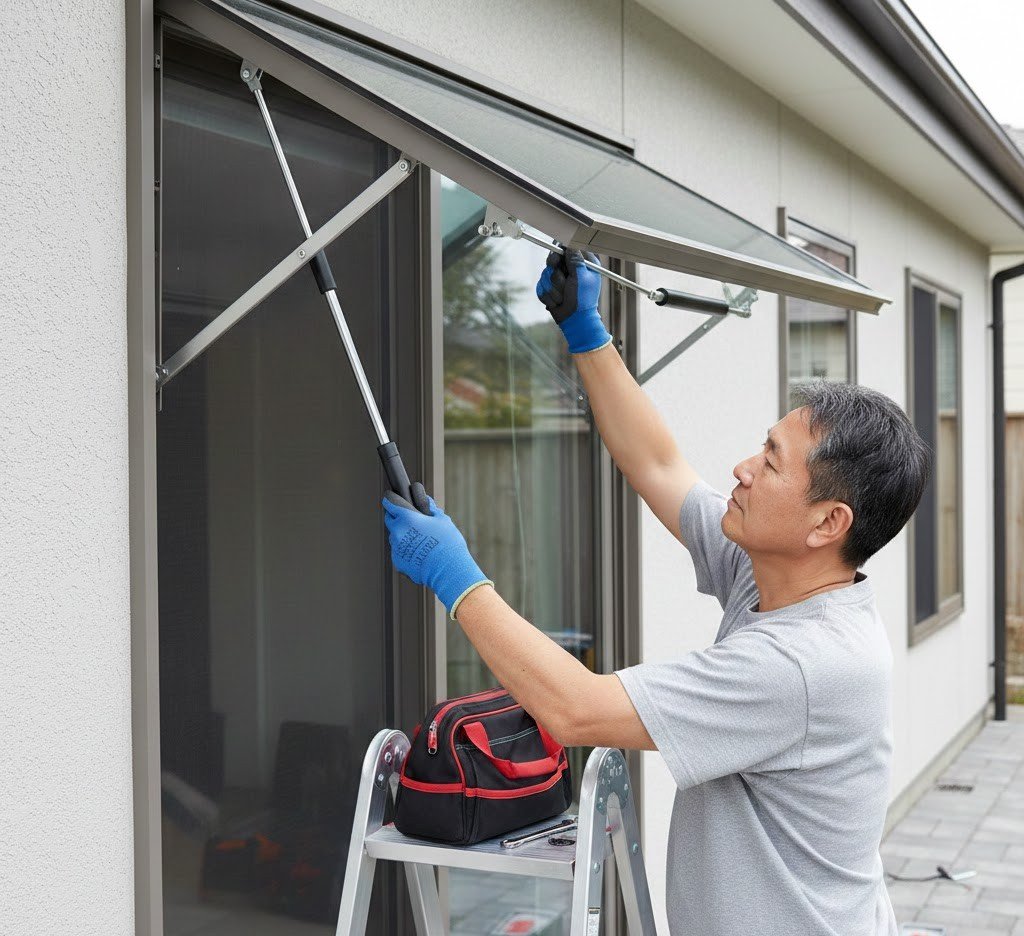
Yes, replacing a gas strut is mechanically simple but precision and proper handling are essential.
The procedure typically takes 10–20 minutes per unit when performed correctly.
Step 1: Secure the Window in a Stable Position
Open the window to a comfortable working angle.
Have a second person hold the sash firmly from the outer edge.
For larger panels, temporary bracing or support bars may be used.
Step 2: Inspect Existing Hardware
Before removing the old strut:
- Check hinge alignment
- Examine ball studs for wear
- Confirm mounting brackets are tight
- Look for metal fatigue or corrosion
If structural issues are present, replacing only the strut will not resolve the root cause.
Step 3: Release the Retaining Clip
Insert a flathead screwdriver under the metal retaining clip at the socket end.
Gently lift it just enough to release tension.
Do not remove the clip completely.
Repeat on the opposite end.
Step 4: Remove the Old Strut
Carefully pull the socket away from the ball stud.
Remove one end at a time while the sash remains supported.
If the strut resists removal, verify that the clip has been lifted sufficiently.
Step 5: Confirm New Strut Specifications
Before installation, verify:
- Extended length matches original
- Newton rating is identical
- Mounting type is compatible
- Orientation is correct
Even minor specification errors can cause operational imbalance.
Step 6: Install the New Strut
Align the socket with the ball stud and press firmly until a clicking sound confirms engagement.
Install one end first, then attach the second end.
No screws or drilling should be required if specifications are correct.
Step 7: Operational Testing
Slowly release manual support and test the window.
Open and close the sash multiple times to confirm:
- Smooth motion
- Controlled lift
- Proper closing pressure
- No hinge strain
If the window lifts too aggressively or closes with force, the Newton rating may be incorrect.
For commercial procurement teams, documenting replacement specifications ensures consistency across future maintenance cycles.
How to Choose the Correct Gas Strut Specification
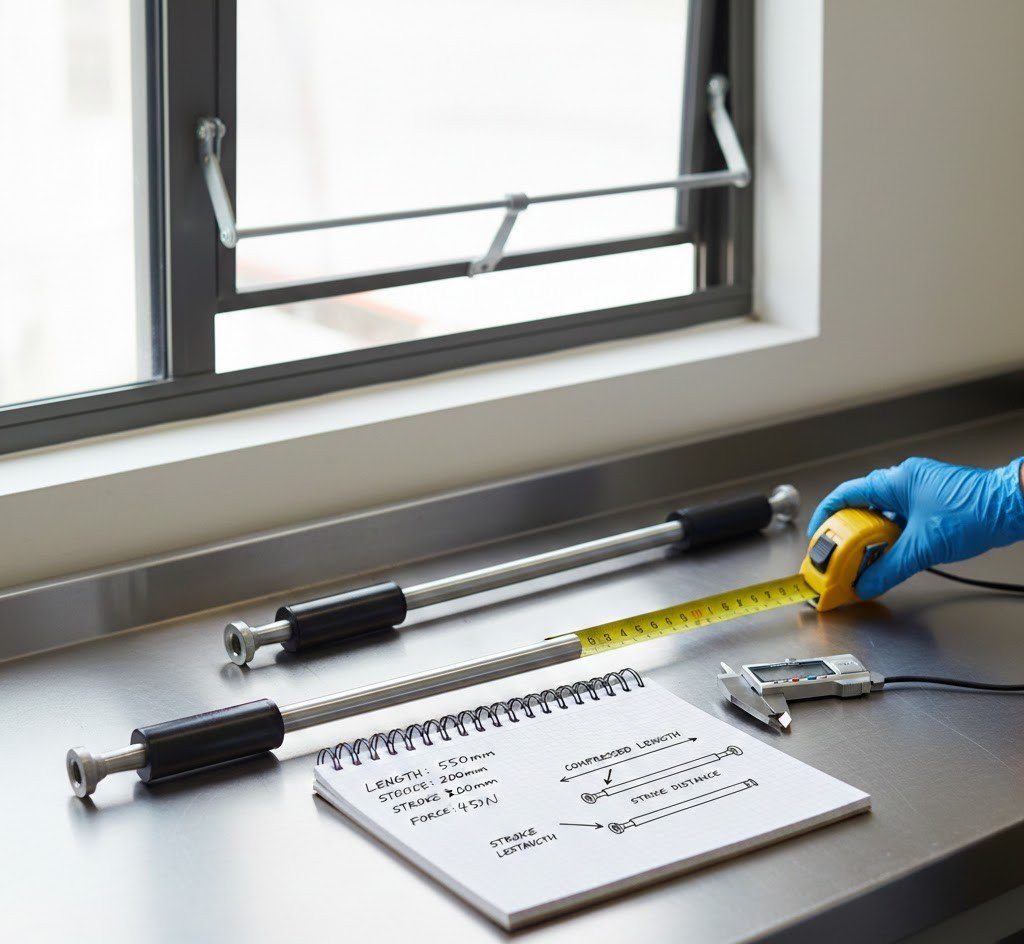
Correct sizing and force calibration are critical.
Measure Precisely:
- Extended length (center-to-center)
- Compressed length
- Stroke distance
- Mounting type
Confirm Newton (N) Rating:
| Window Size | Glazing Type | Typical Weight | Common Force Rating |
| Small | Single Glazed | 10–20 kg | 150–250N |
| Medium | Double Glazed | 20–40 kg | 300–500N |
| Large | Laminated / IGU | 40–70+ kg | 500–800N |
Using the wrong rating may cause slamming, hinge fatigue, or incomplete closure.
In contrast, sliding systems such as aluminum sliding windows do not require gas struts because their operational mechanics rely on track rollers rather than lift assistance.
Installation Direction: Orientation Matters
Yes, orientation directly affects gas strut lifespan and performance.
The narrow piston rod must face downward when the window is in the closed position.
Why Proper Orientation Is Critical
Gas struts contain internal lubrication oil that protects the piston seal. When installed correctly:
- Oil remains in contact with the seal
- Friction is reduced
- Seal drying is prevented
- Service life is extended
If installed upside down:
- Lubrication may not reach the seal
- Internal wear increases
- Gas leakage risk rises
- Lifespan may shorten by up to 30%
Mechanical Impact of Incorrect Orientation
Improper installation can also:
- Increase closing resistance
- Cause uneven lift pressure
- Accelerate hinge fatigue
- Affect long-term sealing performance
In high-frequency applications such as kitchen service windows or commercial counters, correct orientation significantly improves durability.
Manufacturer Engineering Considerations
In professionally engineered aluminum systems:
- Orientation is predefined during fabrication
- Mounting brackets are positioned to enforce correct angle
- Opening geometry is calculated to distribute load evenly
For builders and architects, ensuring correct strut alignment during installation protects both hardware integrity and warranty validity.
DIY Replacement vs Professional Installation
Gas strut replacement is not the same as structural repair.
| Situation | DIY Suitable | Professional Recommended |
| Gas pressure failure only | Yes | No |
| Ball joint wear | Yes | Sometimes |
| Hinge deformation | No | Yes |
| Frame misalignment | No | Yes |
| Curtain wall integration | No | Yes |
For commercial facade systems, professional oversight protects envelope performance and compliance.
Engineering Perspective in Commercial Projects
In professional manufacturing, gas struts are calculated during system design not treated as generic hardware.
Manufacturers such as Oridow integrate strut engineering into:
- Sash weight modeling
- Wind load simulations
- Durability cycle testing
- Air and water tightness validation
- Global certification compliance
Certified systems typically undergo:
- 10,000–25,000 operational cycles
- Structural load testing
- Water penetration testing
- Wind pressure resistance evaluation
For wholesalers and developers, sourcing pre-engineered systems reduces field modifications and warranty risk. Technical consultation for custom specifications is typically coordinated through the trustable manufacturer’s project inquiry team like oridow to ensure alignment with architectural requirements.
Cost Comparison: Hardware Replacement vs Full Upgrade
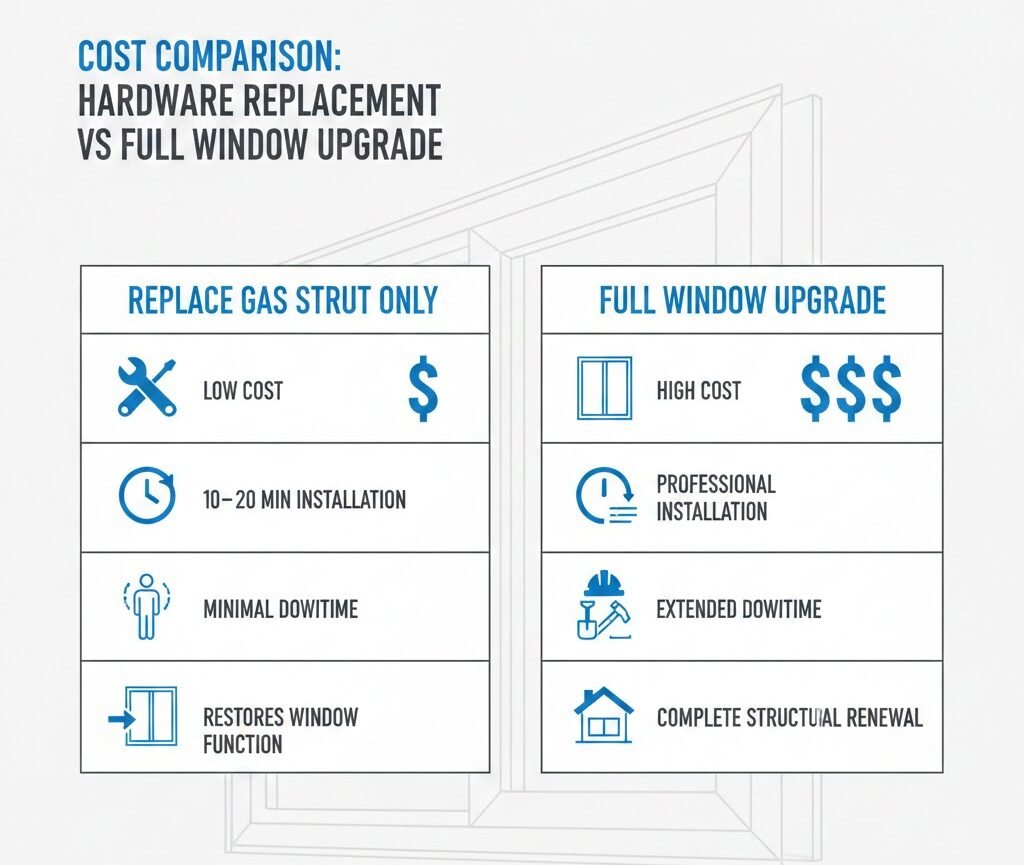
Replacing a gas strut is significantly more cost-effective than replacing the entire window unit.
| Solution | Relative Cost | Complexity | Long-Term Impact |
| Replace strut only | Low | Simple | Restores function |
| Replace hinges + strut | Moderate | Medium | Improves alignment |
| Replace full sash | High | Complex | Structural reset |
| Replace full system | Very High | Professional required | Complete renewal |
For multi-unit developments, maintaining spare hardware inventory minimizes operational downtime.
Final Answer
Yes, you can replace a gas strut window without a professional if you are only changing the strut and the frame structure remains intact.
However, for oversized glazing, misalignment issues, or integrated commercial systems, professional evaluation is recommended to maintain long-term performance and safety.
Proper specification, accurate force matching, and certified manufacturing remain the most reliable ways to reduce future maintenance requirements.


